

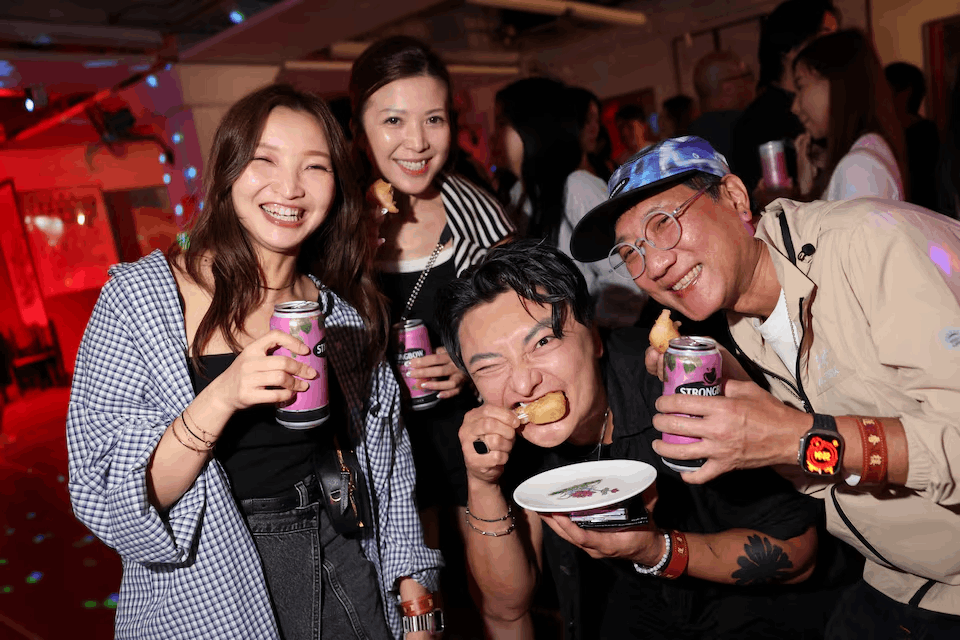
In the bustling heart of Hong Kong's Central district, the century-old Lin Heung Lau tea house is trying an unexpected new approach. During the day, it serves traditional cart-style dim sum with steaming shrimp dumplings, siu mai, and buns. But as night falls, the tea house transforms into a party space with disco lights, a DJ, and Cantonese-style electronic music for hundreds of young patrons.
This shift reflects Hong Kong's broader efforts to restore its tourism and dining appeal after years of hardship following Covid-19. With locals increasingly opting for cheaper shopping and dining in mainland China, many long-established restaurants in Hong Kong are facing unprecedented pressure.
According to local media reports cited by Reuters, at least 14 restaurants in Hong Kong closed in the first four months of 2026 alone, including many long-established brands that were once closely associated with the city's culinary culture.
Rocky Wong, chairman of Lin Heung Lau restaurant, said that the Hong Kong economy has been weakening for many years. However, he believes that the return of tourists is helping to balance the market to some extent. "We are just focusing on improving our brand and service," Wong said.
Therefore, these "lively dim sum parties" are seen as an effort to bridge the gap between traditional culinary heritage and the new tastes of Generation Z. Instead of just serving food, tea houses now offer a cultural experience, where diners can enjoy dim sum while immersing themselves in music and a festive atmosphere.
Luna Chan, 30, who came from Macau to attend the event, believes the biggest draw lies in a unique blend that's hard to find elsewhere. According to her, eating dim sum while listening to a DJ play electronic music creates a very "modern Hong Kong" feel.
This trend also illustrates how Hong Kong is repositioning its tourism image. For years, the city was known for luxury shopping and international finance. But as consumer patterns shift, cuisine and cultural experiences are becoming new competitive advantages.
Lin Heung Lau restaurant, which opened in the 1920s, closed its historic Central location before moving to a new, nearby location. The restaurant plans to host monthly themed events to keep up with global trends, blending food, music, and lifestyle.
In the context of increasingly competitive Asian tourism, dim sum may not be enough to solve all of Hong Kong's economic woes. But the way its long-standing tea houses are reinventing themselves shows the city is trying to rediscover its most appealing identity, starting with the very steaming dim sum stalls that have existed for nearly a century.
According to Reuters
Source: https://hanoimoi.vn/mon-dim-sum-giup-hong-kong-tim-lai-suc-hut-du-lich-749637.html

![[Image] Close-up view of the interchange connecting the two expressways and Long Thanh Airport.](https://vphoto.vietnam.vn/thumb/1200x675/vietnam/resource/IMAGE/2026/05/25/1779703378210_ndo_br_z7863716673926-224453a31600126cce10622af6290afd-4549-jpg.webp)

![[Image] Hanoi's urban life under the challenge of a "scorching hot" environment](https://vphoto.vietnam.vn/thumb/1200x675/vietnam/resource/IMAGE/2026/05/25/1779706979265_nang-nong-t5-2026-minh-duy-7-4636-jpg.webp)
















































































Comment (0)