

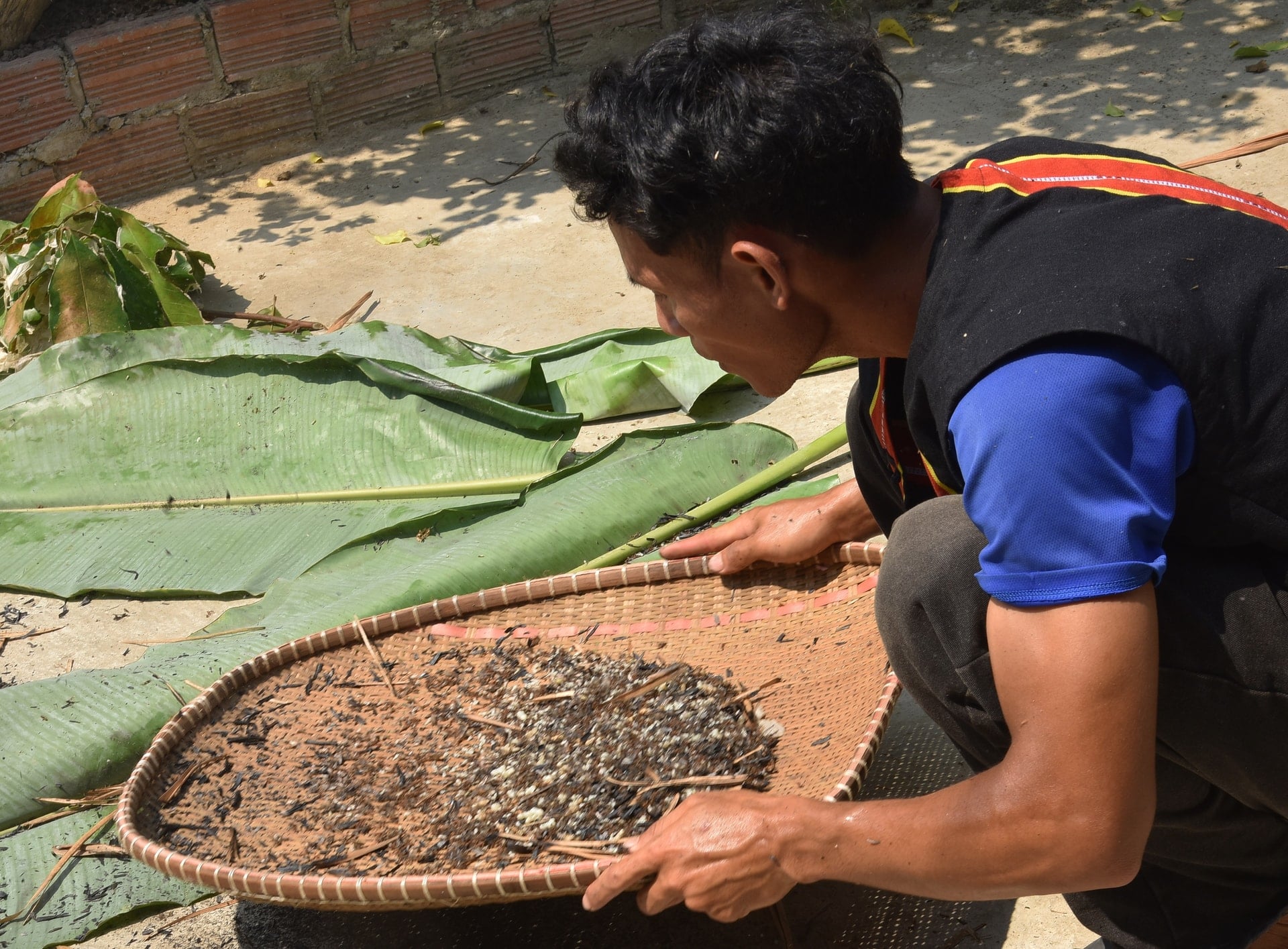
There are many types of ants that ethnic minorities in mountainous areas can harvest for food, such as yellow ants, red ants, black ants, sour ants, etc.
Sour ants are a type of ant that is either red or green in color. These ants typically build their nests on trees by using silk produced by their larvae to wrap leaves together. A sour ant nest usually contains a queen ant, worker ants, and ant pupae. All three are edible. Sour ants feed on insects such as beetles, flies, and mites.
The local people's method of catching sour ants is to use fire to burn the ant nest, causing the ants to fall into a basket placed underneath. Alternatively, they cut a branch with an ant nest, place it in the basket, and then use fire to heat the area around the basket to prevent the ants from crawling out.
March is the season when black ants build nests, laying many young ants and eggs. When the smoke from burning fields fills the air, children gather in the forest, wading through streams, climbing mountains, and hiding in bamboo thickets to find ant nests to bring back for food. Ant eggs are white and full of fat.
Winged ants and termites emerge simultaneously and in the greatest numbers after afternoon rains during the "small full moon" period of April and May (lunar calendar) each year. As soon as the rain stops, swarms of winged termites and ants emerge from their nests. To trap them, people often use oil lamps or candles placed in large basins of water; the ants are attracted to the light and fly towards it, but their wings get wet and they remain trapped in the basin.
Yellow ants and their eggs are easier to eat and more nutritious than some other insects. Dishes made from yellow ants offer a unique experience for diners. From yellow ants, people can prepare many attractive dishes such as salads, soups, and especially salted ant dishes.
After catching the ants, soak them in boiling water, drain them, and then roast them with coarse salt and wild chili peppers. Once the salt is dry and the ants are cooked and fragrant, pound them in a mortar. The sour, pungent, and slightly greasy taste of the ants, combined with the spiciness of the chili peppers and the saltiness of the sea salt, creates a unique and appealing flavor. Because the salt is roasted dry, it can be stored for a long time without refrigeration. This yellow ant salt is used as a dipping sauce for meat, fish, vegetables, and eaten with rice.
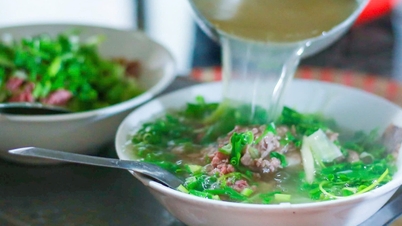
Yellow ant soup is a favorite dish of many ethnic groups. After being washed thoroughly with water to remove impurities and dirt, the yellow ants are placed in a basket and left to drain.
Spices such as shallots, sawtooth coriander, seasoning powder, salt, MSG, chili peppers... along with wild vegetables, bamboo shoots, and young shoots of herbs are indispensable ingredients for cooking together. The cooking method is as follows: Bring a pot of water to a boil, add a little salt, and when the water boils vigorously, add the crushed shallots, shrimp, crab, fish... When the ingredients are cooked and the water boils vigorously again, add the vegetables to the pot and cook together with the yellow ants. The acid in the ants and their eggs mixes with the water, creating a mild, refreshing, and fragrant sour taste.
In the culinary arts of various ethnic groups, insects have always played an important role, especially ants. Among the ants that these communities utilize for food, yellow ants and their eggs are rich in protein and amino acids, and do not carry venom that poses a danger to humans. Among these, a rustic dish like ant salt has become a culinary specialty of the mountainous regions and is favored by consumers.
Source: https://baodanang.vn/mon-ngon-dan-da-tu-kien-3338784.html


![[Photo] General Secretary and President To Lam and the President of the Philippines hold talks.](https://vphoto.vietnam.vn/thumb/1200x675/vietnam/resource/IMAGE/2026/06/01/1780286997787_anh-man-hinh-2026-06-01-luc-11-09-43.png)















































































Comment (0)