

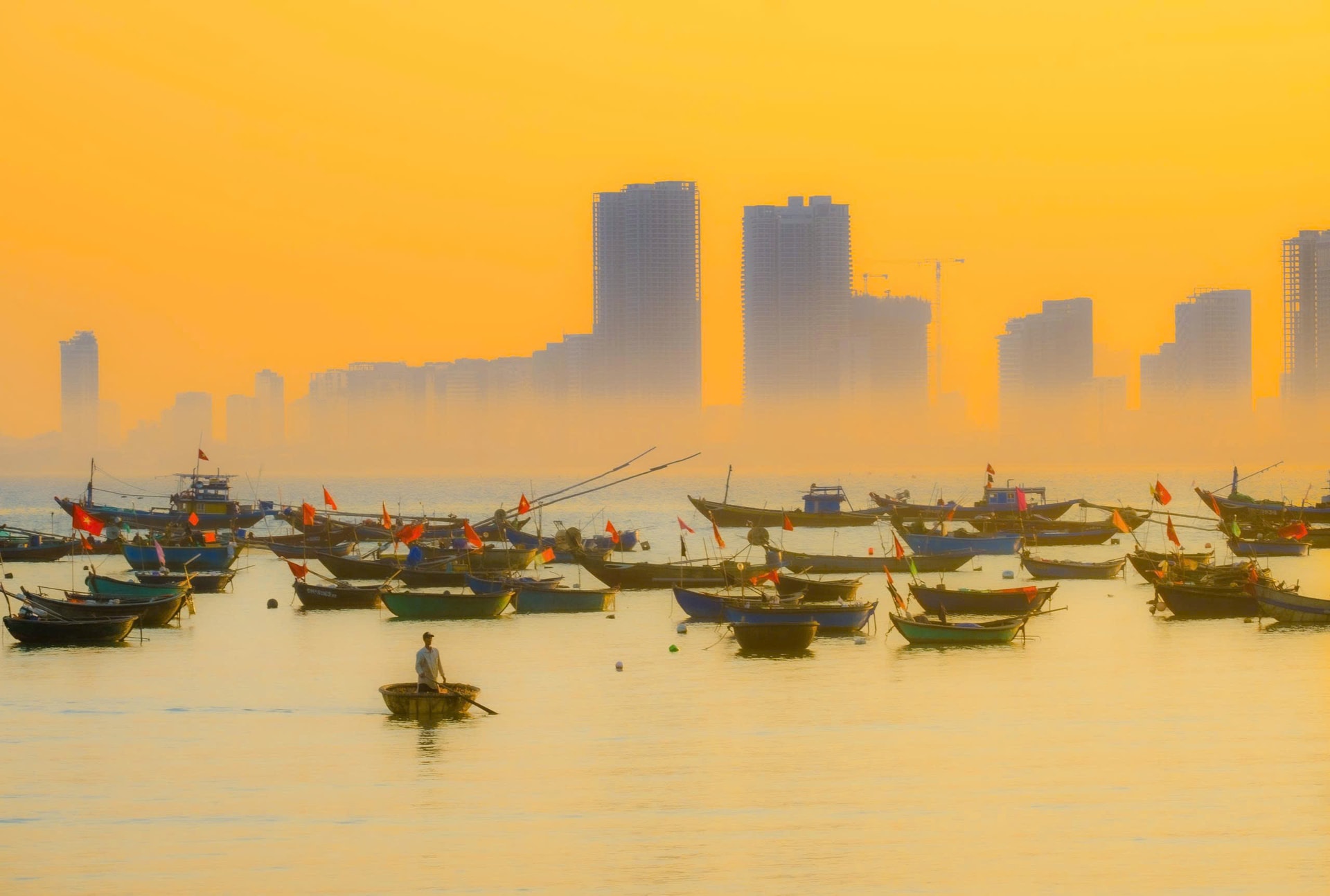
The trend of "urbanization" of coastal villages.
More than ten years ago, the people of Da Nang were worried as fishing villages brimming with the spirit of the sea, such as Nam O, Thanh Khe, Man Thai, Tho Quang, etc., gradually receded inland to make way for international-class tourist resorts, restaurants, and hotels. The simple houses no longer faced the sea to welcome the boats returning each morning or watch the sails heading out to sea each evening.
Waves of urbanization continue to crash against the pristine beaches of Tam Thanh, Tam Tien, Tam Hai, and Tam Quang, transforming many coastal areas into tourist zones.
The smiles of the people in the coastal region are brighter because they have enough food and clothing, sturdy houses, and paved roads stretching all the way to the water's edge. People from many other regions come to work and live, intermingling with the traditional fishing villages, causing the unique identity of the coastal villages to fade to some extent.
Many people have worried whether, one day, those charming, centuries-old fishing villages will only be a memory. How can we preserve the traditional methods of drying, steaming, and making fish sauce during the southern fishing season when industrial life and tourism are creating service and commercial activities that gradually replace manual labor?
Having visited the ancient fishing village of Nam O many times, we had lengthy conversations with Mr. Dang Dung, known as the "historian" of this 700-year-old land nestled at the foot of the "most magnificent pass in the world." Through these conversations, we truly understood that the most noticeable changes in Nam O and many other coastal villages in Da Nang are not just superficial, such as the architecture of houses and villages, fishing equipment, and traditional processing methods, but also the fading of the soul and essence of the fishing village over the years.
Everyone knows that people from coastal areas differ from those from lowland and mountainous regions in terms of speech, customs, and beliefs. Although they all share a similar way of speaking, each coastal village has its own unique accent, intonation, and vocabulary due to migration from different regions. In the past, you could tell where someone came from just by hearing their accent, but now, fishermen in coastal villages are tending towards "urbanizing" themselves.
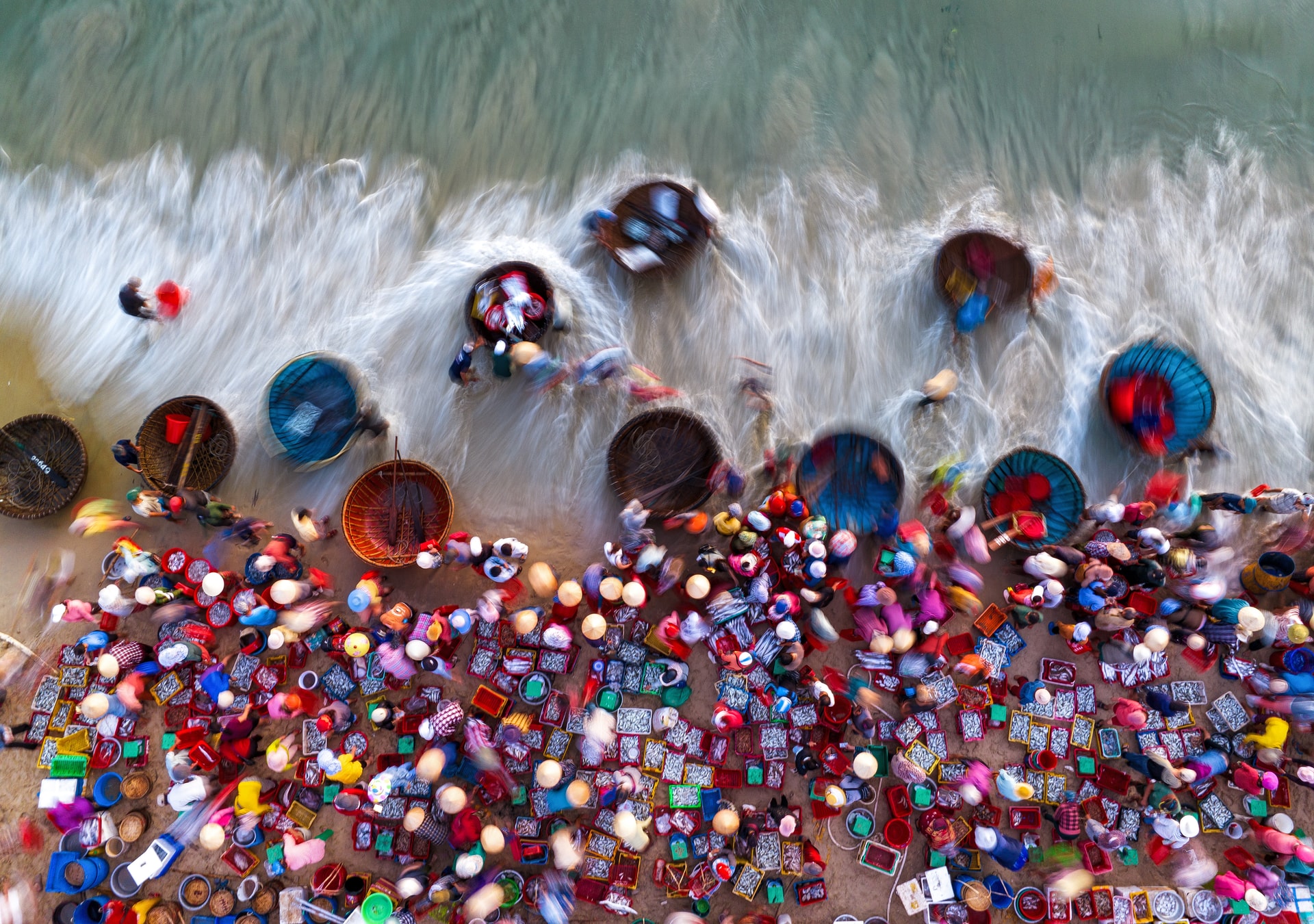
Preserving and spreading the cultural values of fishing villages.
Living in large cities, fishermen today can enjoy many more modern amenities than in the past. However, even with large ships and modern machinery, they still face rough seas and strong winds on every fishing trip.
Legend has it that the whale (or "Ông Cá") is regarded as a deity that saves people and ships in distress at sea, and is therefore revered as the God of the South Sea. Originating from this perilous environment, the worship of the whale gradually formed a system of sacred spaces with numerous whale shrines and fishing festivals throughout the coastal fishing villages from Hai Van Pass to the south of Nui Thanh commune.
Recently, more and more fishing villages have been nestled within large urban areas and become tourist destinations, but the coastal inhabitants still cling tightly to their sails and the salty essence of the sea in their voices, customs, and festivals.
While cultural and ecotourism are becoming a "magic wand" to stimulate the economy , the people of the fishing village still strive to preserve the original essence of the Fishing Festival by limiting modern performance elements and moderating commercial activities. This is because "theatricalization" diminishes the sacredness of the ritual, as performance elements overshadow its spiritual function. Within the festival space, the traditional folk songs and chants, deeply rooted in the sea, contribute to the soul and essence of the fishing village. Perhaps this is why the Fishing Festival in Da Nang has been preserved almost intact to this day.
Visiting Tam Thanh, Tam Tien, Tho Quang… these days, tourists are still delighted to find that these places have preserved almost intact the rhythm of life of a coastal fishing village – where the sunrise begins with the sound of oars splashing in the waves and the bustling markets filled with shrimp and fish, and the sunset closes with the sunlight still lingering on the brim of the conical hat.
The beauty of the people and culture of the fishing villages has attracted many artists to participate in mural projects in Tam Thanh and Tam Hai. Even more interestingly, over 350 students from Da Nang University of Architecture participated in the book project "Da Nang - The Village Pavilion by the Sea," a research project on culture and architecture carried out over three years, contributing to preserving and spreading the unique values of Da Nang's fishing villages.
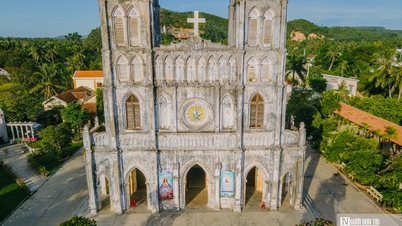
Perhaps, this is also a way to preserve the soul of the fishing village amidst the relentless development of tourist cities. Because what makes these coastal areas so enduringly attractive is not just the resorts or modern coastal roads, but also the calls of the boats each morning, the smell of fish drying in the southerly breeze, the tranquil village communal houses, and the salty way of life that has persisted through generations. When these values are cherished, the fishing village will not only exist in memory, but will be present as an integral part of the soul of the coastal homeland today.
Source: https://baodanang.vn/lang-chai-duoi-bong-do-thi-3338898.html

![[Photo] General Secretary and President To Lam and the President of the Philippines hold talks.](https://vphoto.vietnam.vn/thumb/1200x675/vietnam/resource/IMAGE/2026/06/01/1780286997787_anh-man-hinh-2026-06-01-luc-11-09-43.png)
![[Photo] Reception to welcome General Secretary and President To Lam and his wife on their State visit to the Philippines](https://vphoto.vietnam.vn/thumb/1200x675/vietnam/resource/IMAGE/2026/06/01/1780295488620_vna-potal-chieu-dai-chao-mung-tong-bi-thu-chu-tich-nuoc-to-lam-va-phu-nhan-tham-cap-nha-nuoc-toi-philippines-8798060-7855-jpg.webp)







































































































Comment (0)