

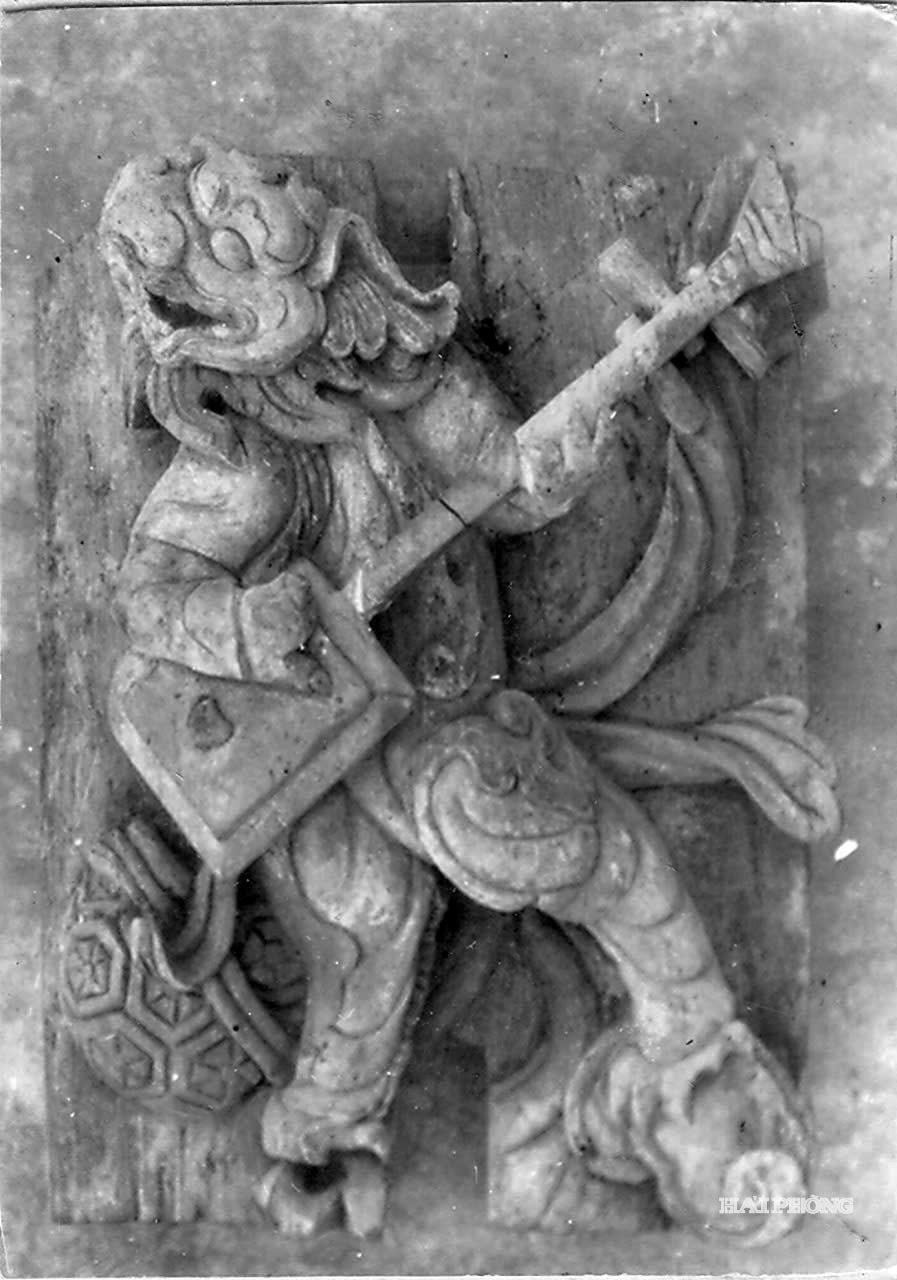
The person who brought Ca Tru back to his homeland.
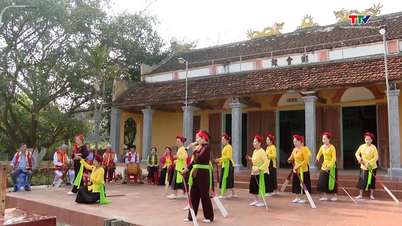
The Hai Phong region – where the river meets the sea – has long been the cradle of many forms of folk performing arts. Ca Tru (also known as Co Dau singing, A Dao singing, or Cua Dinh singing) has been present and developed in this area since very early times.
According to historical documents and folk field research, the art of Ca Tru originated from devotional singing and court singing, then spread and became a refined pastime for the intellectual class, nobility, and working people.
Ca trù singing in Hai Phong is closely associated with a historical figure, Lady Sang (Pham Thi Sang), from Vien Lang commune, Tu Ky district, Ha Hong prefecture, Hai Duong province, now Cung Chuc village, Vinh Thinh commune, Hai Phong city. A virtuous and talented woman, skilled in both music and singing, she was selected to serve in the court of Lord Trinh Giang (1729-1740) and was appointed as a concubine.
Lord Trịnh Giang was passionate about music and literature. In the year of Nhâm Tý (1732), he even commissioned the creation of special ceremonial music for use in his palace to "enhance the peaceful times."
Living amidst opulent palaces, concubine Pham Thi Sang still yearned for her homeland. She sought permission from God to return to her hometown of Cung Chuc, where she used her money to commission a statue of the patron saint of the art form, established a performing arts troupe, and personally taught the art of ca tru (traditional Vietnamese singing) to the villagers. This created a noble livelihood and ushered in a golden age for the sounds of the clappers and stringed instruments in the area.
Cung Chúc Ca Trù has flourished, becoming a high-level art form. This art form has a rigorous and systematic training method with a tightly organized guild system.
Mr. Vu Hoang Son, 95 years old, residing in Vinh Thinh commune, a former official of the Hai Phong Department of Culture and Information, still vividly remembers the years when Ca Tru (traditional Vietnamese singing) flourished. He recounts stories of Mr. Ngo Van Tang and his son Ngo Phuong Diem, who were once talented instrumentalists; and the two sisters, Han and Han, who were renowned female singers with powerful, resonant, and expressive voices...
On every major occasion, the performing arts troupe would solemnly invite officials and scholars from the district to attend and enjoy the most spectacular performances.
Along with Cung Chúc in Vĩnh Thịnh commune, ca trù (a traditional Vietnamese musical genre) also flourished in Đông Môn village (part of Hòa Bình commune, Thủy Nguyên district), now part of Hòa Bình ward. In the early 19th century, Mr. Tô Tiến Trọng – a leader of the Kinh Môn (formerly Hải Dương) performing arts guild, under the Bắc Thạch performing arts department – brought this art form to Đông Môn. Thanks to his talent and the skills of previous generations of artists, Đông Môn became a strong and reputable performing arts guild with significant influence throughout the northern coastal region.
The ups and downs of Ca Tru (Vietnamese traditional singing)
In the year of the Rooster, 1945, a terrible famine forced female singers and male musicians to abandon their profession and wander everywhere in search of a livelihood. The performing arts troupe disbanded, the Ca Cong Temple (where the two founders of Ca Tru singing, Thanh Xa Dai Vuong and Man Duong Hoa, were worshipped) in Vinh Thinh commune was dismantled, and sacred artifacts were completely lost among the people.
Subsequently, during the period of resistance and the building of a new culture, ca trù faced severe prejudice, being criticized for its sentimental lifestyle reminiscent of the old regime, and even being considered a social vice. This "misunderstanding" led to this art form being marginalized for half a century.
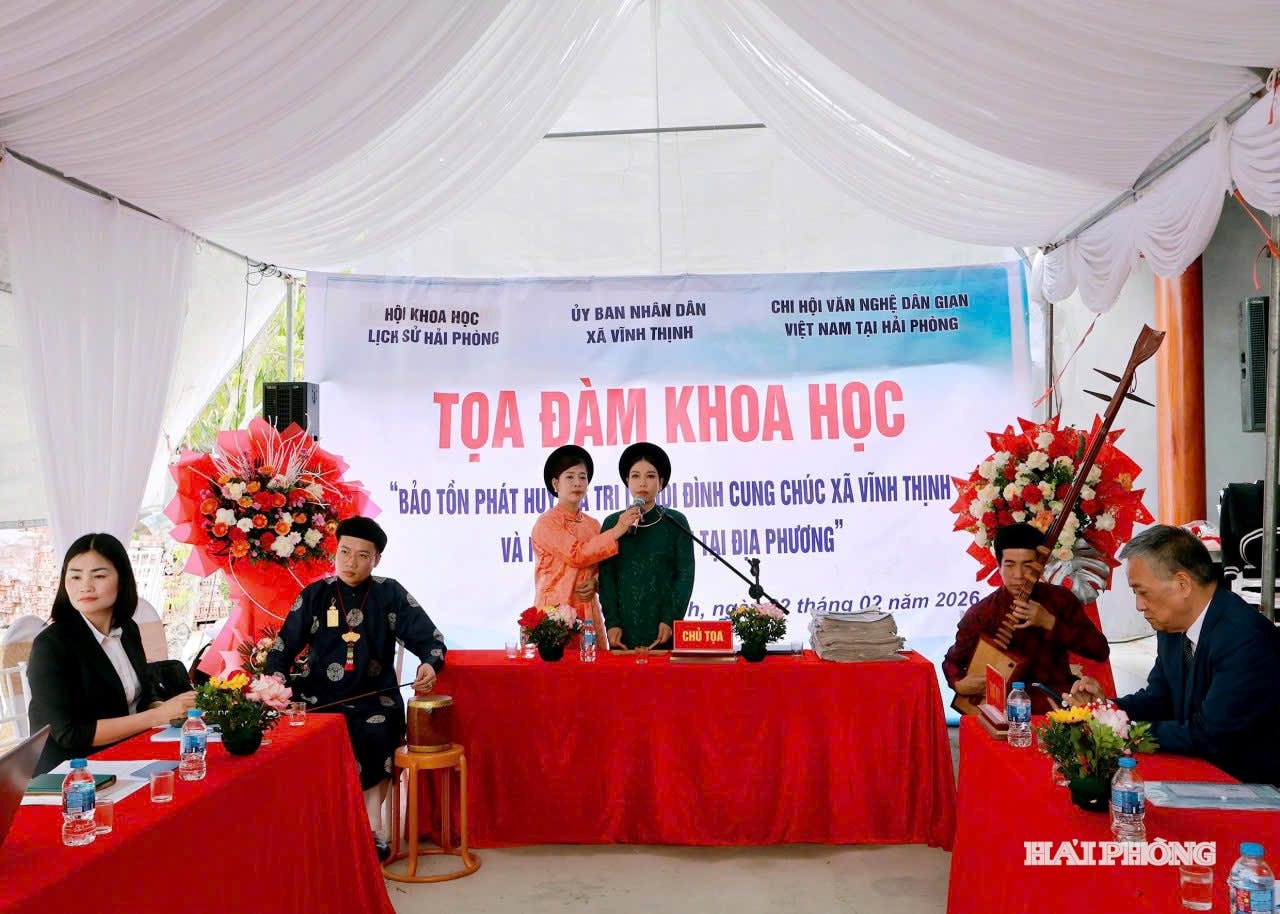
The Party's Central Resolution V (8th Congress) of 1998 on "Building an advanced Vietnamese culture imbued with national identity" came into effect, and heritage values were truly revived.
According to Mr. Vu Ba Xinh, a native of Vinh Thinh who is passionate about researching ca tru (traditional Vietnamese singing), looking at the entire city of Hai Phong, since 1991, a dedicated group of artists including the male musician Tran Trong Que, the female singers Dao Thi Tham and Nguyen Thi Chin, and the official Nguyen Han (Han Den) have quietly come together to rediscover the ancient forms. “They strived to pass on their knowledge to the first generation, including Kim Yen, Thanh Can, Do Quyen, Hong Nhung, and Ngoc Bich, under the name of a small group belonging to the Poetry Club of the City Cultural Center,” Mr. Xinh shared.
The early days of reconstruction were extremely difficult: there were no venues for performances and a shortage of musical instruments. In 1993, two Ca Tru clubs were officially established. On October 1, 2009, UNESCO officially inscribed Vietnamese Ca Tru on the List of Intangible Cultural Heritage in Need of Urgent Safeguard. This also marked a turning point for the revival of Ca Tru in Hai Phong.
After decades of preservation, Hai Phong now boasts five vibrant Ca Tru clubs: the Dang Giang Ward Ca Tru Club, the Xu Dong Ca Tru Club, the Nguyen Cong Tru Primary School Ca Tru Club, the Nguyen Van To Primary School Ca Tru Club, and the Long Thanh Ca Tru Club.
With financial support from the Department of Culture, Sports and Tourism and the venue at Hang Kenh communal house, the Hai Phong Ca Tru singing troupe has regularly maintained its performances on the fourth Saturday morning of every month.
By 2026, Hai Phong's Ca Tru (traditional Vietnamese singing) had achieved many successes: 2 team gold medals and 14 individual gold medals at national festivals. The State also bestowed the titles of 1 Meritorious Artist, 3 Meritorious Artisans, and 7 Folk Ca Tru artisans.
THU HUONGSource: https://baohaiphong.vn/con-duong-thang-tram-cua-ca-tru-o-hai-phong-544289.html

![[Photo] The General Secretary, President and his wife begin their state visit to the Philippines.](https://vphoto.vietnam.vn/thumb/1200x675/vietnam/resource/IMAGE/2026/05/31/1780230559452_anh-man-hinh-2026-05-31-luc-19-28-11.png)
![[Photo] Admire the coral "masterpiece" amidst the million-year-old heritage of Dak Lak province.](https://vphoto.vietnam.vn/thumb/1200x675/vietnam/resource/IMAGE/2026/05/31/1780221235105_anh-man-hinh-2026-05-31-luc-16-53-27.png)
![[Photo] Solemn bathing ceremony and Buddha procession in Hue](https://vphoto.vietnam.vn/thumb/1200x675/vietnam/resource/IMAGE/2026/05/31/1780228263543_1-jpg.webp)




















![[Video] Sunset at Lap An Lagoon – Where the sun sets over the fishing nets](https://vphoto.vietnam.vn/thumb/340x192/vietnam/resource/IMAGE/2026/05/31/1780192137701_beach-landscape-sea-water-nature-grass-745871-pxhere-com.jpeg)





























![[Photo] Admire the coral "masterpiece" amidst the million-year-old heritage of Dak Lak province.](https://vphoto.vietnam.vn/thumb/402x226/vietnam/resource/IMAGE/2026/05/31/1780221235105_anh-man-hinh-2026-05-31-luc-16-53-27.png)


























Comment (0)