

People, especially the leadership team, are always the core factor that determines the development direction. In this transition, from the proactive handover of the predecessor to the sense of responsibility of the successor is the continuous "transformation" in implementing the pillar resolutions, in operating new models and institutions, in leading key projects and works associated with the revolution of "rebuilding" urban, economic and social space.
During the past term, the city has overcome unprecedented challenges. Not only the recovery from the Covid-19 pandemic, but also the handling of the long-term consequences, associated with the task of recovery and development.
A series of important infrastructure projects have been restarted: many bridges and residential roads that have been "shelved" for many years have been put back into operation; traffic projects such as Ring Road 2 and the Ho Chi Minh City - Moc Bai Expressway have been implemented; Ring Road 3 and 4 have completed their component branches; Metro Line 1 is about to be inaugurated; urban beautification has been accelerated with projects such as Tham Luong - Ben Cat, Xuyen Tam Canal, Thu Thiem urban area, circus and Phu Tho multi-purpose performance center... Basically, the city has formed a traffic framework connecting the inner city with the inter-regional belt, creating a clear "vision" for the North - South axis.
In terms of institutions, Resolution No. 98/2023/QH15 of the National Assembly on piloting a number of specific mechanisms and policies for the development of Ho Chi Minh City has been flexibly applied, "doing it while solving it", bringing initial results. Resolution 222/2025/QH15 on building an International Financial Center in Vietnam. Resolution 188/2025/QH15 on piloting a number of specific and special mechanisms and policies to develop the urban railway network system, along with plans related to Ho Chi Minh City and Thu Duc City are being reviewed and supplemented, paving the way for long-term development.
The huge amount of work, especially in the post-Covid-19 pandemic period, has created the "foundation" for the lean-merger revolution, with synchronization, consensus and high determination.
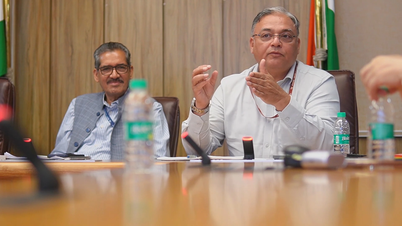
From that foundation, the practical order for Ho Chi Minh City is to continue to bring a better life to nearly 14 million people. That is the motivation for the new Secretary of the Ho Chi Minh City Party Committee and the city's leadership to quickly complete unfinished projects, and at the same time initiate a new step towards a unified megacity.
Completing the city’s master plan in conjunction with the national growth pillar resolutions and drivers will be the guiding principle. A key requirement is to unleash the private economic potential – which has always been considered a creative, adaptable and powerful driving force.
At the same time, the city is implementing a project to improve the quality of the civil service associated with the efficiency of a streamlined apparatus and a two-level local government organization; towards a modern, effective and efficient urban governance model. The task of restructuring key economic sectors towards a green economy, digital economy and circular economy is also being promoted, along with the conversion of the functions of 5 industrial parks - export processing zones, and the development of a comprehensive industrial relocation program for the period 2026-2035.
The new institutions - the International Finance Center, the Creative Startup Center, the data center system, the Cai Mep Ha Free Trade Zone - if completed soon, will not only serve the development of Ho Chi Minh City but also contribute to the realization of national strategies. However, challenges still exist: the problem of temporary housing, housing along canals, unsafe living spaces, and low quality now need to be thoroughly resolved.
Along with that is the requirement to develop traffic according to the TOD model, combining housing programs with population arrangement, urban beautification in each central ward, organizing sidewalk economy, reasonable parking lots, creating a green environment and civilized lifestyle.
Ho Chi Minh City not only needs modern transport infrastructure, but also needs worthy cultural institutions to enrich the spiritual and entertainment life of its people.
This personnel transfer is a strong boost, ensuring succession and innovation, unity of will and action. With new belief, aspiration and determination, Ho Chi Minh City will certainly break through, continue to affirm its role as an economic locomotive, contributing to the country's strong rise in the period of integration and development.
Source: https://www.sggp.org.vn/mot-cuoc-tiep-suc-khong-ngung-nghi-post810495.html
















































Comment (0)