

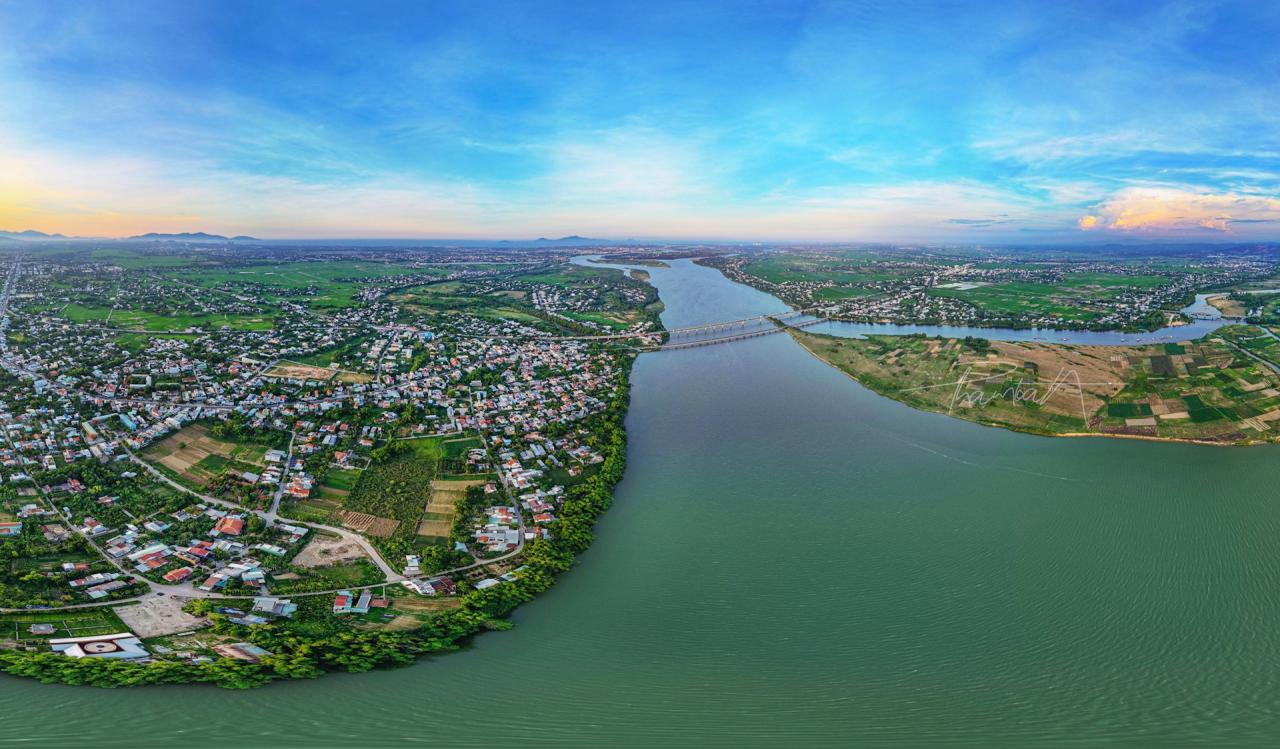
1. I remember a drinking session at Ms. Ba Sac's house (Duy Phu commune, Duy Xuyen district). When I asked about the rituals for worshipping the local earth spirits, Mr. Hai Choi - a relative of Ms. Ba Sac - said that they pray like in other places, and they must pray to the spirits of My Son, because they live in ancient Cham land and cannot do without them.
The My Son Sanctuary is just a few steps from Ms. Ba Sac's house.
Hearing that, I suddenly remembered another night drinking in An Luong (Duy Hai). My friend's father from high school said that when praying, you should say "Goddess... help me, please help me." According to researcher Nguyen Boi Lien, this place once had Hai Pho - a trading port in front of Hoi An, predating Hoi An. Later archaeological excavations uncovered huge anchors. Cham relics are abundant here.
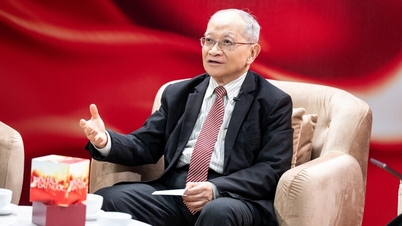
Right now I'm sitting with Professor Doan Ngoc An at his home. When I was in school, he was the vice principal of Duy Xuyen High School. We were surprised to be taught by him, because that day the History class was empty, and the classroom was as noisy as a district market (there was a district market right next to what is now Sao Nam school).
The professor walked by, stopped in, and immediately launched into a lecture about the Paris Conference. I briefly remember him explaining why the conference was held with round tables instead of square tables. That's a rather rare teaching style, one that doesn't dwell on lengthy, rambling theories.
I sought out the professor not only because I believed he had solid knowledge of history and geography, but also because he was a co-author of the book "Duy Xuyen - The Land and People," published in 2016 and reprinted in 2020.
The teacher said, "Note that Quang Nam is a melting pot, because people from Thanh Hoa, Nghe An, and Cham all live in the same area. Saying that Duy Xuyen is influenced by Champa is definitely not wrong, because there is My Son, and you don't even need to go to My Son; our people's custom is to say 'Midwife' and worship at her temple! Why 'Mrs.' and not 'Mr.'?"
Besides the Buddhist aspect and the worship of Quan Thế Âm (Guan Yin), it's important to note that she is matriarchal and Cham. A blend of bloodlines is inevitable. Not to mention the eastern region, where there were Minh Hương (Minh Hương) refugees who migrated and mixed with her.
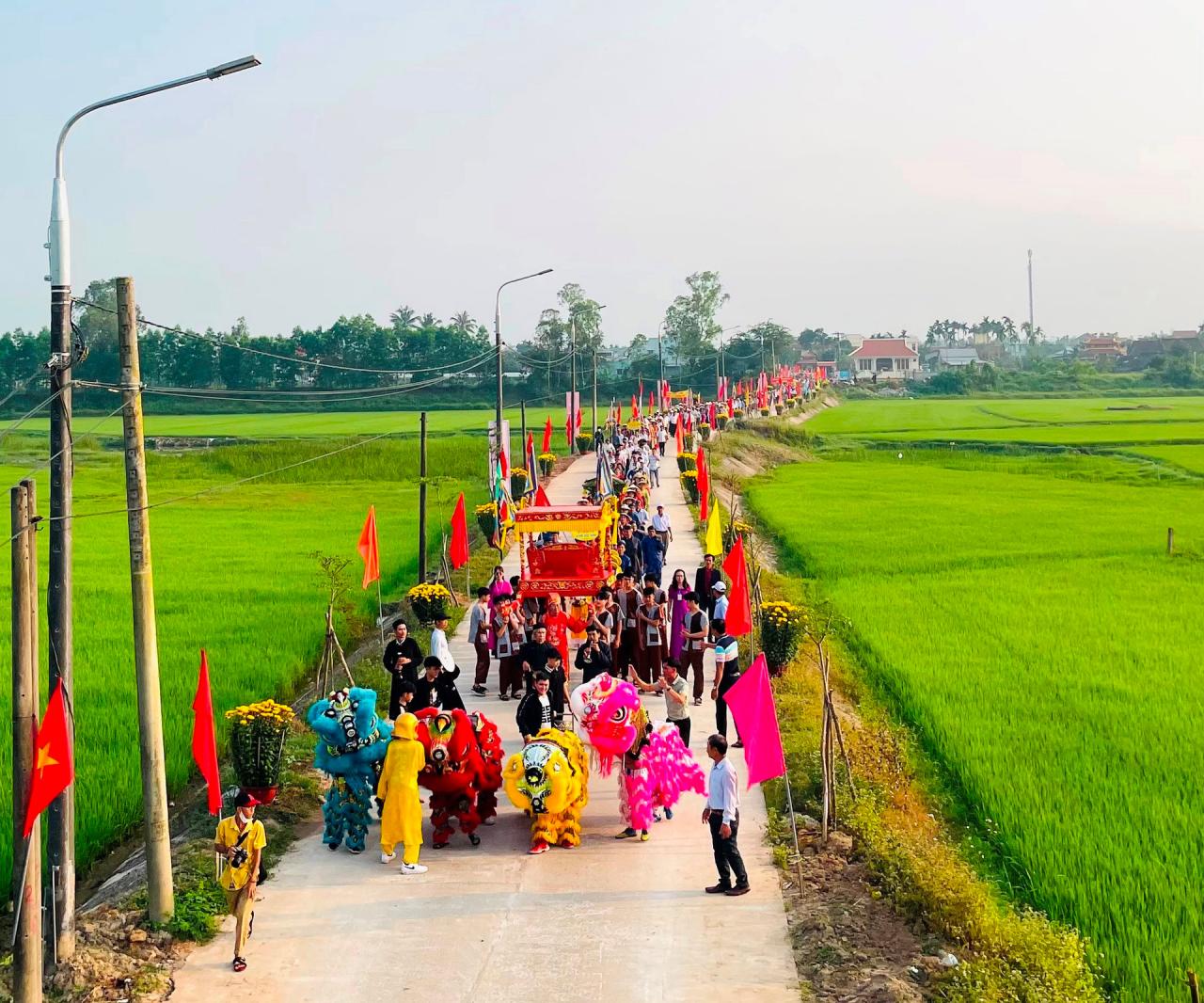
2. The story of Champa in Duy Xuyen is well-written. But I want to explore another aspect: Land shapes people, so how are the people of Duy Xuyen different from those of Hoi An or Dien Ban? Because I'm still haunted by the fact that just across the Cau Lau bridge, one side is famous for its roasted beef at Cau Mong, while the other side worships the bull god Ninga!
My teacher said, "The difference from Hoi An is that our hometown is purely agricultural, while Hoi An is full of merchants. Notice that farmers live separated by fields or rice paddies, and their houses are often separated by gardens, so they have to speak loudly to be heard, and they aren't very tactful. But merchants sit and stand close together, so they don't need to speak loudly; in fact, speaking loudly would... give them away."
What about Dien Ban? I asked researcher Ho Trung Tu – he's from Duy An, and he's the great-grandson of Dr. Ho Trung Luong.
He replied that Duy Xuyen was originally the capital of Champa, and after King Le Thanh Tong incorporated it into Dai Viet in 1471, there is much evidence to suggest that they remained there.
The genealogies of the 13 founding clans in Tra Kieu show that they only arrived in Tra Kieu after 1550 and recruited people to establish settlements, with the condition that any people they recruited had to be Cham. The Cham people had a stronger character than those in Dien Ban, as they only switched to speaking Vietnamese during the reign of Minh Mang, hence the different accent.
So, is it stronger in the element of reverence for the gods, not easily resigned to their fate, and therefore harboring resentment? Anh Tú said: the people of Duy Xuyên are more argumentative. They are more reserved. More secretive. They refuse to work for others. They refuse to conform to industrial norms.
Anyone from Dien Ban, or even Duy Xuyen, who reads this and wants to argue, please meet with Mr. Tu.
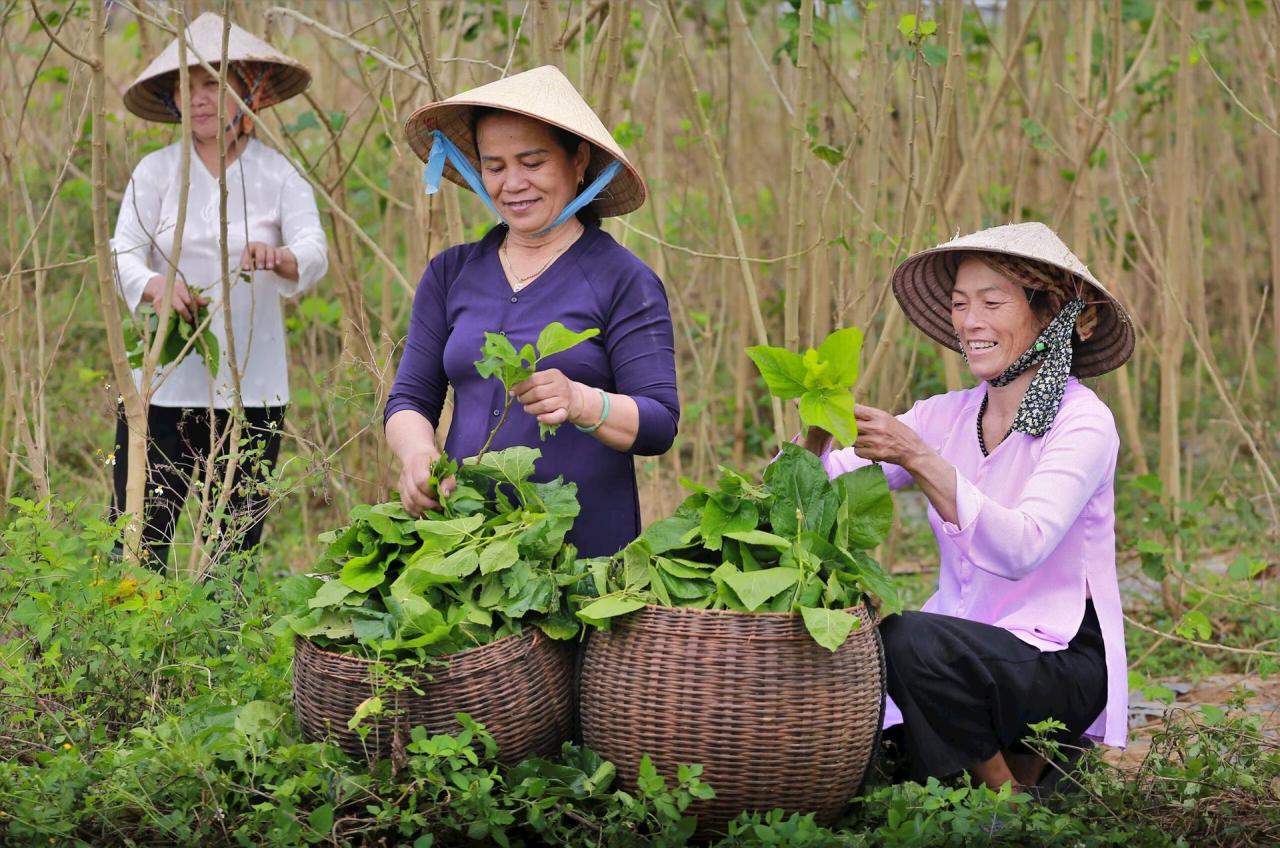
3. The Duy Xuyen area can be roughly divided into three regions: west, central, and east. I've noticed that people in the western region speak briefly, even sparingly, and are quite reserved, with a touch of humor. This is my rough estimate from Duy Chau to Duy Phu, Duy Thu...
In the central areas like Duy Trung, Duy Son, Duy Trinh, Duy An, and Duy Phuoc, the people are quicker to adapt, perhaps because they started engaging in wholesale trade early on. But even in Duy Son, the people of Tra Kieu are different from the people living near the mountains in Tra Ly.
As for the eastern areas like Duy Thanh, Duy Vinh, Duy Nghia, and Duy Hai, their way of speaking and working is rough and forceful. Of course, Duy Vinh, like the Ban Thach area, is different because it has a market.
I say this because I remember my high school class, which was also... a mixed bag of people from the central and eastern districts. Later in college, I met some guys from the western districts as well. Not to mention later in life, when I started working, the diverse voices and faces that lingered in my mind.
The teacher said that even in markets, although Duy Xuyen was close to the Thu Bon River, with markets like Thu Bon, Ban Thach, and Noi Rang, the commercial element was minimal, mostly bartering, except for the Thu Bon and Ban Thach markets which had a wider variety of goods. Even in silk-producing regions like Ma Chau and Duy Trinh, the silk itself came from agriculture . And even the former capital of Tra Kieu, with its Ham Rong market, had very little commercial documentation. The urban character wasn't as strong or vibrant as in Hoi An.
By the way, let me tell you, Mr. An, about the time I went with Mr. Van Cong Dung, who works at VTV8, to his hometown in Tien Ruou (Nam Phuoc). This is where My Xuyen Dong village is famous for having the most imperial decrees in Vietnam, with 32 decrees still preserved by the villagers today.
Mr. Dung is also a co-author of the geographical book "My Xuyen Dong - Land and People," which was recently published in 2024. He said there is documentation confirming that Can Huc is located here, not Dien Phuong. I think that's a mystery! Teacher An nodded, saying that there used to be horse stables there, and if that were the case, soldiers would have gathered, eaten, and built pavilions and inns, but the basis for saying Can Huc is here is unconvincing, because Dien Phuong has stronger historical records.
4. On another occasion, I read a research paper by author Le Thi, which stated that the land of Duy Xuyen resembles a bat, and according to ancient beliefs, a bat represents the word "Phuc" (blessing/fortune). I thought, "What kind of blessing is that? Is it for future generations to receive blessings, wealth, land, and estates, when I think my hometown isn't as rich as other places?"
Teacher An smiled, saying that, according to him, the word "fortune" was once synonymous with agriculture. He then asked: "Duy Xuyen proudly boasts being the burial place of two famous women of the Nguyen Dynasty, Mac Thi Giai and Doan Quy Phi. So, I ask, why did the Nguyen lords choose this land to bury them, instead of Hue or elsewhere? What was their intention, and what were the feng shui factors behind their burial here?"
Bear.
Writing about one's hometown can easily lead to excessive praise – because only unfilial children would curse their parents. But praise it correctly, otherwise you'll get beaten up in your own hometown and ridiculed by people from other places.
Duy Xuyen recently held a seminar commemorating the 420th anniversary of the name Duy Xuyen. The history of this land is intertwined with the names of many people who have made their mark on the nation's history, from economics to culture and society, both ancient and modern.
Village history, hometown history, is often like a breath taken while sitting on the porch. Remembering father and mother, the rice paddies and fields in front of the village have now become memories. What I said above, and I repeat, also speaks to the character and customs of a bygone era, because now it seems that everywhere... the music and lyrics are the same. If that's not right, please disregard it!
Remember, and then you'll see the compassionate land of your homeland, like a scripture echoing from somewhere in the village temple…
Source: https://baoquangnam.vn/mot-nhip-tho-que-3139310.html

![[Photo] General Secretary and President To Lam presides over a working session with the Central Policy and Strategy Committee on the development of the materials industry.](https://vphoto.vietnam.vn/thumb/1200x675/vietnam/resource/IMAGE/2026/05/21/1779359935432_a3-bnd-3129-1412-jpg.webp)

![[Photo] National Assembly Chairman Tran Thanh Man working with the Standing Committee of the Law and Justice Committee](https://vphoto.vietnam.vn/thumb/1200x675/vietnam/resource/IMAGE/2026/05/21/1779378929214_ndo_br_1-4610-jpg.webp)


























































Comment (0)