

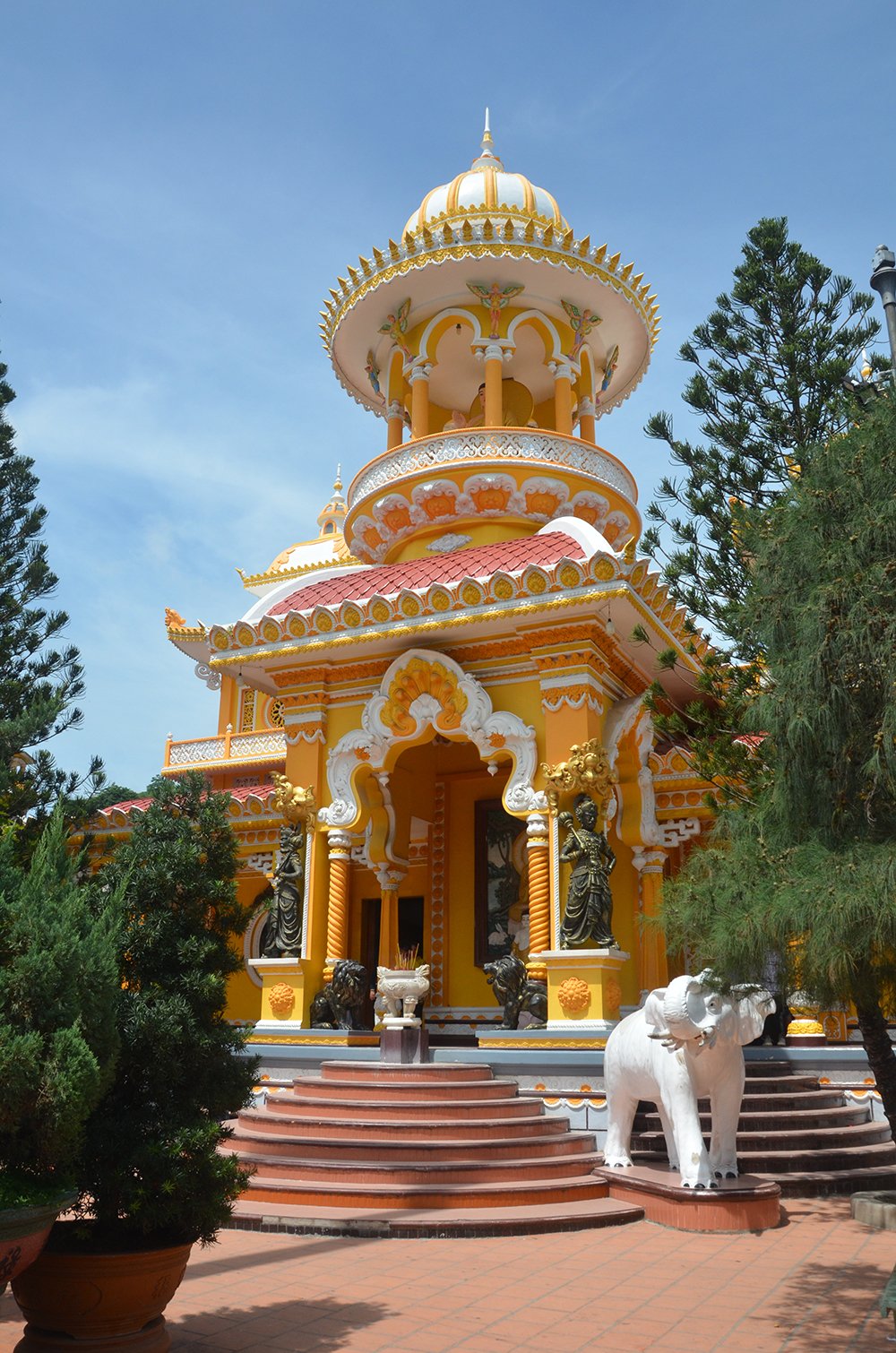
The Lady of Sam Mountain Temple (located in Sam Mountain Ward) is a famous cultural and spiritual tourist destination in An Giang province. The Lady of Sam Mountain Temple is a beautiful and solemn architectural structure situated at the foot of Sam Mountain. Every year, the Lady of Sam Mountain Festival takes place from the 22nd to the 27th of April in the lunar calendar, featuring many solemn traditional rituals. It attracts a large number of people and tourists from both within and outside the country, not only because of its rich cultural and religious value but also because it reflects the cultural exchange in the region.
In 2001, the festival was recognized as a national-level festival by the Ministry of Culture and Information. In 2014, it was included in the National List of Intangible Cultural Heritage by the Ministry of Culture, Sports and Tourism. In 2023, the Via Ba Chua Xu Nui Sam Festival was honored as a "Typical Cultural Activity of Asia-Pacific". On December 4, 2024, at the 19th session of the Intergovernmental Committee of the 2003 Convention on the Protection of Intangible Cultural Heritage of UNESCO held in the Republic of Paraguay, the Via Ba Chua Xu Nui Sam Festival of Vietnam was officially inscribed by UNESCO on the Representative List of Intangible Cultural Heritage of Humanity. This event is a recognition by the international community of the unique values of the festival in terms of history, culture, and spirituality. This is Vietnam's 16th intangible cultural heritage, and the second intangible cultural heritage of the Southern region (along with Don Ca Tai Tu art) to be inscribed by UNESCO. "Every year, my family comes back to Chau Doc during the Lady of the Mountain Festival and visits nearby temples to pray for the health, business, and education of my family and children," shared Ms. Duong Thi Kieu Tien (Ho Chi Minh City).
Opposite the Lady of Sam Mountain Temple is the Thoai Ngoc Hau Mausoleum, also known as Son Lang. This is a famous landmark, a typical ancient architectural work from the Nguyen Dynasty, and was classified as a national historical monument in 1997. Built on a foundation of blue stone, with the slopes of Sam Mountain behind it, creating a solid and sturdy structure that enhances its ancient and majestic appearance, the mausoleum was completed in the late 1820s. It is the resting place of the renowned official Thoai Ngoc Hau, who made significant contributions to land reclamation, village establishment, the construction of the Thoai Ha Canal (over 31km long), and the Vinh Te Canal (over 90km long), protecting the southwestern border of the country.
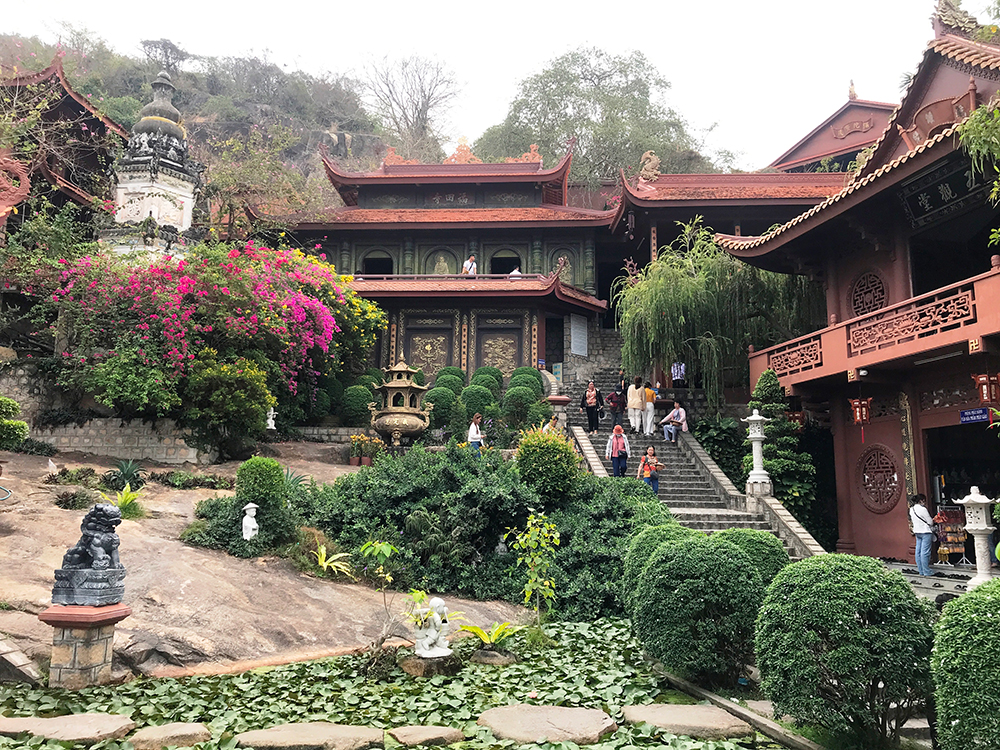
Right next to the Thoai Ngoc Hau mausoleum is Tay An Pagoda (also known as Tay An Ancient Temple), a Buddhist temple. The pagoda is built in the shape of the Chinese character "tam" (three), combining Indian and Islamic artistic styles with the ancient temple architecture of Southern Vietnam. Tay An Pagoda is a historical and cultural relic because it is associated with the legend of the Buddhist Master Tay An (Doan Minh Huyen), the founder of the Buu Son Ky Huong sect more than 150 years ago.
Not far from there, halfway up the western slope of the Mount Sam National Tourist Area, Hang Pagoda (also known as Phuoc Dien Pagoda) is built in a contemplative ancient architectural style, standing like a giant, meticulously carved bas-relief on the side of Mount Sam, making visitors feel as if they have wandered into some distant land, both ancient and peaceful, and no less poetic. Therefore, Hang Pagoda attracts a large number of tourists from all over who come here for pilgrimage, sightseeing, and to take photos.
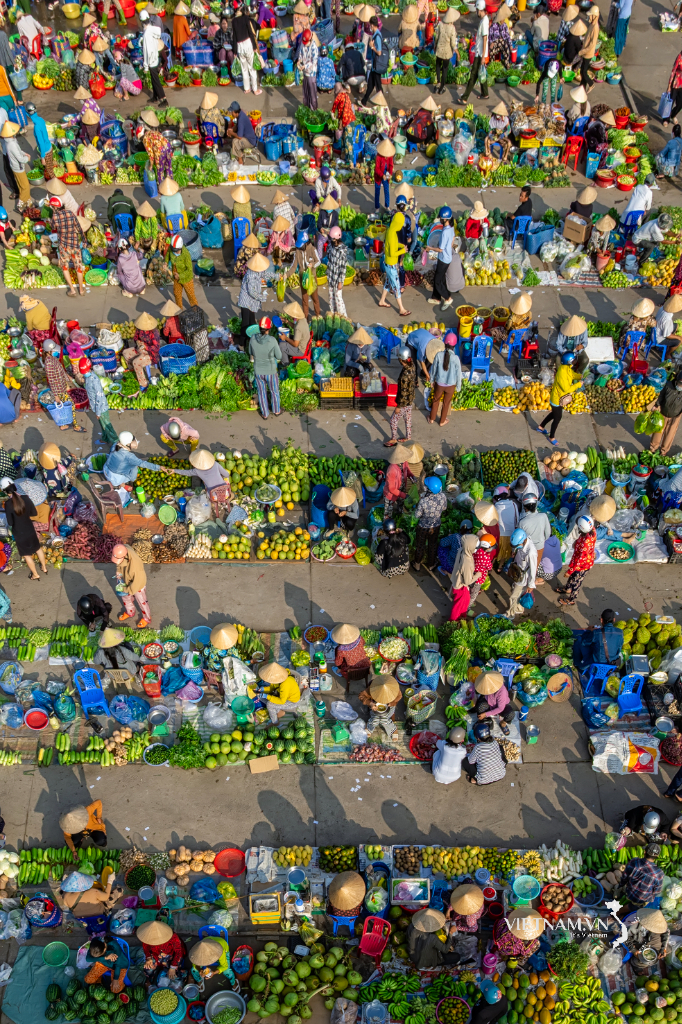
One of the unique destinations in Chau Doc is the floating village, a distinctive cultural feature deeply rooted in the riverine lifestyle. Boats and canoes are the primary means of transportation for each family in these floating villages. Here, each raft is like a connected apartment stretching along both banks of the river. In addition, Chau Doc's specialty fish sauce and dried fish are made from freshwater fish such as snakehead fish, spotted snakehead, tilapia, catfish, and striped catfish. With a history spanning hundreds of years, these fish, sourced from natural waters and processed skillfully by the traditional fish sauce and dried fish making villages at the Chau Doc river junction, have become a traditional craft. Simply by visiting Chau Doc market, tourists can easily explore, admire, and enjoy dishes made from various types of fish sauce, dried fish, fish sauce hotpot, sour fish soup, Chau Doc fish noodle soup… along with many other delicious and unique dishes that are distinctly characteristic of this riverine region.
Come to Chau Doc City to explore and learn about this land rich in tradition and its friendly, hospitable people, and enjoy the delicious and attractive dishes unique to this place. Surely, the trip will bring visitors many unforgettable experiences.
Source: https://baoangiang.com.vn/mot-thoang-chau-doc-a421140.html


![OCOP during Tet season: [Part 3] Ultra-thin rice paper takes off.](/_next/image?url=https%3A%2F%2Fvphoto.vietnam.vn%2Fthumb%2F402x226%2Fvietnam%2Fresource%2FIMAGE%2F2026%2F01%2F28%2F1769562783429_004-194121_651-081010.jpeg&w=3840&q=75)


Comment (0)