

In regions with abundant forests and fruit trees, beekeepers always consider the period from after the Lunar New Year until the end of June as the "golden season." When acacia, longan, lychee, and forest flowers bloom, the bee colonies enter an active honey-gathering phase, which largely determines the year's yield.
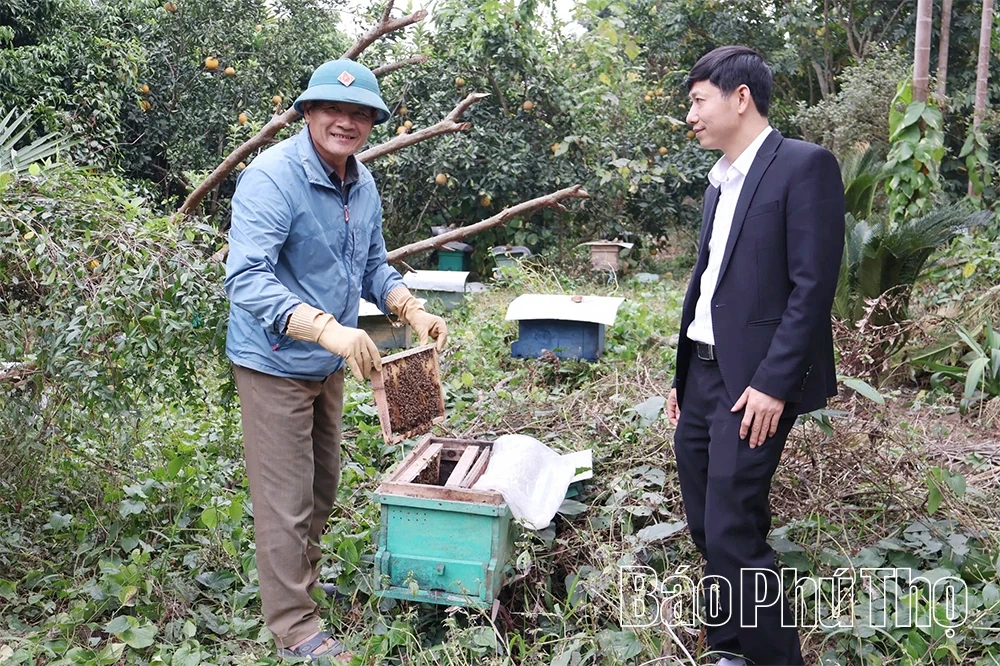
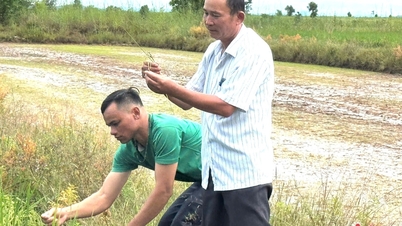
Mr. Kieu Ba Thuong - Head of the beekeeping group, member of Tinh Nhue Agricultural, Forestry and Honey Beekeeping Service Cooperative, Yen Son commune (on the left) inspects the bee colony.
In the past, people in Yen Son commune raised bees using traditional methods. They did not interfere much with the bees' natural growth process, so their honey had a natural sweetness unlike honey from other regions.
However, due to the lack of standardized beekeeping techniques, the size of bee colonies in the commune is often quite small and entirely dependent on nature. This makes honey production unstable and lacking in systematic investment; the product has not yet gained recognition, and therefore has not been able to help the local people alleviate poverty through beekeeping.
Recognizing the immense potential of beekeeping and concerned about the local situation, several experienced beekeepers decided to regulate beekeeping, build a local honey brand, and thereby increase people's income.
In 2019, the Tinh Nhue Agricultural, Forestry and Beekeeping Service Cooperative was established, with its main business being the breeding, trading, production, preliminary processing, and processing of bee-related products. At the end of 2024, the cooperative's Tinh Nhue natural honey product was certified as a 3-star OCOP product.
Owning 4 hectares of hilly forest land primarily planted with acacia trees, the family of Mr. Kieu Ba Thuong - Head of the Beekeeping Group and member of the Tinh Nhue Agricultural, Forestry and Honey Beekeeping Service Cooperative - has developed beekeeping towards a commercial scale. From an initial 40 colonies, the family has now expanded to nearly 200 colonies, producing over 2,000 liters of honey annually. After deducting expenses, the profit earned is nearly 200 million VND per year.
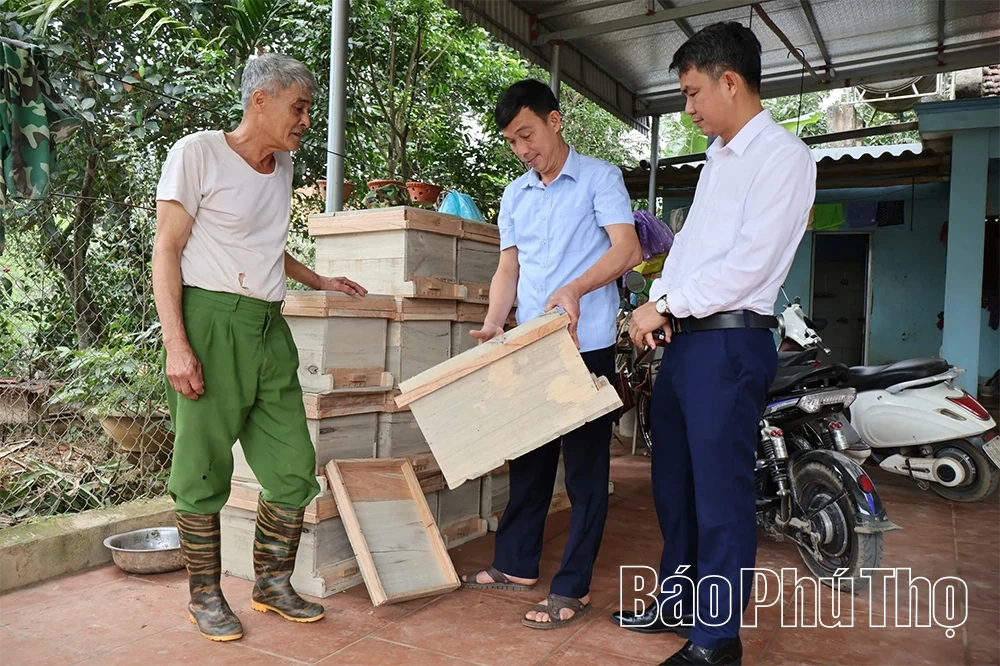
People in Tram Than commune are preparing beehives to expand their bee colonies.
For beekeepers, the work is not only arduous during the honey harvesting months, but also busy year-round. Maintaining healthy bee colonies requires experience, meticulousness, and skill.
Sharing his beekeeping experience, Mr. Bui Tho Toan (Zone 6, Tram Than Commune) said that the main honey harvesting season is from March to June each year. When forest flowers are scarce, beekeepers must supplement the bees' food at night to prevent them from fighting each other. At the same time, it's necessary to control the colony density to prevent bees from splitting off. To prevent disease, he uses ginger, yogurt, and lemon juice sprayed or mixed into the feed to boost the bees' immunity.
Thanks to proper care techniques, his family's 40 bee colonies are thriving, and are expected to yield around 300 liters of honey by 2025. Besides selling honey, he also breeds his colonies and supplies bee colonies to households interested in developing beekeeping.

Beekeeping for honey production offers a double benefit, contributing to increasing the value of local agricultural products.
With favorable natural conditions, a mild climate, a large forest and forestry land area of over 514,822 hectares, and a rich variety of fruit orchards, Phu Tho is a land with great potential for developing beekeeping for honey production.
Taking advantage of this, not only families but also many companies and cooperatives in the communes of the province have developed beekeeping models for honey production, bringing positive economic results such as: Tam Dao Beekeeping Joint Stock Company, My Thuan Agricultural and Forestry Service Cooperative (Minh Dai commune); Trung Du Forest Honey Cooperative (Tho Van commune); Hung Long Beekeeping Cooperative (Chan Mong)...
Having been involved in beekeeping for many years, many households are no longer confined to their local areas but are actively practicing "nomadic" beekeeping according to the flowering seasons. Trucks carrying hundreds of bee colonies traveling back and forth to areas with abundant flowering sources have become a familiar sight.
Beekeeping for honey production offers many advantages, such as low initial investment, efficient utilization of existing forest and tree areas, and the creation of products with high nutritional and economic value. Besides honey, by-products like pollen, beeswax, and royal jelly also open up diverse development opportunities. In particular, honeybees play a crucial role in pollinating crops, contributing to increased agricultural productivity and quality, creating a "double" value that few other industries can offer.
In recent years, with the support of agricultural extension programs and the new rural development program, many beekeeping models linked to consumption have been implemented. The development of OCOP products, trademark registration, and standardization of production processes are helping local honey gradually assert its position in the market.
Hong Nhung
Source: https://baophutho.vn/mua-con-ong-di-lay-mat-250341.htm
![[Photo] General Secretary and President To Lam presides over a meeting on assessing national development resources.](https://vphoto.vietnam.vn/thumb/1200x675/vietnam/resource/IMAGE/2026/05/20/1779253785852_a1-bnd-2943-8519-jpg.webp)

































































Comment (0)