

Among the songs about the harvest season in Vietnam, the late composers Van Cao and Pham Duy both have very beautiful pieces. Van Cao's song "Harvest Day" has been famous for a long time.
Van Cao's "Harvest Day" is a song praising the beauty, vitality, and resilience of Vietnamese farmers: "Harvest day in the village/ Rice rustles like a joyful song/ Rice doesn't worry about the enemy coming/ When the harvest is golden in the countryside...". Pham Duy, on the other hand, conveys the lively, exuberant feeling of farmers' quick steps during a bountiful harvest through the lyrics and rhythm of his song "Carrying Rice": "Carrying, carrying, carrying rice home/ Carrying rice home, carrying rice home/ Carrying home! Carrying home! Carrying home! Carrying home!".
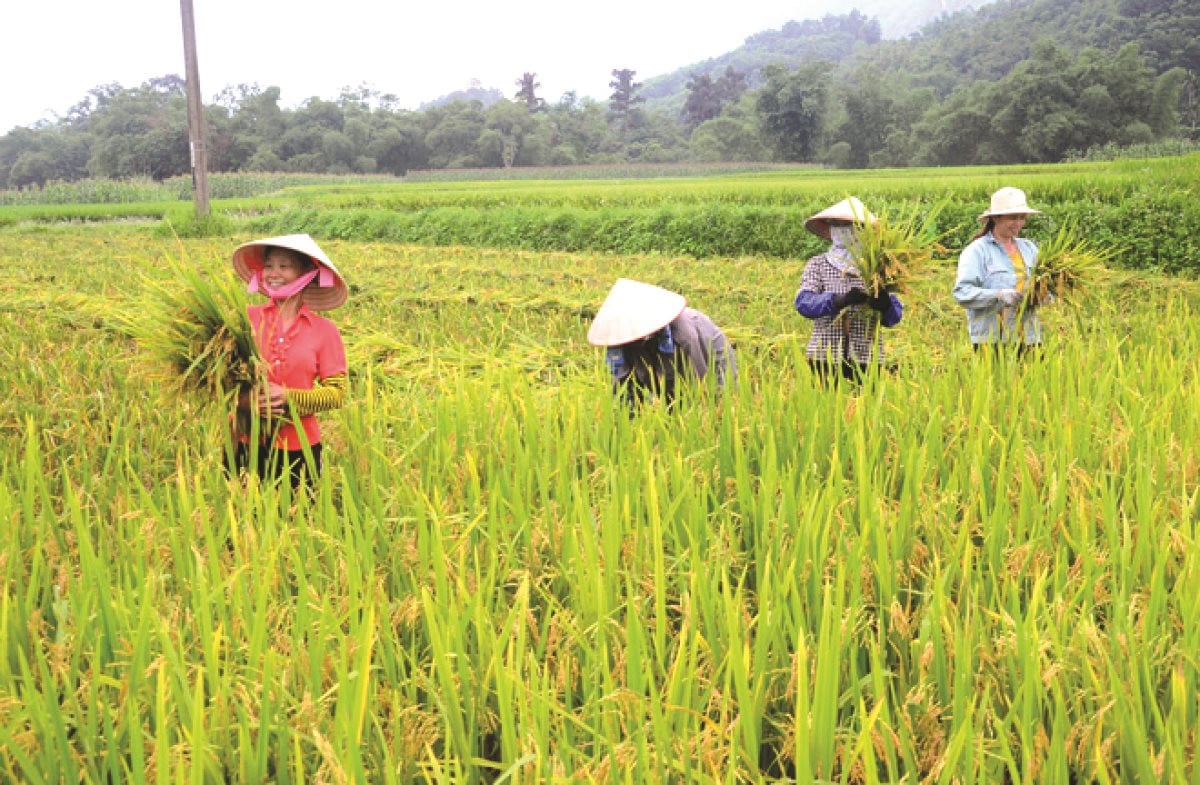
In the old days, every harvest season brought a flurry of activity to the villages. People were busy preparing for the harvest, threshing, drying, and storing the rice in baskets and sacks. Everything needed for the harvest had to be ready. Villagers shared the work, moving from one family to the next. From adults to children, everyone was busy. Men took on the heavy tasks like gathering, bundling, threshing, and winnowing the rice. Women harvested, carried, winnowed, and dried the rice. Children tended the buffaloes and brought food to the fields. Back then, farmers planted and sowed seasonal rice, and the entire harvest took six months, with only one crop per year. A bountiful harvest was a long period of anticipation and waiting. "Work hard, earn a living!" a good rice crop meant a season of joy and abundant laughter for the farmers. Harvest season arrives, and in the golden rice fields, women and girls swiftly sweep their sickles across the land, spreading bundles of ripe rice grains across the fields. Laughter and chatter fill the air, dispelling weariness. The men gather and bundle the rice, while the children search for fish and crabs in the muddy puddles at the base of the rice stalks. As evening falls, groups of people trudge along, carrying sacks of rice on their shoulders, the plump, golden grains swaying with each step. The rice, once carried home, is piled high. When night falls and the moon rises, it is spread out in the yard for the buffaloes to trample. On the wide brick yard, some lead the buffaloes, others thresh the straw, some shake the chaff, and others gather the rice... Occasionally, someone sings a folk song, playfully teasing each other, multiplying the joy of a bountiful harvest. And so, buffaloes and people work tirelessly until the moon rises high in the sky. After threshing the rice, the women wait for the wind to pick up and winnow it to remove the straw and chaff. When the wind weakens, they use large bamboo fans to fan the rice. Once clean, they take the rice out to dry in the sun, then store it in baskets and containers. The newly harvested rice is then milled or pounded until the husks are removed, revealing the pristine white grains. The rice is then cooked in a copper pot, and when it's cooked, the pot emits a fragrant aroma. The first bowls of rice from the harvest are offered as a thanksgiving to the gods, the land, and the ancestors for their blessings, before the family's reunion meal. Perhaps this is the most delicious meal of the year. Straw is also a valuable product for farmers. It's used for cooking, as feed for buffaloes and cows, and to protect crops from rain and damage. Farmers dry the straw and stack it into tall piles, pulling it out as needed. In the fields, after the harvest is over and the soil is dry, farmers begin to gather the waste and burn it. In the fields at the end of the season, plumes of white smoke curl in the wind, carrying the pungent, acrid smell of burnt straw. It's a smell that attracts grasshoppers, locusts, and tiny birds, who circle around as if trying to catch a whiff, to pick up every wisp of smoke. And so it has stayed with me throughout my life.
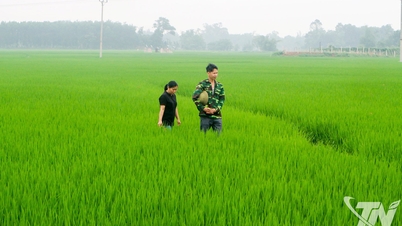
Now, with scientific advancements and new, short-duration rice varieties, several harvests can be grown in a year. Harvesting is no longer as arduous as it used to be. The scene of carrying rice home for buffaloes to trample, or men standing in the sun threshing bundles of rice, is now very rare. Farmers' sickles are now much less busy. Women no longer have to toil under the sun in shallow or deep fields. Instead of hand harvesting, there are now combine harvesters. In small, narrow fields, people use grass-cutting machines modified into combine harvesters, increasing productivity dozens of times compared to hand harvesting. Threshing is done by machines. In large fields, people rent entire combined harvester systems that harvest, thresh, winnow, and bag the rice, so farmers only need to hire trucks to transport it home for drying. Straw is bought directly from the fields. The price of straw is also sky-high, and the money from selling straw is more than enough to pay for the machinery rental. In general, farmers today are much better off than before.
Wandering through memories of harvest seasons long ago, I suddenly crave the fragrant aroma of freshly cooked rice, the "Nang Huong" and "Nang Ut" varieties, spread out on earthen mats!
Source


![[Photo] Prime Minister Pham Minh Chinh presides over a dialogue with Japanese businesses.](https://vphoto.vietnam.vn/thumb/1200x675/vietnam/resource/IMAGE/2026/03/21/1774097547316_ndo_br_dsc-0448-jpg.webp)


























































Comment (0)