

During the transitional seasons, Northern Vietnam often experiences periods of high humidity, known as muggy weather. Many people believe that the humid conditions mean there's no need to moisturize or apply sunscreen. Is this true?
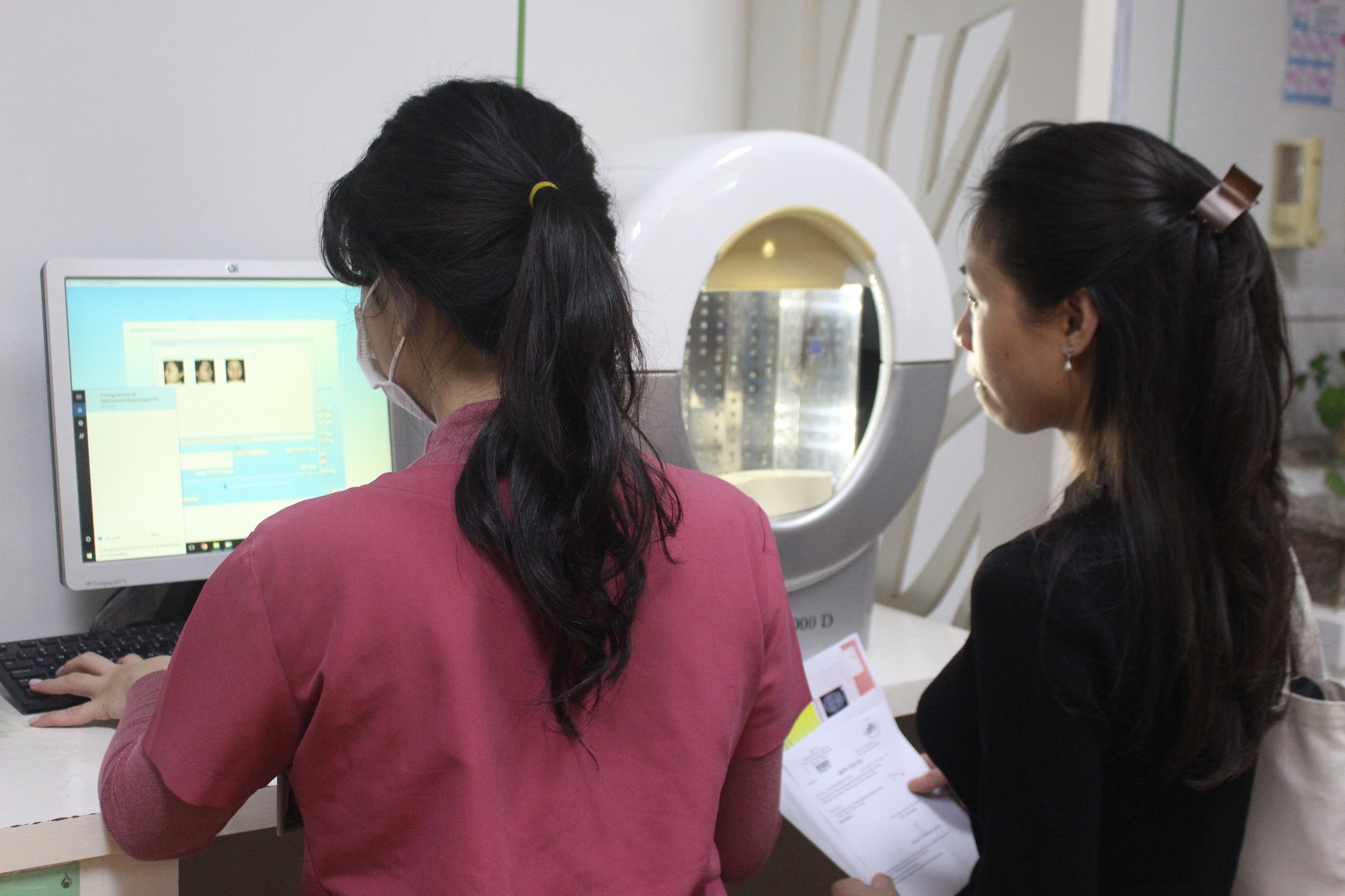
Doctors at the Central Dermatology Hospital examine a patient's skin - Photo: DUONG LIEU
Does the humid season mean skin doesn't need moisturizing?
Speaking to Tuoi Tre Online , Dr. Quach Thi Ha Giang, head of the male skin disease treatment department at the Central Dermatology Hospital, said that skin is the surface area of the body, protecting it. However, it is also the first part of the body to come into contact with the external environment.
Humidity is one of the factors affecting the skin. The ideal air humidity for maximum skin comfort is between 40-70%.
Winter and spring are periods when the weather lacks ideal humidity. During this time, air humidity can exceed 80%, affecting the skin. Humid but not cold air creates favorable conditions for skin diseases such as fungal and bacterial infections to develop.
According to Dr. Giang, regardless of the climate, it is necessary to follow skincare steps, cleanse the face with soap-free cleansing products, and remove excess sebum and dead skin cells.

"We often think that we don't need to moisturize during the humid season. However, even though the humid weather helps prevent skin dehydration and dryness, adequate moisturizing is still necessary."
This moisturizing step not only helps keep skin soft but also prevents wrinkles. However, you should only use moisturizers with a light, easily absorbed texture that don't leave your skin shiny or greasy. Avoid thick, sticky creams that can clog pores and cause your skin to produce more oil.
In addition, sunscreen should be used even when there is no sunlight. As we know, even without sunlight, the skin is still affected by UV rays," Dr. Giang advised.
Be cautious about fungal infections and hives.
Dr. Giang said that he sees many cases of fungal infections daily, affecting both the elderly and young children. The disease appears in many areas of the body, such as the face, hands, feet, and genitals (buttocks, groin).
Patients often experience symptoms such as burning, redness, blisters, and scaling… and the intense itching significantly affects their daily lives, Dr. Giang said.
"One of the most common mistakes patients with fungal infections make is self-medicating with over-the-counter anti-itch creams. Meanwhile, there are many other causes of itching."
When patients self-medicate, they are mostly sold medications containing corticosteroids, which provide very rapid relief from itching. However, in patients with fungal infections, the lesions can spread and even become secondarily infected within just 3 days.
Experts warn that skin conditions like fungal infections can recur if not treated completely. Each recurrence can be more severe than the previous one. Therefore, when noticing any unusual signs on the skin, it is crucial to seek medical attention and absolutely avoid self-treating at home.
Another common group of diseases during humid weather is allergic skin conditions, urticaria, etc. In particular, with urticaria, some patients only experience symptoms during the humid season.
"Preventing hives in humid weather is difficult. However, patients can limit risk factors. For example, allergy testing to identify the 52 allergens can help avoid those that may cause allergies," Dr. Giang advised.
Dr. Giang advises that during the humid season, it's important to create the cleanest and driest environment possible. Families can use dehumidifiers to ensure good air circulation.
Personal hygiene is especially important. Absolutely avoid wearing damp clothes. Note that for children, diapers can easily lead to fungal infections due to poor hygiene. It's crucial to keep the child dry and well-ventilated. After bathing, you can use a hairdryer, keeping it at a distance to avoid injuring the child and to help dry the genital area.
Source: https://tuoitre.vn/mua-nom-am-da-co-can-duong-am-boi-kem-chong-nang-20250215115719159.htm

























































![[Video] Sunset at Lap An Lagoon – Where the sun sets over the fishing nets](https://vphoto.vietnam.vn/thumb/1200x675/vietnam/resource/IMAGE/2026/05/31/1780192137701_beach-landscape-sea-water-nature-grass-745871-pxhere-com.jpeg)






































Comment (0)