

Every day, they pump 1.5 million cubic meters of water from the ground.
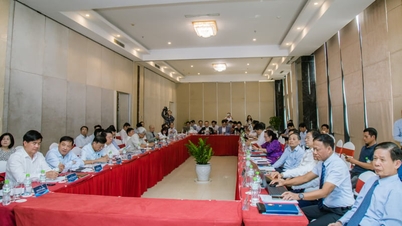
At a recent scientific conference in Dak Lak titled "Water and Life and People in the Central Highlands," Associate Professor Dr. Doan Van Canh, former Chairman of the Vietnam Hydrogeological Society, presented the current situation: the average annual rainfall in the Central Highlands is nearly 100 billion m³ /year. Of this, approximately 50 billion m³ /year creates surface runoff (rivers and streams), about 3.2 billion m³ /year infiltrates the ground, and the remainder evaporates. Of the infiltrated water, about 1.4 billion m³ /year is added to the aquifer, while the rest creates underground flow into rivers. The total water volume in the aquifers of the Central Highlands is 117-170 billion m³ .
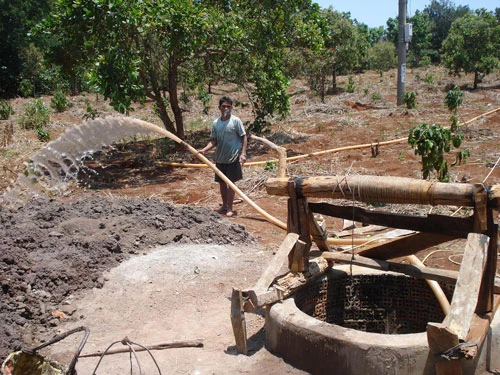
Farmers dig wells to irrigate coffee plants during the dry season in Dak Lak.
The current water demand in the Central Highlands is approximately 11.7 billion m³ /year. By 2022, groundwater extraction in the Central Highlands was estimated at around 1.5 million m³ /day. At the current rate of groundwater extraction, the exploitable water reserves could last for 60 years.
Before the 1990s, the four provinces of Kon Tum, Gia Lai , Dak Lak, and Dak Nong had 2,272 water channels with flow rates of 0.5 liters/second or more. However, by 2020, according to an assessment by the Vietnam Institute of Water Resources Science, the number and flow rate of these channels had decreased significantly, to about 40-60%, and the flow rate was only about 30-40%.
The cause is the loss of water sources; most rainwater runs off, not having enough time to seep into the ground, and there are even many months of dry season without rain. This prevents the basalt aquifer from being replenished in a timely manner while we exploit groundwater for socio-economic activities. "To retain more water in the Central Highlands, we need to protect forests, reforest barren hills and mountains, collect rainwater and surface water and channel it into surface reservoirs, and channel it into depleted aquifers so that it can be exploited and used," Dr. Canh advised.
6 challenges to water resources in the Central Highlands
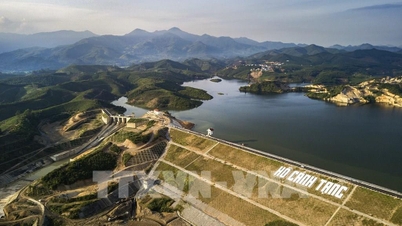
Dr. Nguyen Ngoc Ha, Deputy Director General of the National Center for Water Resources Planning and Investigation, outlined six challenges to the exploitation and use of water resources in the Central Highlands: Firstly, water resources are unevenly distributed. Secondly, the poor water storage capacity of the land, coupled with the degradation of upstream forest quality, increases the shortage of water flow during the dry season. Thirdly, population changes and shifts in economic structure and crop patterns lead to increased water exploitation, resulting in a decline in groundwater levels. Fourthly, irrigation and hydropower systems significantly impact the flow regime. Some hydropower projects divert water to other areas, causing water shortages. Fifthly, there are insufficient resources to complete the irrigation system according to the plan. Sixthly, there is a lack of systematic research related to integrated river basin planning and management.
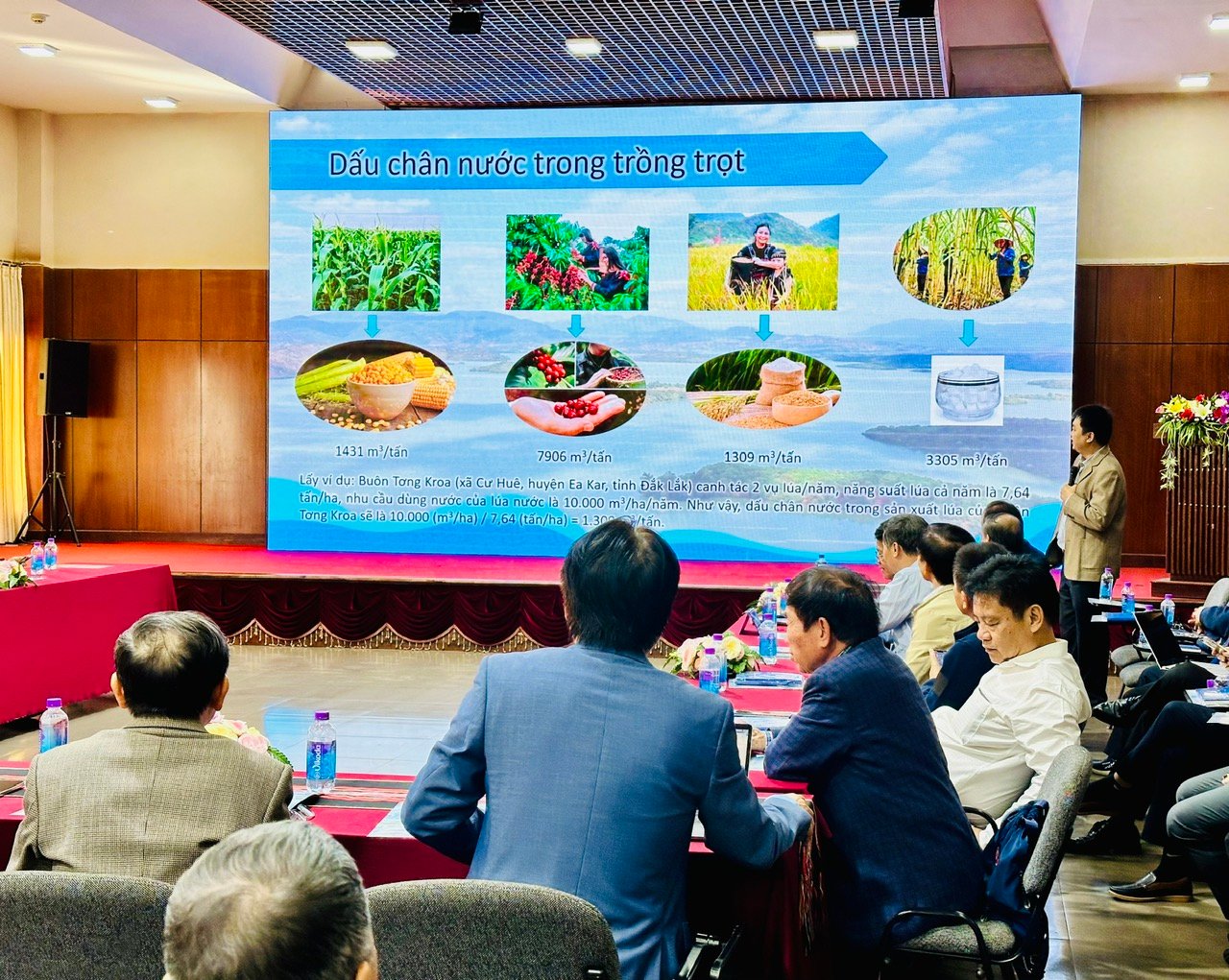
Socio-economic activities in the Central Highlands rely heavily on groundwater exploitation.
To address these challenges, Dr. Ha recommends implementing water-saving solutions in agriculture, industry, and daily life. In addition, research should be conducted on transforming production structures and cropping patterns towards high-quality, high-value commercial agriculture, suitable for water resources and adaptable to climate change. Furthermore, it is necessary to shift crop structures and production areas in water-scarce regions prone to drought to crops with low water requirements and high drought tolerance…
Dr. Tong Ngoc Thanh, Director General of the National Center for Water Resources Planning and Investigation, recommends that the efficient and sustainable exploitation and use of water resources in the Central Highlands region should be based on the spirit of the Water Resources Law recently passed by the National Assembly. The Center, in coordination with the Department of Water Resources Management (Ministry of Natural Resources and Environment), is implementing a decision support system and developing scenarios for incoming water resources. Based on this, water use plans are being developed for ministries, departments, and localities to exploit and utilize water resources in a way that ensures efficient and optimal allocation.
Source link


![[Photo] General Secretary and President To Lam presides over a meeting on preparations for the review of one year of operation of the three-tiered government system.](https://vphoto.vietnam.vn/thumb/1200x675/vietnam/resource/IMAGE/2026/06/02/1780391821195_a1-bnd-4595-9717-jpg.webp)









































































Comment (0)