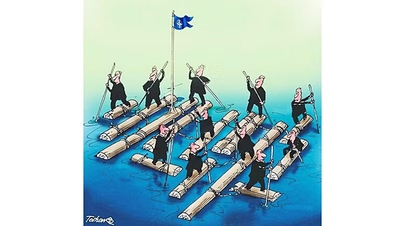
Cartoon: TOSO BORKOVIC
The 2026 NATO summit is expected to be no longer a forum for further debate and bargaining over who will spend more on protecting Europe. Speaking at the NATO Parliamentary Leaders' Meeting on June 29th in Istanbul, NATO Parliamentary Assembly President Marcos Perestrello emphasized that building a strong NATO depends not only on increased defense spending but also on smart investment strategies and coordinated implementation of the alliance's security priorities. However, as the US and its European allies continue to argue about balancing budgetary burdens with security responsibilities, NATO Deputy Secretary General Radmila Shekerinska urged members to demonstrate their commitment and readiness, with concrete plans to achieve a defense spending target equivalent to 5% of GDP.
According to NATO officials, the agenda at the Ankara Summit focused on a concrete action plan to increase defense spending to 5% of GDP by 2035; the goal of reshaping US-Europe relations in the context of the US adjusting the scale of its financial contributions and withdrawing forces, forcing European allies to increase autonomy, enhance their defense capabilities, and share finances more equitably. The summit also discussed aid commitments and future relations with Ukraine , new security challenges in the Middle East, and adjusting the NATO force model to respond quickly to potential crises.
The 2026 summit takes place against a backdrop of numerous challenges facing NATO, particularly disagreements over burden-sharing, relations with Russia , and priorities in the Middle East, exposing internal divisions and even raising questions about the alliance's long-term cohesion. Meanwhile, US-European relations are at their most tense and challenging point since World War II. The biggest sticking points are not limited to ordinary diplomatic debates, but have shifted profoundly to the very nature of the security structure and autonomy.

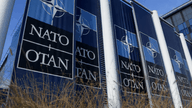

The biggest sticking points are the US's reduction of its "security umbrella" role and disagreements over Ukraine. Implementing a strategy of gradually reducing its direct military presence in Europe to redirect resources to the Indo-Pacific region and domestic security, the US has significantly reduced its strategic assets, creating a major shock to the European defense system. Regarding the Ukraine crisis, while Europe considers Russia a "direct existential threat" and strives to support the defense of Ukraine's territorial integrity, the US wants Ukraine to accept a conciliatory peace agreement, while leaving open the possibility of normalizing economic relations with Russia. This has fractured Europe's confidence in its commitment to collective defense under Article 5 of the NATO Treaty.
Beyond exerting pressure and demanding a share of the financial burden, the US also seeks to completely shift conventional defense responsibilities to Europe. European countries are striving to achieve a defense budget of 5% of GDP by 2035, but many are facing national budgetary difficulties due to the crisis. However, disagreements have emerged regarding the US's protectionist stance on the defense industry. The European Union (EU) is promoting its Readiness 2030 initiative, prioritizing domestic arms procurement to build strategic self-reliance and develop European defense corporations. The US, however, is seeking to prevent this to protect the enormous market share of American military contractors in Europe.
The two sides also fiercely debated the tens of billions of dollars in loans to Ukraine, arguing whether the weapons should be used to purchase US-made or European-made weapons. The US's unilateral policies, such as those concerning Greenland and its tariff policies, also pushed the two sides into economic confrontation, leading to reciprocal retaliatory measures.
Increased disagreements between the US and Europe are blurring the lines of the transatlantic alliance, posing a major challenge to efforts to build a "NATO 3.0" model. This goal marks the third shift in the history of the transatlantic military alliance after two periods of restructuring: the Cold War era (1949-1991), which focused entirely on deterrence and collective defense, and the post-Cold War era (1991-2020), which shifted to crisis management.
The "NATO 3.0" version aims for a radical change in the alliance's operation across three dimensions: First, a shift in the "frontline forces," with Europe primarily responsible for defense and the US mainly playing a role in nuclear deterrence and strategic logistical support. Second, a "budgetary revolution," with a 5% GDP threshold, thereby imposing stricter financial rules. Finally, an expansion of the concept of "comprehensive defense," encompassing not only traditional defense but also cybersecurity, energy, and the defense industry supply chain.



According to Nhandan.vn
Source: https://baoangiang.com.vn/muc-tieu-dinh-hinh-nato-3-0--a491297.html