Bringing Phu Quoc into every chocolate bar.
For three years, while studying restaurant and hotel management and working part-time as a bartender in Ho Chi Minh City, Huynh Thi Hang (born in 1997), residing in Phu Quoc Special Economic Zone, realized that chocolate, widely used in beverage preparation, and Vietnamese cocoa and fruits from the Mekong Delta have great potential for development into high-value tourism products, gifts, and consumer goods.
“In Ho Chi Minh City, I had the opportunity to learn a lot and realized that the knowledge I gained could be applied back in my hometown. Returning to Phu Quoc Special Economic Zone, I continued working in bartending while also conducting more in-depth research on cocoa and surveying raw material sources in Dong Thap, Vinh Long, and other localities with strong fruit production. Initially, I opened a bubble tea shop with fresh fruit flavors from the Mekong Delta, combined with making chocolate-based products. From these small experiments, my group of friends and I began experimenting with producing our first chocolate bars,” Hang shared.
Chocolate-making technology requires consistency from raw materials to the roasting, grinding, mixing, molding, and storage processes. Hang recounted that initially, the group only hoped to sell 1,000 chocolate bars during Christmas and Tet (Lunar New Year). But then, many hotels in the Phu Quoc special economic zone contacted them to place orders for tourists. Based on that market signal, the group decided to invest more systematically.
With an initial capital of approximately 500 million VND contributed by Hang and two young friends, along with additional loans from family to purchase machinery and raw materials, after three years, the Bittersweet Chocolatier brand of chocolate products is now available in many 5-star hotels in Phu Quoc, hotels throughout Vietnam, major food retail chains, e-commerce channels, and a chain of chocolate shops developed by the group themselves. Beyond production, Hang's workshop in Phu Quoc receives daily visits from tourists and students who come to experience making chocolate themselves.
Currently, Hang's team is finalizing the documentation and product testing for export to South Korea and Thailand. For Hang, the goal is not just to sell chocolate, but to incorporate the image of Phu Quoc into each product. "I am very proud that a product made from Vietnamese ingredients, developed by young people from my hometown, can become a popular souvenir for tourists. On the packaging, we put the words 'Phu Quoc Chocolate' because we want to bring Phu Quoc to the world," Hang shared.
Revitalizing traditional Vietnamese rice wine with a responsible mindset.


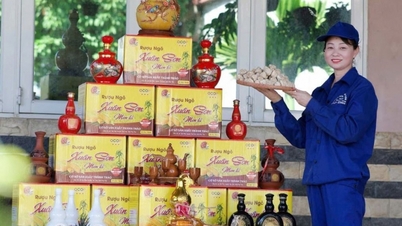
With the mindset of learning and returning home, Le Thi Cam Ha, residing in Hamlet 1, Thanh Phung Tay Village, An Minh Commune, chose a product very familiar to the Southern Vietnamese countryside: traditional rice wine made from local rice, glutinous rice, and agricultural products. Having received the Tam Ky wine brand from a friend, Ha pondered: “Vietnam has a rice-based civilization, a tropical climate, and abundant fruit resources, but we haven't fully exploited this potential to create products with unique characteristics, safety, and higher value.”

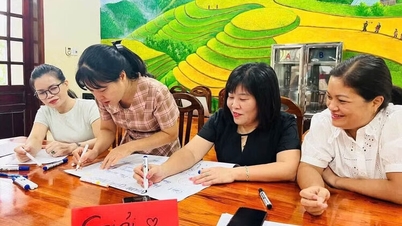
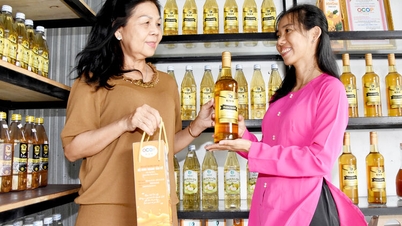
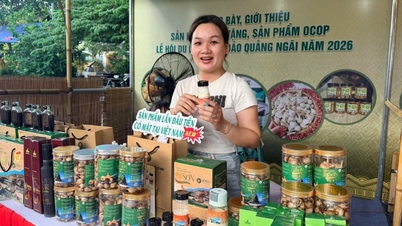
Le Thi Cam Ha (on the right) introduces wine to customers. Photo: KIEU DIEM
After 12 years working in Ho Chi Minh City in media, research projects, and the development of dried agricultural products and fresh food, Ha had the opportunity to interact with many major brands. “From that experience, I realized Vietnam’s advantage: If we utilize rice, sticky rice, fruits, and other agricultural products to create secondary products, this could be a way to increase the value of agricultural products, open up more markets for farmers, and create local products with the potential to reach a wider market,” Ha shared.
Tam Ky Pineapple Wine has been certified as a 3-star OCOP product and is currently undergoing a refresh in both appearance and quality to meet the growing demands of the market and consumers. In addition, the Tam Ky wine brand also offers other products including rice wine, cloudy glutinous rice wine, black glutinous rice wine, jackfruit wine, and guava wine. These products are made from rice and glutinous rice, fermented and distilled using traditional methods, with an alcohol content of approximately 22-25%.
Given the current market situation where many types of liquor of unknown origin have appeared, posing potential safety risks, Ha believes that preserving the traditional craft must start with quality, transparency, and responsibility towards consumers. "I want to produce a safer, more refined line of homemade liquor so that consumers have more reliable choices. Beyond that, I want to spread a culture of healthy, civilized, and responsible liquor consumption," Ha said.
Returning to her hometown, Ha didn't choose to handle the entire process herself, but instead partnered with traditional local distilleries. If well-organized, this model could provide distillers with additional outlets, while the Tam Ky brand focuses on quality control, product improvement, and market expansion. At the end of June 2026, Ha signed a memorandum of understanding to distribute Tam Ky liquor through major distribution systems organized by the An Giang Provincial Department of Industry and Trade in collaboration with the Ho Chi Minh City Department of Industry and Trade. With her knowledge and skills in business management, human resource management, and brand development, Ha is confident in creating a product deeply rooted in agricultural culture.



Hang and Ha are young people who returned to their hometowns to start businesses that add value to agricultural products. They bring their knowledge, urban experience, market skills, and service-oriented mindset to their products. After deep processing, telling the right product story, controlling quality, and building a brand, local produce can become goods, gifts, and products that reflect the local identity.
KIEU DIEM
Source: https://baoangiang.com.vn/roi-pho-ve-que-khoi-nghiep-a491249.html