

Along the west coast of India, where the Arabian Sea laps against bustling harbors day and night, Mumbai emerges as a vibrant paradox: both chaotic and captivating, both harsh and hopeful.
Mumbai isn't a city that immediately appeals to visitors. Crowded streets, blaring horns, throngs of people on local trains – all create a suffocatingly fast-paced life. But upon closer examination, one realizes that this very overload is the city's heartbeat, the way Mumbai operates, survives, and sustains millions of people. In the city center, the Gateway of India stands silently overlooking the sea, a witness to colonial history and constant change. From here, a simple turn of the door takes you into a completely different world : bustling markets, street food stalls emitting the pungent aroma of spices, skyscrapers jutting alongside slums.

Mumbai is not perfect, which makes it all the more vibrant and unforgettable for visitors from afar. Photo: NHAT PHAN
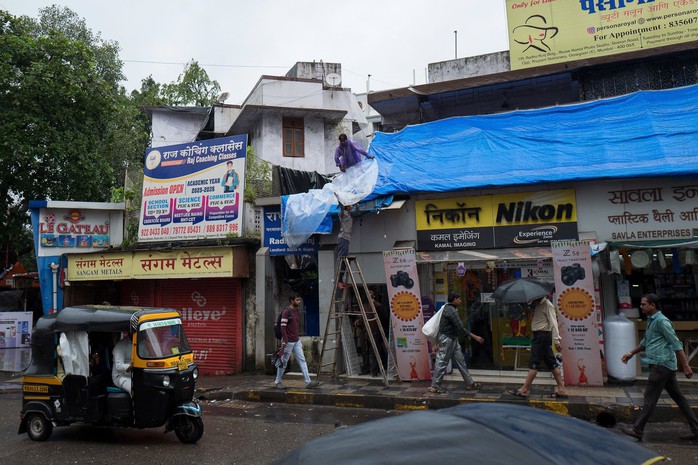
Mumbai is one of the world's most populous cities with a population of over 22 million people. Photo: NHAT PHAN
When mentioning Mumbai, it's impossible not to mention Bollywood – the famous dream-making machine of the film industry. Every day, countless young people from all over the world flock here with the goal of becoming stars.
Some achieve spectacular success, while countless dreams fade away in silence. Mumbai offers no promises, yet opens its doors to possibilities. A stark contrast to the city is the Dharavi district – considered one of Asia's largest slums. But Dharavi is more than just poverty. It's a vibrant ecosystem of labor, creativity, and survival. Recycling workshops and tiny production facilities operate nonstop, creating an incredibly thriving informal economy .

Many call Mumbai the "city that never sleeps," but perhaps it's more accurate to say it's a place where dreams rarely rest. Photo: NHAT PHAN
What makes Mumbai so strangely alluring probably lies in its contrasts. On one side are skyscrapers and glamorous financial districts; on the other are cramped, makeshift houses.
Everything seemed to exist, intertwined, inseparable. And then, as night fell, Mumbai donned a different appearance. Yellow lights stretched along the coastal roads, cafes lit up, and night trains carried people back and forth. Our short stay didn't give us the opportunity to explore in greater depth, but it was enough to evoke the feeling that the city, and each person, each corner, holds a story within it – and Mumbai never rejects any hope of progress.
Source: https://nld.com.vn/mumbai-giac-mo-va-thuc-tai-196260411174533293.htm


![[Image] Nearly 125,000 Hanoi students completed the Literature exam for the 10th grade entrance exam.](https://vphoto.vietnam.vn/thumb/1200x675/vietnam/resource/IMAGE/2026/05/30/1780117233041_ndo_br_thiet-ke-chua-co-ten-2-png.webp)














![[Video] The timeless beauty of the century-old Capital Railway Station](https://vphoto.vietnam.vn/thumb/402x226/vietnam/resource/IMAGE/2026/05/30/1780132528002_1080-jpg.webp)




































































Comment (0)