

 |
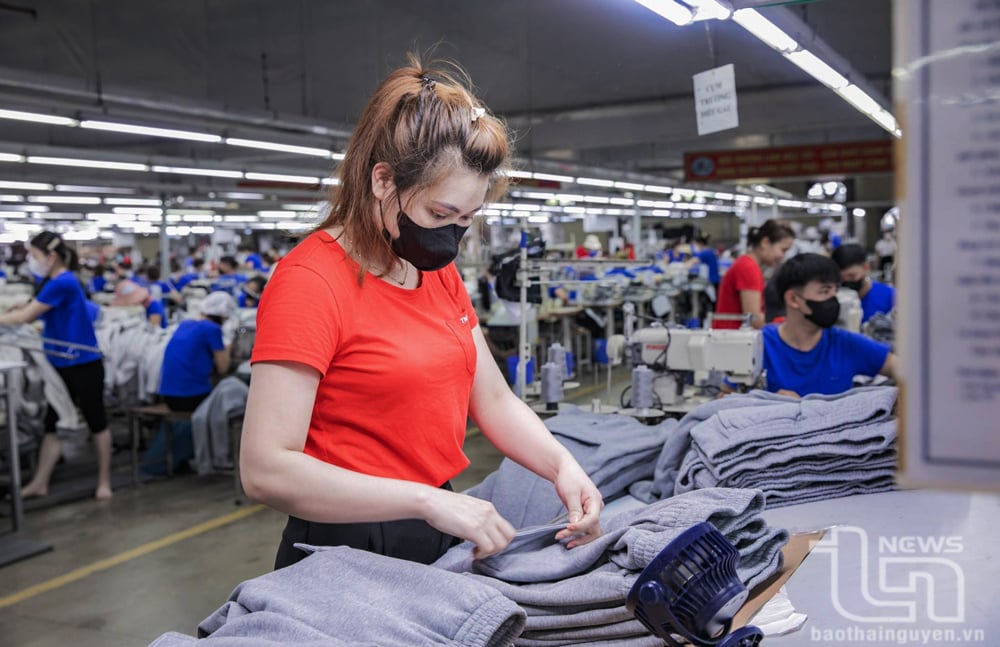
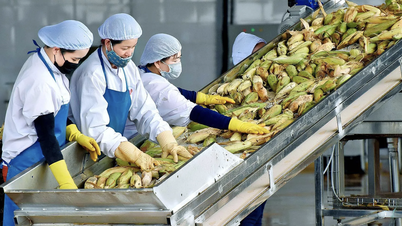
| Garment exports are one of the sectors heavily impacted by the US's retaliatory tariff policy. (In the photo: Garment manufacturing for export at TNG Investment and Trading Joint Stock Company.) |
Market diversification
The US market currently accounts for over 30% of the export turnover of businesses in Thai Nguyen province, with key products such as: garments, electronics (smartphones, tablets), auto parts, motorbikes, industrial machinery, etc. With the application of the new 46% tariff in the US market, an increase of 10-22% compared to the current rate (depending on the product type), businesses face the risk of losing the US market to competitors, especially those from India and Indonesia.
Furthermore, the US imposing high tariffs on all markets could increase inflation, affecting consumer spending, and consequently impacting Vietnam's exports in general, and those of Thai Nguyen province in particular.
From another perspective, Mr. Duong Van Thai, Chairman of the Trade Union of Industrial Parks in the province, commented: Currently, businesses in the province's industrial parks are providing employment for nearly 90,000 workers, with incomes ranging from 9-15 million VND per person per month. The majority of these businesses export to the US. However, with the 46% tax on exports from Vietnam, export costs have increased significantly. These corporations may consider shifting their investments to other countries with better trade preferences, potentially leading to capital withdrawal or cessation of investment expansion in the province. This would reduce job opportunities, income, consumption, and budget revenue.
Against this backdrop, many export businesses in the province have flexibly diversified their export markets and strived to lower production costs to increase competitiveness. For example, TNG Investment and Trading Joint Stock Company - a unit specializing in exporting garment products to the US market (accounting for 30% of revenue) - Mr. Nguyen Van Thoi, Chairman of the Board of Directors, shared: In 2025, TNG aims for a revenue of VND 7,736 billion (a 44% increase compared to the previous year). Of which, export turnover will reach USD 358 million. Currently, the US tariff increase does not significantly affect the company's production and business activities. This is because from the beginning of the year, TNG has made efforts to find and establish garment orders until the end of the second quarter of 2025. Regarding the information about the US imposing retaliatory tariffs, we have worked with all our US customers who import goods from TNG, and they all responded that they will continue to purchase goods from TNG.
From now until the end of the year, TNG aims to ensure that the market share of its export markets does not exceed 30%, distributing it evenly to avoid risks in case of fluctuations. For example, in the US export market, by the time orders are placed in July 2025, TNG will only reach 26-30%.
Similarly, at several other garment export businesses, such as Thanh Hung Garment Joint Stock Company and TDT Investment and Development Joint Stock Company, we observed that production remained stable, maintaining their growth targets for the entire year. Accordingly, these companies are also actively expanding their export markets to Russia, South Korea, and several other Asian countries to reduce their dependence on the US.
Meanwhile, at Minh Bach Co., Ltd. (in Song Cong City) - specializing in exporting forklift counterweights, Ms. Trinh Thi Huong, Deputy Director of the company, shared: On average, the company exports 2,000-2,500 tons of products to the US market each month. If the US increases the tariff to 46%, Minh Bach's products will not be able to compete because there will be no profit. Currently, we have temporarily suspended export shipments for April 2025 to await the results of negotiations between Vietnam and the US. If the tariff remains unchanged, the company will have to negotiate with its partners to receive support and assistance regarding production costs.
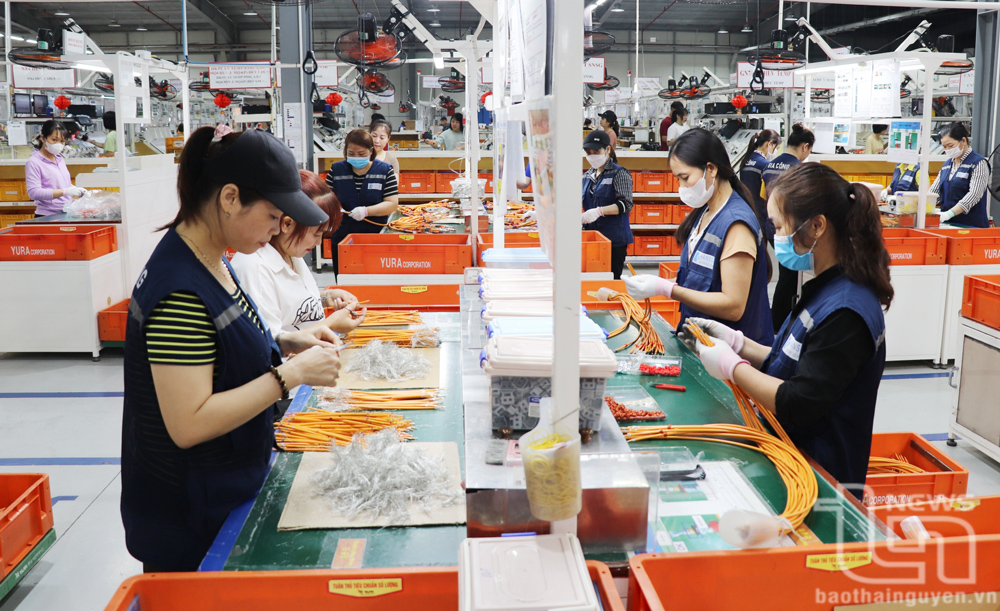 |
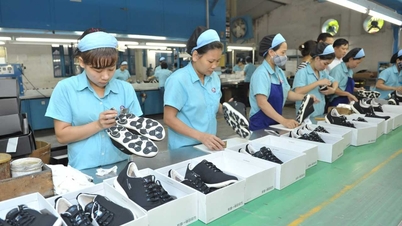
| Production of high-voltage wiring harnesses for automobiles at Hansol Harness Vina Co., Ltd. (Song Cong II Industrial Park). Photo: Provided. |
Continue negotiations and support businesses.
The reality is that the US's imposition of a 46% retaliatory tariff on Vietnamese goods is primarily aimed at reducing the trade deficit. Furthermore, Vietnamese goods exported to the US mainly compete with third countries, not directly with US businesses in the US market. Therefore, along with the businesses' own efforts, the government is striving to negotiate with the US to reduce the tariff rate, thereby supporting businesses.
On the evening of April 7th, Prime Minister Pham Minh Chinh chaired a meeting with ministries and agencies to update on the latest developments and continue discussions on solutions following the US announcement of retaliatory tariffs on goods from several countries, including Vietnam. This was the third meeting of government leaders with ministries and agencies in the past five days.
At the meeting, Prime Minister Pham Minh Chinh stated that Vietnam requested the US to postpone the imposition of tariffs on Vietnam for at least 45 days to allow for negotiations, preparation, and a transition period. This would also allow Vietnam to approach and negotiate with the US side to reach a bilateral agreement, moving towards a sustainable trade balance that benefits both sides and does not affect Vietnam's international commitments.
Earlier (on the night of April 5th), immediately after the meeting of the Government Standing Committee, Deputy Prime Minister Ho Duc Phoc departed for the United States to negotiate a 0% tariff reduction, embodying the principle of "adapting to changing circumstances while maintaining core principles." The government's swift response is expected to yield more favorable negotiation results for Vietnam, given the very high tariffs announced by the US government. The business community also hopes to receive positive information to plan appropriate responses.
According to experts, along with negotiating tariff adjustments, ministries and agencies need to continue effectively implementing cooperation mechanisms and bilateral agreements with the United States; specifically, increasing imports of certain key US products, in line with Vietnam's needs, thereby conveying a positive message and demonstrating Vietnam's readiness to adjust the trade balance towards a balanced, harmonious, and mutually beneficial direction.
Regarding export businesses in general, experts recommend strengthening information gathering and updating to adjust business strategies and respond promptly; strictly adhering to regulations on origin and labor safety to effectively utilize the free trade agreements Vietnam has signed in order to diversify export markets; and considering the possibility of negotiating with importers to share the burden of reciprocal taxes and support businesses in overcoming this difficult period.
| - On April 2nd (US time), US President Donald Trump announced countervailing duties effective April 9th, 2025, which will raise the tariff rate on Vietnamese goods exported to the US to 46%. - In 2025, Thai Nguyen province aims to achieve an export value of over 30 billion USD (a 9% increase compared to the previous year). As of the end of March, import and export turnover reached 14.7 billion USD. |
Source: https://baothainguyen.vn/kinh-te/202504/my-ap-thue-doi-ung-46doanh-nghiep-tim-cach-thich-ung-b430f68/


![[Photo] Prime Minister Pham Minh Chinh presides over a meeting on private sector economic development.](/_next/image?url=https%3A%2F%2Fvphoto.vietnam.vn%2Fthumb%2F1200x675%2Fvietnam%2Fresource%2FIMAGE%2F2025%2F12%2F20%2F1766237501876_thiet-ke-chua-co-ten-40-png.webp&w=3840&q=75)
![[Photo] Prime Minister Pham Minh Chinh presides over the conference announcing the establishment of the International Finance Centre in Vietnam.](/_next/image?url=https%3A%2F%2Fvphoto.vietnam.vn%2Fthumb%2F1200x675%2Fvietnam%2Fresource%2FIMAGE%2F2025%2F12%2F21%2F1766309817714_ndo_br_dsc-3400-jpg.webp&w=3840&q=75)


![[Photo] Prime Minister Pham Minh Chinh presides over the conference announcing the establishment of the International Finance Centre in Vietnam.](https://vphoto.vietnam.vn/thumb/402x226/vietnam/resource/IMAGE/2025/12/21/1766309817714_ndo_br_dsc-3400-jpg.webp)







































































Comment (0)