

On June 1st, according to The Times of Israel, Iranian Foreign Ministry spokesman Esmaeil Baghaei affirmed Tehran's right to retaliate against any attack targeting the country, including targeting military bases or assets used against Iran. According to Baghaei, countries in the region have a responsibility not to allow their territories to become launching pads for military operations against Tehran.
The statement comes amid criticism from the European Union (EU) of attacks that the West attributes to Iran against Kuwait. Tehran rejects this view, arguing that condemning Iran while ignoring US military activities is a manifestation of "double standards" in the approach to regional security.

The latest developments indicate that the spiral of military confrontation between the US and Iran is at risk of escalating again. The US Central Command (CENTCOM) confirmed conducting airstrikes targeting Iranian radar facilities and drone control centers in Goruk and Qeshm Island on May 30th and 31st. Washington stated that this was an act of "self-defense," carried out after Iran shot down a US MQ-1 drone operating in international waters. According to CENTCOM, the airstrikes destroyed an air defense system, one ground control station, and two Iranian attack drones.
In response, Iran's Islamic Revolutionary Guard Corps (IRGC) claimed to have attacked an air base used by the U.S. to conduct military operations against Iranian territory. While not publicly disclosing the specific location, the IRGC's statement came almost simultaneously with news that Kuwait had activated its air defenses to intercept missiles and drones.
According to several international sources, the US Ali Al Salem base in Kuwait may have been the target of the latest attack. If confirmed, this would be the second time in just one week that US military facilities in Kuwait have been targeted by Iran. Some reports also suggest the attack damaged two MQ-9 Reaper drones, reconnaissance and attack assets worth tens of millions of dollars.
These developments reflect the reality that the current ceasefire is insufficient to reduce tensions between the two sides. On the contrary, limited-scale exchanges of fire are creating a dangerous state of confrontation, keeping the risk of miscalculation ever-present.
Notably, the reciprocal military actions by the US and Iran continue alongside the already fragile, even stalled, negotiation process. US President Donald Trump has stated that Iran genuinely wants an agreement, but the negotiations are hampered by political disputes and disagreements over Tehran's nuclear program.
Meanwhile, according to The New York Times and Axios, US President Donald Trump has presented Iran with a new, tougher peace proposal than previous versions. He is believed to have altered some of the proposals, although the specific details remain unclear. According to US officials, President Trump has insisted on using tougher language regarding Iran's nuclear commitments and reopening the Strait of Hormuz.
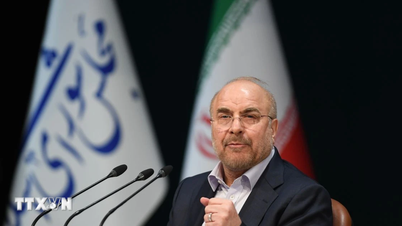
On the Iranian side, Parliament Speaker Mohammad Bagher Ghalibaf declared that Tehran would not accept any agreement unless its core interests were fully guaranteed. This is seen as a message indicating that Iran is not ready to concede to tougher demands from Washington, particularly regarding the nuclear issue and control of the strategic Hormuz shipping lane.
Observers believe the gap between the two countries remains very large. While the US wants stricter commitments regarding Iran's nuclear program and guarantees of freedom of navigation in the Strait of Hormuz, Tehran demands the release of frozen assets, the lifting of economic pressure, and respect for its right to develop nuclear weapons for peaceful purposes.
Amidst difficult negotiations, the ongoing airstrikes, missile attacks, and military activities by the relevant forces further dim the prospects of reaching a comprehensive agreement between Washington and Tehran.
Source: https://baolangson.vn/my-iran-dam-phan-kho-khan-giua-nhung-cang-thang-5094175.html





![[Photo] General Secretary and President To Lam presides over a meeting on preparations for the review of one year of operation of the three-tiered government system.](https://vphoto.vietnam.vn/thumb/1200x675/vietnam/resource/IMAGE/2026/06/02/1780391821195_a1-bnd-4595-9717-jpg.webp)









































































Comment (0)