

In the context of modern education , teaching English from primary school is a sound policy aimed at reforming foreign language teaching and learning, meeting the demands of international integration. Learning English early helps develop lifelong learning skills, work capabilities, and the ability to participate in cultural and social activities. Furthermore, it lays the foundation for continued English learning at higher levels of education, as well as learning other languages in the future.
However, the reality today is that most primary school English teachers are graduates of English pedagogy programs with curricula and methods designed for secondary school students. This leads to many primary school English teachers often feeling confused and struggling to find appropriate methods for their students. Furthermore, understanding the psychology and development of primary school children is a major challenge, as children at this age typically require more engaging and interesting learning methods. A lack of suitable teaching resources and tools, such as picture books, educational games, and interactive activities, also reduces the effectiveness of lessons.
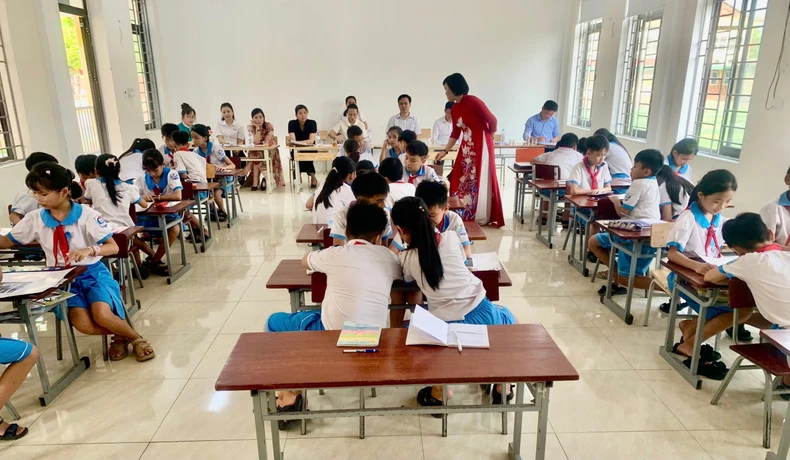 |
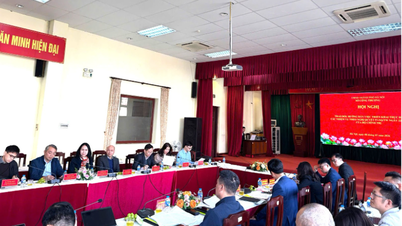
A professional development and training session for teachers. |
Given the above reality, improving the quality of English teaching in primary schools is an essential need, requiring practical solutions from management levels, educational institutions, and the entire teaching staff. For management levels and educational institutions, an important solution is to organize training courses, workshops, and in-depth training for teachers on methods of teaching English to primary school students, with a focus on teaching techniques, classroom management, and understanding child psychology.
Furthermore, it is necessary to develop training and capacity-building plans specifically for English teachers at the primary school level as soon as they are recruited. Another important solution is to focus on developing teaching resources and equipment. Providing resources and equipment suitable for primary school age is essential, including picture books, educational games, and interactive activities. Educational institutions, training facilities, and book publishers should support teachers by providing or encouraging the use of modern learning resources, teaching materials, and teaching tools.
Next, it is necessary to effectively utilize the role of core teaching staff to organize experience-sharing sessions and model lessons on effective teaching methods. Furthermore, providing regular support and advice to teachers to address problems arising during the teaching process is a crucial solution. Therefore, establishing teacher support groups or experience-sharing sessions among primary school English teachers is essential to share teaching strategies and resolve difficulties.
Finally, it is necessary to establish an evaluation and feedback system to monitor student progress and the effectiveness of teachers' teaching methods. Through this, diverse assessment tools and feedback from students, parents, and colleagues can be used to adjust and improve teaching methods.
For teachers directly involved in teaching, it is essential to first pay attention to the psychological and physiological developmental characteristics of children. Elementary school children typically have short attention spans and are easily distracted; therefore, short, engaging, and frequently changing learning activities are necessary to maintain their attention and motivation. Children at this age generally have better cognitive and recall abilities through hands-on experience and interactive activities rather than theory, so learning vocabulary and grammatical structures through games and interactive activities is often more effective.
Regarding teaching methods, learning through play is the most effective approach, as children learn best through fun games and activities. Using educational games, songs, and role-playing activities helps children learn vocabulary and grammatical structures naturally and enjoyably. Teaching vocabulary through actions (Total Physical Response - TPR) is also very helpful, using actions and gestures to help children learn vocabulary and sentence structures. Storytelling and using pictures help children understand the meaning of vocabulary and sentence structures in context, with picture books and short stories being suitable tools.
Teaching techniques also need to be emphasized, with creating a comfortable learning environment and using engaging learning resources being crucial. The learning environment should encourage children's participation and creativity, with classrooms decorated in an interesting way and learning resources such as flashcards, educational toys, and interactive tools. Using media such as animated videos or learning apps can make learning more appealing. Communication and classroom management skills also play a vital role. Teachers should use simple and clear language when communicating with children, ensuring instructions and requests are easy to understand and can be implemented immediately. Effective classroom management through establishing clear rules and positive encouragement also helps maintain order and create a positive learning environment.
Assessment and feedback should be continuous and proactive. Evaluate student progress through activities and games rather than solely through written tests, and provide constructive feedback to help children feel confident and motivated in their learning process. Motivating and encouraging participation and rewarding efforts, as well as connecting learning to real-world situations, is crucial.
Implementing the above solutions will not only improve the quality of teaching but also create a solid foundation for children's future English learning.
Source: https://nhandan.vn/nang-cao-chat-luong-day-hoc-tieng-anh-o-cap-tieu-hoc-post823942.html































































































Comment (0)