|
| Severe landslides in many mountainous communes are making disaster response increasingly difficult. |
Natural disasters are becoming increasingly severe.
Highlanders have traditionally been accustomed to identifying risks by observing the color of stream water, listening to the movement of the earth, or monitoring cracks in the mountains. However, the series of natural disasters at the end of 2025 has shattered this old response mindset, making disasters increasingly severe and unpredictable. Statistics for the entire province in 2025 recorded 23 natural disaster events, resulting in 17 deaths and 16 injuries; more than 30,600 houses were flooded or damaged by landslides requiring emergency relocation; nearly 139 km of roads were damaged; and more than 9,300 hectares of rice and crops were destroyed. Total economic losses exceeded 5,000 billion VND. In particular, the heavy rains and floods caused by the remnants of Typhoon No. 10 in October 2025 alone triggered widespread emergency response in almost all localities.
These are devastating figures, unprecedented in decades, reflecting the immense pressure on the state management system, especially at the local level. For example, in Na Hang commune, when the storm's aftermath combined with the Tuyen Quang hydroelectric dam opening its eight bottom sluice gates to their maximum capacity, the water level in the downstream Gam River rose rapidly overnight, completely isolating villages 2, 3, 4, 5, 6, 7, Ngoi Ne, and Tan Lap; the Tat Luong bridge and the iron bridge across the Gam River were severely damaged. The damage amounted to over 550 billion VND. With vital transportation routes cut off, the province's specialized rescue forces could not immediately reach the area; amidst the life-or-death situation, the first to arrive were commune officials, local police, and militia. However, sometimes the leadership and management were disorganized, and the lack of rescue equipment and personnel made rescue and disaster relief efforts extremely difficult. These issues were addressed by the leaders of Na Hang commune, who held a debriefing meeting immediately after the flood to proactively develop plans for the future.
In many localities, the biggest challenge is the rapid weather changes, with heavy rainfall concentrated in short periods, creating extreme and unusual weather conditions. Meanwhile, the infrastructure and equipment are insufficient to respond promptly. Mr. Tai Minh Cuong, Vice Chairman of the People's Committee of Xin Man commune, shared: "Even areas previously assessed as safe and thoroughly surveyed still experience serious landslides; sunny days can turn into flash floods that flatten villages at night. Our old experience, based on intuition and feeling, has completely reached its limit in the face of the severity of global climate change."
 |
| Maps warning of landslide risk locations have been installed in the villages of Hoang Su Phi commune, helping people proactively access information and take preventive measures. |
New operational capabilities
Currently, communes have been transferred 12 key disaster prevention and control tasks from the former district level, along with significant authority over construction and repair of infrastructure, distribution of relief supplies, etc. This is both a solution to increase proactiveness and shorten response time, but it also places a very heavy legal responsibility on the commune level. Communes are compelled to become independent, on-site command and control centers. This also requires new changes in management thinking, shifting from passive flood response to proactive disaster risk management early and from afar.
After a night of rain, Mr. Nguyen Cao Cuong, from Thieng Khum Thuong village, Hoang Su Phi commune, went to his garden to check the rain gauge. He recorded the data and updated it to the coordinates on the landslide risk warning map. This is one of the activities of the project "Building a landslide risk map due to rain, supporting early warning to the community" being implemented by Hoang Su Phi commune. Data from 14 rain gauges installed in the villages is digitized and updated via real-time coordinates onto the software system, clearly identifying each dangerous coordinate, safe evacuation location, and rescue routes in case of isolation. Comrade Lu Van Loi, Vice Chairman of the People's Committee of Hoang Su Phi commune, shared: "With just a tap on the phone, information on rainfall and risk areas appears immediately. Warning technology is no longer located in distant forecasting centers but has gone straight into the pockets of farmers, helping them proactively anticipate natural disasters. This is also an important scientific basis and in-depth data for the locality to proactively replan the population, develop sustainable infrastructure, and mitigate natural disaster risks."
In disaster prevention and control, the speed of information transmission and the ability to respond quickly are decisive factors in ensuring the safety of communities when isolated. In the communes of Xin Man, Du Gia, Chiem Hoa, Son Duong, etc., social media and digital platforms have become the official channels for disaster prevention and control. Comrade Tai Minh Cuong, Vice Chairman of the People's Committee of Xin Man commune, explained: "Due to the large area after the merger, the risk of landslides is high, so the commune has directed the placement of fixed warning signs at vulnerable points. Whenever the meteorological agency issues a disaster warning, the commune immediately translates the rain radar data into concise information and sends it to the Zalo groups of the villages. Within minutes, the village head and Party branch secretary receive and disseminate the information to each household, no longer relying entirely on loudspeakers or emergency calls in the middle of the night."
Thanks to the smooth flow of information, people's response habits have completely changed. Standing in front of his house, which has been reinforced with large wooden beams and sturdy steel wire, Mr. Va Chua Dinh, from Phinh Ty B village, Du Gia commune, shared: "At the beginning of the rainy season, the phones of all family members are always on alert to monitor announcements from the village. When we see a danger alert, we proactively evacuate immediately instead of waiting for the water to rise."
 |
| Authorities in Can Ty commune are helping residents overcome the consequences of the storm. |


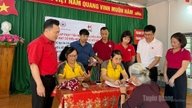
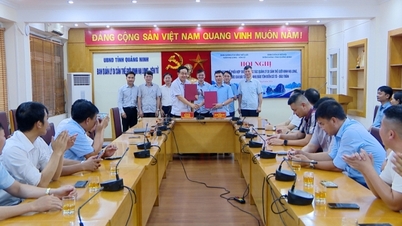
In Ha Giang 1 ward, the "great flood" of 2025 served as a painful lesson for the ward's operational capacity, with 2,700 households experiencing severe flooding and 1,900 households suffering heavy losses. Entering the 2026 rainy season, the ward government has issued a comprehensive disaster response and search and rescue plan, detailing emergency scenarios such as thunderstorms, hailstorms, landslides, flash floods, and localized flooding based on the "four on-the-spot" principle. The ward has strengthened its rapid response force, clearly defining coordination mechanisms, activating 40 ward police officers, a 250-person mobile militia platoon, and a 10-person medical team with sufficient medicine and stretchers. Simultaneously, an emergency coordination agreement was signed with key units stationed in the area, such as Regiment 877, Companies 19, 20, and 27, and the Provincial Border Guard Training Battalion. The problem of the previous year's shortage of specialized equipment was thoroughly resolved by mobilizing all resources and compiling a list of trucks, excavators, and bulldozers from households and businesses in the area that were ready to be requisitioned. Currently, in addition to distributing helmets, boots, flashlights, and life jackets to the Military Command, the ward is finalizing a supply contract to hand over a system of rafts and composite boats to vulnerable residential areas before the peak of the rainy season.
Along with equipment, strengthening the command organization and investing in infrastructure are prerequisites for maintaining stable operational capacity. Currently, the province has deployed and appointed 124 regular army officers to work at the Military Command Boards of communes and wards... Simultaneously, the "proactive and forward-thinking" strategy is further affirmed by the simultaneous repair and upgrading of irrigation infrastructure and large reservoirs and dams to enhance water storage and regulation capacity. For example, the Ngoi La irrigation reservoir in Minh Xuan ward and Yen Son commune has completed the upgrading of the entire head dam, spillway, and water conduit, ensuring safety for the downstream area. The Cao Ngoi reservoir in Truong Sinh commune is being urgently completed by construction units, including the concrete dam, canal, and control building, to be put into operation and provide water for more than 5,200 households before the flood season.
The 2026 rainy and stormy season has begun with unpredictable forecasts, but with a new, more scientific, proactive, and standardized operational capacity, local authorities have sufficient leverage to stay one step ahead of natural disasters, fighting every hour and every minute to protect the lives and livelihoods of the people.
Text and photos: Bien Luan
Taking proactive measures against the threat of landslides.
 |
| Comrade Duong Viet Hung Chairman of the People's Committee of Pà Vầy Sủ Commune |
Currently, the situation of geological landslides in Pa Vay Su commune is becoming increasingly complex. In the central area of the commune alone, 16 landslides of varying sizes have been recorded, 9 of which are still active and pose a high risk to the safety of residents. We have directed a comprehensive review of all areas at risk of landslides, developed response plans according to risk levels, and assigned officials to monitor the situation regularly. Simultaneously, we have established civil defense task forces in all 34 villages to disseminate information, issue warnings, assist in the evacuation of residents, and handle emergency situations when natural disasters occur. In addition, we are strengthening the use of online communication groups between the commune and villages, and between villages and residents, to promptly transmit warning information and ensure that all unusual developments are detected and addressed as quickly as possible. Along with immediate response measures, the locality is focusing on reviewing households in high-risk areas and gradually relocating them to safe housing.
Deploy forces proactively and be ready to respond on the spot.
 |
| Lieutenant Colonel Chau Ngoc Anh Chief of Police of Thai Binh Commune |
Operating under a two-tiered government model, the commune level is currently the central command center and the frontline for directly handling emergency situations.
Playing a core role, the commune police organize close coordination with militia, medical personnel, and security forces in each village and hamlet. Rescue and evacuation scenarios are always meticulously prepared. Following the "four on-the-spot" principle: on-the-spot command, on-the-spot forces, on-the-spot equipment and supplies, and on-the-spot logistics, the commune police force can reach hotspots as quickly as possible. This seamless coordination at the grassroots level is the decisive factor in ensuring the absolute safety of the people in conditions of isolation.
From loss, a yearning for peace emerges.


 |
| Mr. Vang Mi Po Ma Lau A village, Lung Cu commune |
On September 30, 2025, a landslide claimed the lives of my parents and two children, completely destroying our home. In the midst of this tragedy, the support and compassion from all levels of government, relevant agencies, and the community gave my wife and me the strength to gradually rebuild our lives.
From the loss of my own family, I have come to deeply understand the importance of disaster prevention. I hope that areas at risk of landslides will be regularly surveyed before each rainy season; that households living in dangerous areas will be specifically identified and warned so they can proactively take preventive measures. In addition, evacuation plans need to be developed in detail for each village, ensuring that in an emergency, people know where to go, what to do, and how to receive support.
Natural disasters are something no one wants, but with early preparation, much of the damage can be mitigated. My greatest wish is that no other family will have to endure the pain my family has experienced.
Source: https://baotuyenquang.com.vn/xa-hoi/202606/nang-cao-nang-luc-ung-pho-truoc-thien-tai-da20d8e/
![[Photo] Prime Minister Le Minh Hung presides over the thematic session on promoting science and technology development and innovation.](https://vphoto.vietnam.vn/thumb/1200x675/vietnam/resource/IMAGE/2026/06/23/1782207872934_ndo_br_dsc-1724-jpg.webp)