

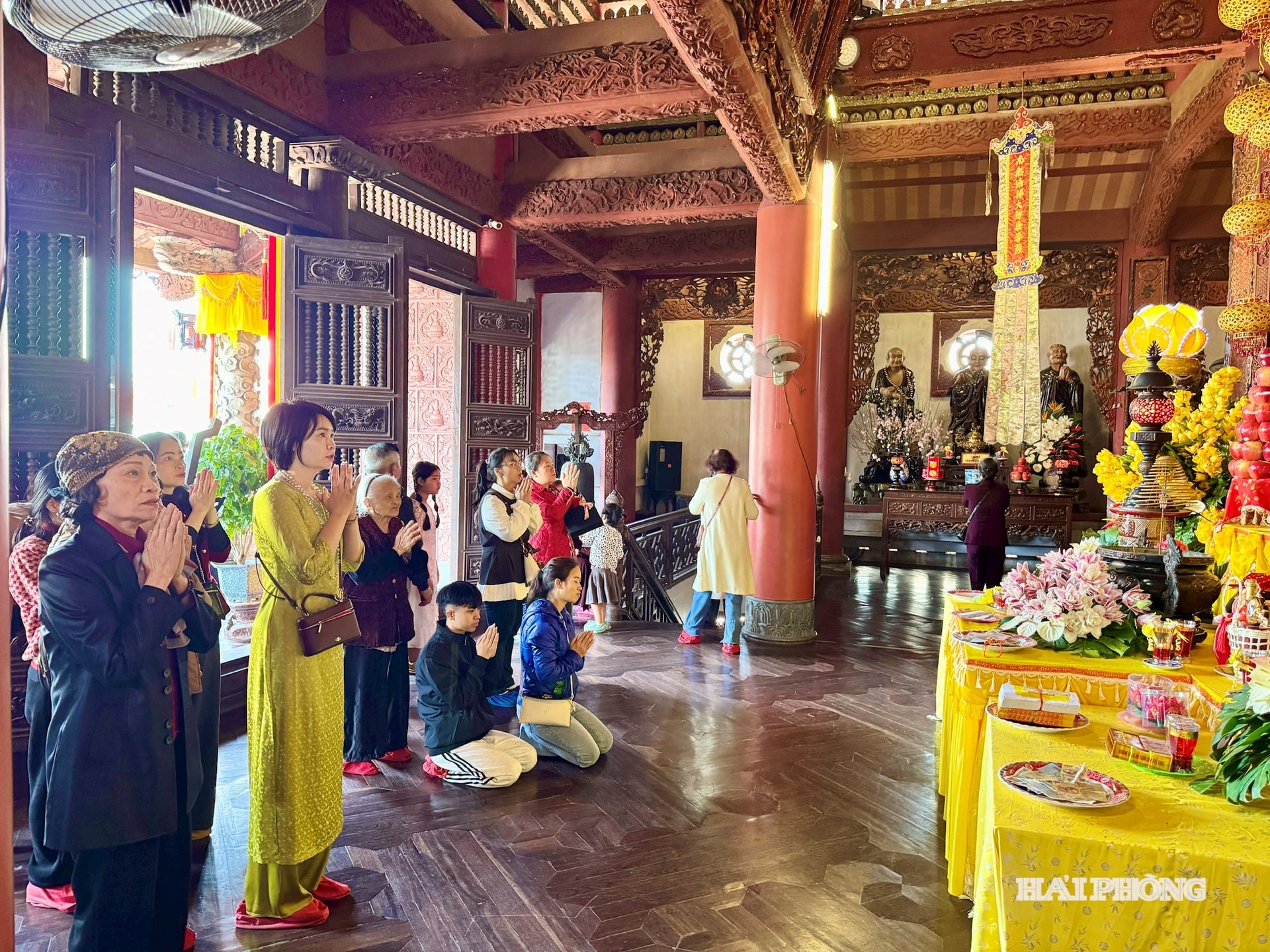
Seeking refuge in sacred places.
Amidst the hustle and bustle of modern life, the custom of visiting temples at the beginning of spring is preserved by the people of the port city as a beautiful cultural tradition and a spiritual anchor during the sacred transition between the old and new year.
Located in a small alley on Le Lai Street, Ngo Quyen Ward, the Red Pagoda has long been famous for its sacredness, especially for its massive statue of Shakyamuni Buddha made of jackfruit wood. During the first three days of the Lunar New Year, the pagoda is crowded with people but still maintains its solemn atmosphere.
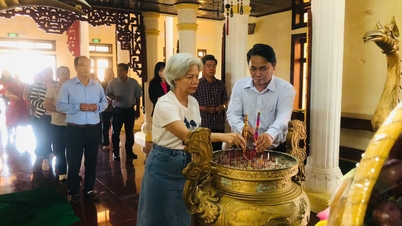
Ms. Le Thi Khuong, 78 years old, residing in An Hai ward, expressed that in the past, her family lived near the temple, so they went to worship every Tet holiday. Although they have moved to a new place, she and her husband still maintain the old tradition every Tet.
"Going to the temple at the beginning of the year makes me feel more at ease. First, I enjoy the scenery, and second, I pray for good health for myself, for my children and grandchildren to excel in their studies, and for family harmony. Visiting the temple at the beginning of the year is not only a spiritual ritual but also a way to start the new year with tranquility and serenity," said Mrs. Khuong.
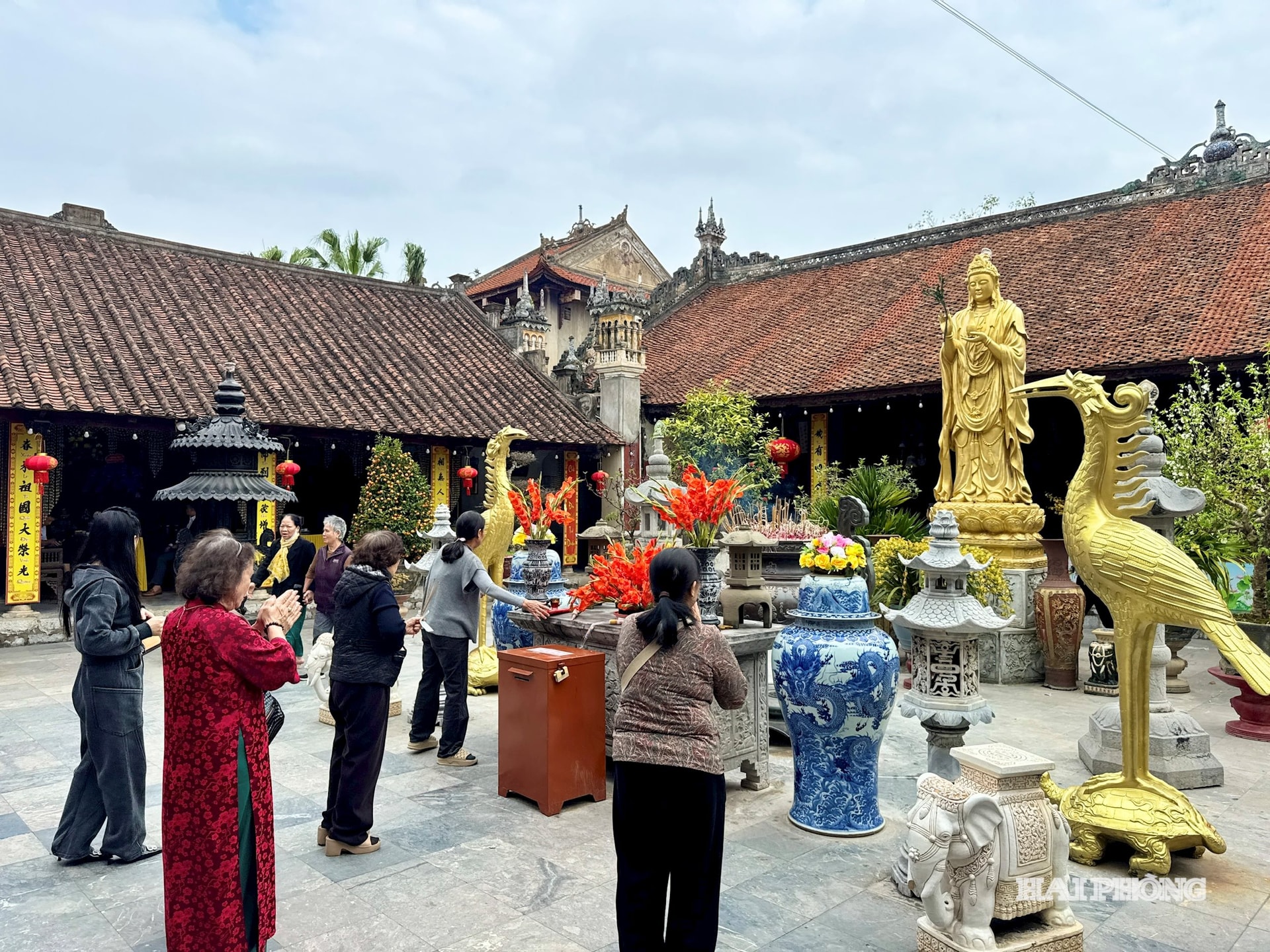
Not only the elderly, but many young families also consider visiting temples at the beginning of the year an indispensable tradition. Dressed in traditional ao dai, Ms. Vu Thi Cham from Le Thanh Tong Street (Ngo Quyen Ward) said that after completing the ancestral worship ceremony at home, her family usually goes to temples and pagodas together.
Ms. Cham shared that many people believe going to temples during the first days of spring will bring good luck and peace. For her, what's more important is for her children to understand and appreciate traditional cultural values.
According to Ms. Cham, the serene atmosphere of the Buddhist temple helps family members bond more closely. After offering incense, everyone usually chats and wishes each other well for the new year.
After a year filled with worries and anxieties, standing before the Buddha statue and listening to the ringing of the bells, everyone feels as if all their troubles have subsided.
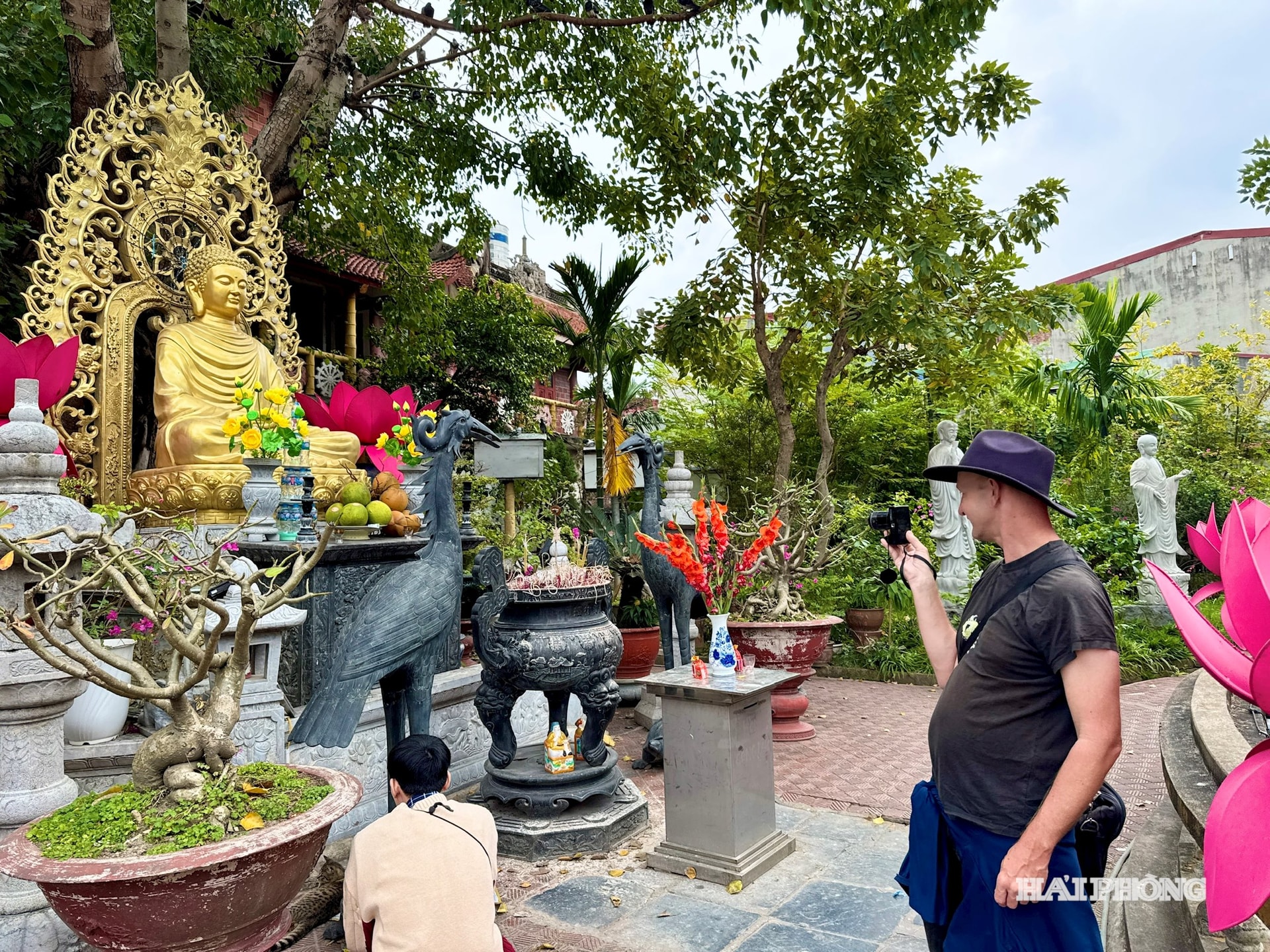
Also one of the most sacred ancient temples in Hai Phong city, with a history of over 1,000 years, Hang Pagoda (Le Chan ward) attracts a large number of visitors from all over to offer incense and admire the scenery.
Hang Pagoda stands out for its imposing architecture, its pagoda garden, and the Buddha statue garden surrounding a large lake, where a golden bronze statue of Shakyamuni Buddha sits beneath a Bodhi tree. Many people stroll through the pagoda grounds, enjoying the fresh air, allowing their souls to find peace and tranquility amidst the spring day.
Preserving cultural beauty
Not only the Red Pagoda and the Hang Pagoda, but many other historical sites in Hai Phong city also recorded a high increase in visitors, such as the Con Son - Kiet Bac historical site (Chi Linh ward); Tranh Temple (Ninh Giang commune); the An Phu - Kinh Chu - Nham Duong complex (Kinh Mon ward); Mao Dien Confucian Temple (Mao Dien commune); the Xua Temple - Giam Pagoda - Bia Temple complex (Cam Giang commune); Chu Van An Temple (Chu Van An ward); Nghe Temple, Tam Ky Temple, Chieu Pagoda (Le Chan ward); Tu Luong Xam Temple (Hai An ward); Cao Linh Pagoda (An Duong ward); Hang Pagoda, Ba De Temple, Tuong Long Tower (Do Son ward); Bach Dang Giang historical site (Bach Dang ward); Nguyen Binh Khiem Temple (Nguyen Binh Khiem commune)...
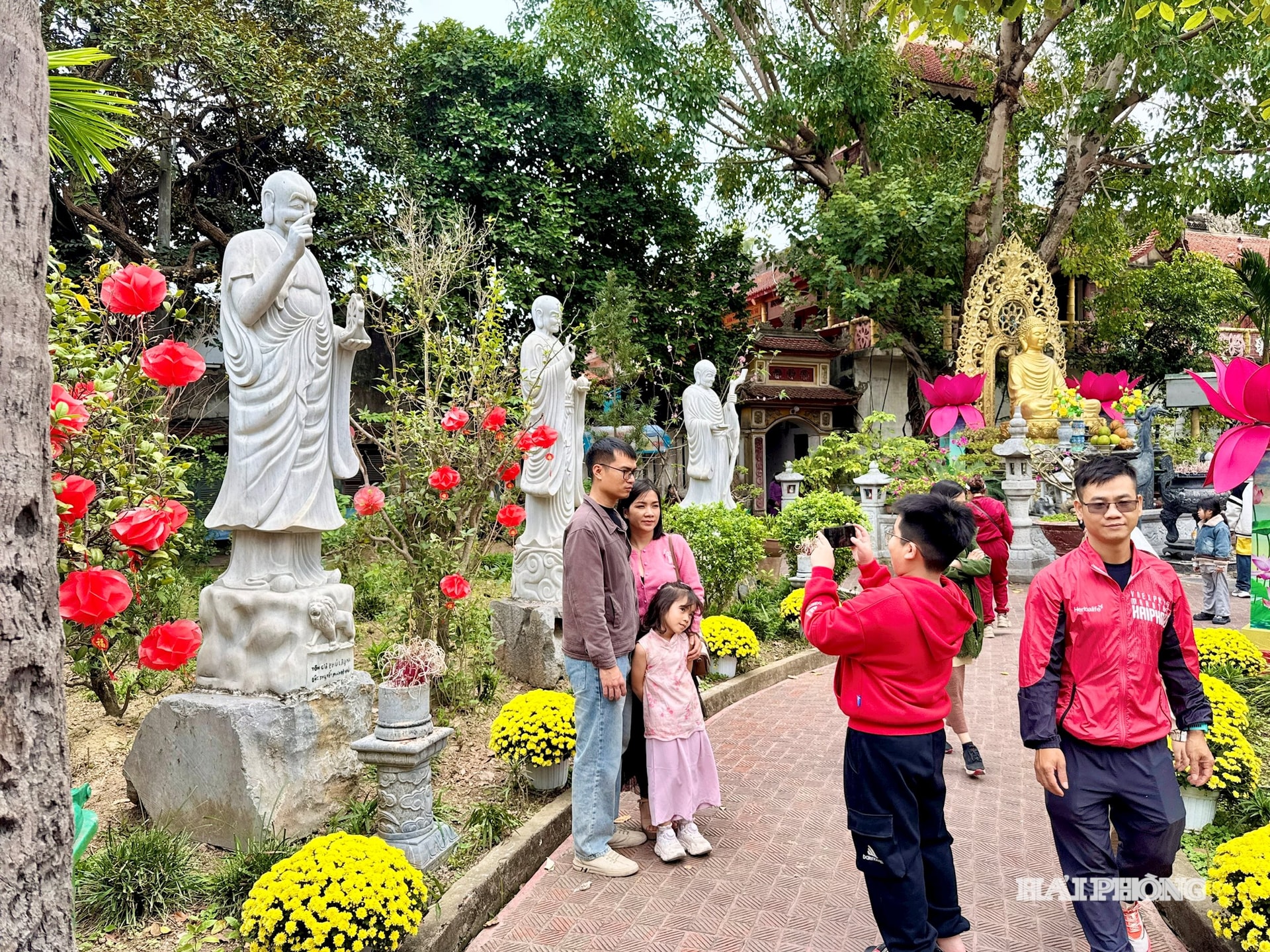
Luke Philip, a tourist from Australia, said he visited Hai Phong during the Lunar New Year of the Horse and was impressed by the Vietnamese tradition of visiting temples. He said, “I felt the solemnity but also the warmth. People go to temples not only to pray but also to meet and share good wishes at the beginning of the year.”
To serve the people and tourists who come to offer incense and worship at historical sites, the authorities, local government, and site management boards are working closely together to ensure security and order, manage traffic flow, arrange parking areas, remind people to comply with regulations, and preserve the landscape and environment.
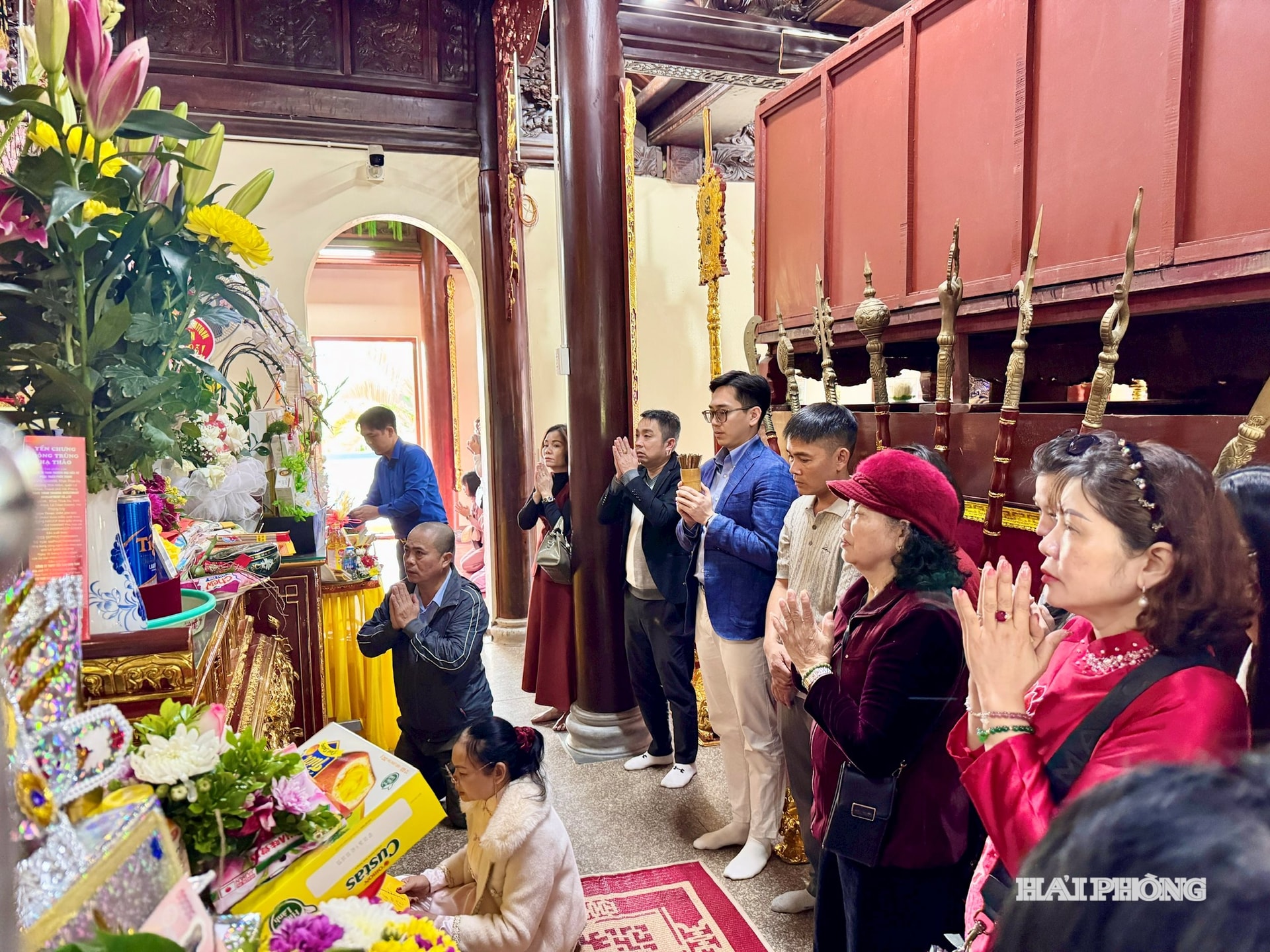
After the merger, Hai Phong has nearly 4,000 historical sites, including 9 special national historical sites and 257 national-level ranked historical sites. Notably, the city is home to Con Son - Kiet Bac, a UNESCO-recognized cultural heritage site.
In the early days of spring, people go to temples not only to pray for peace and good fortune but also to reconnect with their roots and express the principle of "drinking water, remembering the source." In many places, besides offering incense, people also ask for auspicious calligraphy for the new year, seek blessings from the temple, or buy amulets for peace to bring home.
NGUYEN NGUYENSource: https://baohaiphong.vn/net-dep-le-chua-dau-xuan-536155.html
![[Image] Nearly 125,000 Hanoi students completed the Literature exam for the 10th grade entrance exam.](https://vphoto.vietnam.vn/thumb/1200x675/vietnam/resource/IMAGE/2026/05/30/1780117233041_ndo_br_thiet-ke-chua-co-ten-2-png.webp)































































































Comment (0)