Among the myriad professions that govern life, some are defined and measured by tangible values. However, there are also professions that endure in life, their value affirmed by faith! And journalism is one such profession! Because, in an era where even a single status update can spread to millions in seconds, journalism must return to its most fundamental values: that journalists must seek the truth, verify the truth, and serve the public with the truth. This journey of Vietnamese revolutionary journalism began more than a century ago.

In Guangzhou, China (June 21, 1925), the first issue of the Youth Newspaper, founded by leader Nguyen Ai Quoc, was officially published. This was not simply the appearance of a new newspaper, but the moment a new stream of journalism was opened, a journalistic movement carrying the mission of accompanying the nation's destiny. Before this, Vietnam had the Gia Dinh Newspaper and many other newspapers that appeared in Saigon, Hanoi , and other localities. However, the Youth Newspaper created a special turning point. For the first time, journalism not only served the purpose of conveying information, but also became a tool to awaken patriotism, spread revolutionary ideas, mobilize the masses, and point out the path of struggle for independence, freedom, and socialism.
Those first newspapers were not produced in modern newsrooms or with state-of-the-art transmission systems, but were written under conditions of scarcity, secrecy, and hardship. Yet, the newspaper gave voice to the nation during a turbulent period in history! From then on, the Vietnamese Revolutionary Press followed the footsteps of the nation.
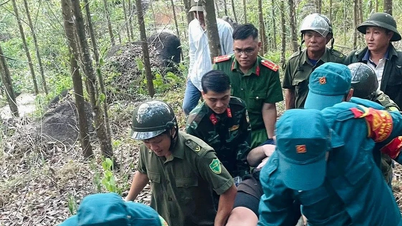
During wartime, journalists were not detached from the conflict. They were present on the battlefield, on supply routes, in bomb shelters, where the line between life and death was sometimes separated by only a moment. Some articles were completed amidst the sound of falling bombs, some photographs were taken in the smoke and flames, and some news reports were broadcast from places lacking everything. At that time, the pages of newspapers recorded and preserved the indomitable spirit of a nation rising up to fight for its independence.


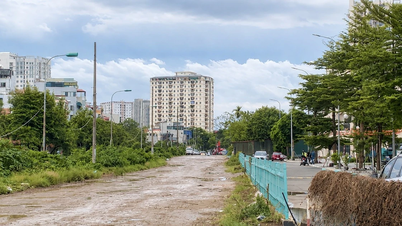
In peacetime, the press continues to be present at new hotspots of social life such as construction sites, overcrowded hospitals, schools in remote areas, rapidly transforming residential areas, courtrooms, parliaments, and places where people need to be heard. The press reflects achievements but does not shy away from shortcomings. It spreads positivity but must also bravely point out inaccuracies, gaps that need filling, and issues affecting the common good. Because, if it only reports without verifying the facts, the press will lose its social role. And if it only chases attention while neglecting its responsibilities, the press will also lose its professional dignity.
From a sigh amidst the hustle and bustle of life, a story about the struggles of daily life, a seemingly minor inadequacy, or a silent social movement, journalists must be perceptive enough to recognize and voice their observations of societal shortcomings. Journalists don't stand outside life observing coldly, but neither can they let emotions overshadow the truth. The journalist's ego is that of a witness, a connector, and an interpreter. An ego that is sensitive but not easily swayed, with opinions but not imposing, capable of delving deep into issues while maintaining objectivity and responsibility to the truth.
Entering 2026, the Vietnamese Revolutionary Press will have passed its 101st anniversary in a completely different context. Today's challenges no longer lie in geographical distance or a lack of operational resources. The challenges lie in the rapid spread of fake news, the pressure of competition from social media, the constant changes in public information consumption habits, and the rapid development of artificial intelligence.
Now, in just seconds, a system can aggregate, distribute, and personalize information for millions of people. But it is precisely in this technological storm that the role of journalism becomes clearer than ever. If social media helps information spread quickly, journalism must help the public discern reliable information. If artificial intelligence can synthesize facts, journalism must go further by relying on on-site experiences, eyewitness accounts, context, and social responsibility. If algorithms prioritize what attracts attention, journalism must persevere with what truly benefits the community.
Innovation, therefore, is not just about changing the platform or the presentation interface. First and foremost, innovation is about changing the mindset of the profession. A modern news organization cannot simply wait for the public to come to it; it must proactively be present in the spaces where the public lives, reads, watches, and interacts. A journalist in the digital age cannot simply be good at writing. They must also know how to exploit data, verify digital sources, understand public behavior, and uphold professional ethics in the face of the pressures of speed.
However, no matter how much technology changes, the essence of journalism remains unchanged: presence. Being present when people need to be heard. Being present when society needs accurate information. Being present in the most difficult, complex, and challenging areas of life. Not to embellish reality, nor to exacerbate anxieties, but to reflect reality accurately, understand correctly, and contribute to promoting positive change.
From the first issue of Thanh Nien Newspaper in 1925 to the multi-platform news bulletins of 2026, it has been a journey spanning over a century. A journey through war, peace, innovation, integration, and into a new era. However, regardless of the time period, Vietnamese revolutionary journalism has always been recognized by a core value: that journalists stand within the flow of the nation, accompanying the people and defending the truth with professional responsibility.

101 years is not just the length of history, it's the depth of a mission. And in an age where millions of pieces of information can appear every second, what makes a newspaper reputable is not being the fastest to disseminate information, but being the one that maintains trust the longest.
Please tune in to HTV News at 8 PM and the 24-Hour World Program at 8:30 PM every day on HTV9.
Source: https://htv.vn/newzgraphic-giu-lua-su-that-giua-dong-chay-mot-the-ky-222260620110720769.htm



![[Photo] Prime Minister Le Minh Hung presides over the thematic session on promoting science and technology development and innovation.](https://vphoto.vietnam.vn/thumb/1200x675/vietnam/resource/IMAGE/2026/06/23/1782207872934_ndo_br_dsc-1724-jpg.webp)