


Vietnam Science , Technology and Innovation Day
According to the Law on Science, Technology and Innovation 2025, May 18th of each year is designated as Vietnam Science, Technology and Innovation Day. This milestone inherits the legacy of the previous Vietnam Science and Technology Day while expanding its scope to include innovation and digital transformation – areas considered new drivers of national growth.
The origin of this day dates back to May 18, 1963, when President Ho Chi Minh attended the first Congress of the Vietnam Association for the Dissemination of Science and Technology. There, he emphasized that science must serve production, improve people's lives, and promote national development. Since 2013, May 18 has officially become Vietnam Science and Technology Day by law.
Currently, many activities such as innovation forums, technology exhibitions, and honoring outstanding scientists are organized during this time, contributing to spreading the spirit of innovation in society.
Hanoi 's first large-scale industrial park inaugurated.
On May 18, 1960, Hanoi inaugurated the Sao Vang Rubber Factory, the Thang Long Tobacco Factory, and the Hanoi Soap Factory. Along with the Hanoi Mechanical Factory, these facilities formed the Thuong Dinh Industrial Zone – the first large-scale industrial zone in the capital during the period of socialist construction in North Vietnam.
This event marked Hanoi's transition from an administrative and service-oriented city to an industrial development center. It also marked the period when North Vietnam embarked on its industrialization process under the first Five-Year Plan.
Many brands that originated during this period, such as Sao Vang and Thang Long, have been closely associated with people's lives for decades. Beyond its economic value, the Thuong Dinh industrial zone is also a symbol of the self-reliance in building the country's nascent industry amidst the many difficulties of the post-war era.
Ham Rong Bridge - a symbol of Vietnamese willpower.
On May 18, 1964, the Ham Rong Bridge in Thanh Hoa and the Ham Rong - Vinh railway line were inaugurated. This was a strategically important transportation project for the North-South transport route during the resistance war against the US.
The Ham Rong Bridge, spanning the Ma River, is situated in a geologically challenging location, making construction extremely difficult. However, the Vietnamese engineering and worker team successfully completed the project on schedule, demonstrating the construction capabilities of the then-nascent transportation sector.
During the bombing campaign against North Vietnam, Ham Rong Bridge became a key target for the US Air Force. The army and people of Thanh Hoa bravely defended this vital bridge, achieving the famous Ham Rong victory.
To this day, this structure remains a symbol of willpower, creativity, and the strength of unity during wartime.
The first French civilian flight to Vietnam after reunification.
On May 18, 1978, in accordance with the Vietnam-France Air Transport Agreement, the first flight of a French civil airline landed at Tan Son Nhat Airport in Ho Chi Minh City. This was one of the events marking the resumption of international air travel for Vietnam after the war.
The event took place against the backdrop of the country beginning to expand international cooperation and restore trade activities. The opening of air routes between Vietnam and France is not only significant for transportation but also contributes to promoting diplomatic, economic, and cultural relations between the two countries.
These first international flights during this period are considered the starting point for the integration of Vietnam's aviation industry. From a limited post-war foundation, Vietnam's civil aviation has gradually developed strongly over the following decades.
Composer Do Nhuan and his mark on revolutionary music.
Composer Do Nhuan passed away on May 18, 1991, leaving a significant mark on modern Vietnamese music. Born in 1922, he served as the General Secretary of the Vietnam Musicians Association in its first and second terms, and was one of the leading composers of revolutionary music.
Do Nhuan composed many famous songs such as "Guerrilla Song," "Liberating Dien Bien," "Wherever there are enemies, we will go," "Vietnam, My Homeland," etc. His works are rich in epic qualities, closely associated with the stages of struggle and nation-building.
He is also considered a pioneer of Vietnamese opera with works such as "Cô Sao" and "Người tạc tượng"... Introducing opera into Vietnamese music demonstrates an effort to combine the best of world music with national elements, contributing to laying the foundation for Vietnamese classical music.
The Vienna Convention of 1961 and the foundation of modern diplomatic relations.
On May 18, 1961, the Vienna Convention on Diplomatic Relations was adopted at an international conference of the United Nations held in Vienna, Austria. This is an important international legal document, laying the foundation for the principles of modern diplomatic relations between states.
The Convention stipulates many fundamental provisions such as the establishment of diplomatic relations, privileges and immunities granted to diplomatic missions, and the inviolability of embassy premises and diplomats. These provisions contribute to ensuring that diplomatic activities are conducted stably and in accordance with international law.
Vietnam joined the Vienna Convention in 1980. By the mid-1980s, the Convention had more than 140 signatories and continues to be one of the most important international instruments in the field of diplomacy. The 1961 Vienna Convention is considered the legal foundation for relations between states in the modern world.
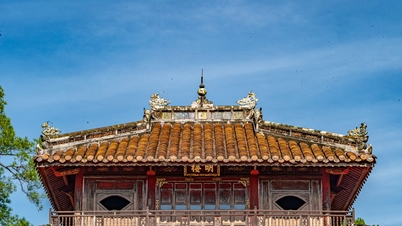
International Museum Day and the journey of preserving cultural memory.
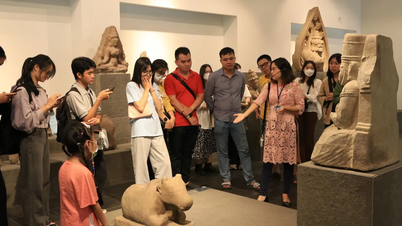
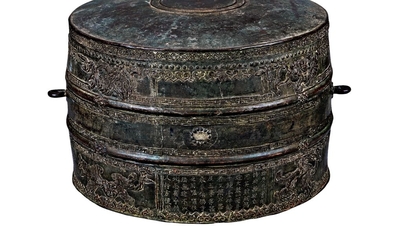
May 18th each year is International Museum Day, initiated in 1977 by the International Council of Museums (ICOM) to raise awareness of the role of museums in heritage preservation and community education.
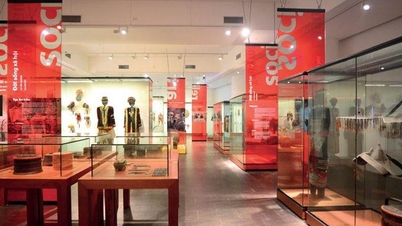
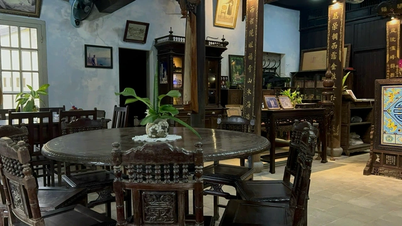
In Vietnam, the museum system is undergoing many innovations towards modernization and increased application of digital technology. Many institutions are implementing digitization of artifacts, automated narration, and interactive experiential spaces to attract the public, especially young people.
Museums today are not only repositories of artifacts, but also spaces for telling historical and cultural stories, contributing to connecting communities with national memory. In the context of developing cultural industries and heritage tourism, museums are playing an increasingly important role in contemporary cultural life.
Source: https://baovanhoa.vn/van-hoa/ngay-quoc-te-bao-tang-228923.html
![[Photo] General Secretary and President To Lam works with the Party Committee of the Ministry of Health on the work of Vietnamese traditional medicine.](https://vphoto.vietnam.vn/thumb/1200x675/vietnam/resource/IMAGE/2026/05/20/1779294323718_a1-bnd-2978-3319-jpg.webp)
![[Photo] National Assembly Chairman Tran Thanh Man working with the Standing Committee of the National Assembly's Delegation Affairs Committee.](https://vphoto.vietnam.vn/thumb/1200x675/vietnam/resource/IMAGE/2026/05/20/1779294340023_ndo_br_1-1691-jpg.webp)
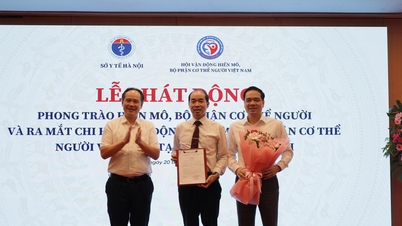
![[Image] "Journey of Hope" promotes the organ and tissue donation movement in Vietnam.](https://vphoto.vietnam.vn/thumb/1200x675/vietnam/resource/IMAGE/2026/05/20/1779294400833_1-8910-jpg.webp)
























































Comment (0)