

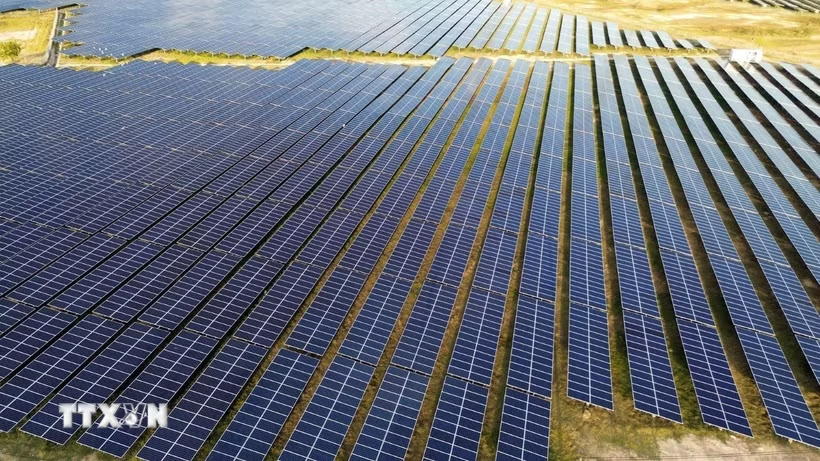
On April 22nd, communities around the world participated in activities to celebrate Earth Day, aiming to promote awareness and action to protect the environment, in the context of climate change increasingly impacting all aspects of global life.
Originating from the environmental protection movement in the US in the 1970s, and inspired by the book... "Silent Spring" Rachel Carson's *Silent Spring* (published in 1962) and the advocacy efforts of U.S. Senator Gaylord Nelson have made Earth Day a landmark in the modern environmental movement.
To date, this event has spread to more than 190 countries, contributing to the advancement of important environmental protection policies, including major clean air and clean water laws in the United States.
During this year's Earth Week (April 18-22), tens of thousands of activities were carried out globally, ranging from tree planting and environmental cleanup to educational campaigns and policy advocacy.
Notably, promoting renewable energy, particularly solar energy, continues to be a focus for reducing emissions and limiting reliance on fossil fuels.
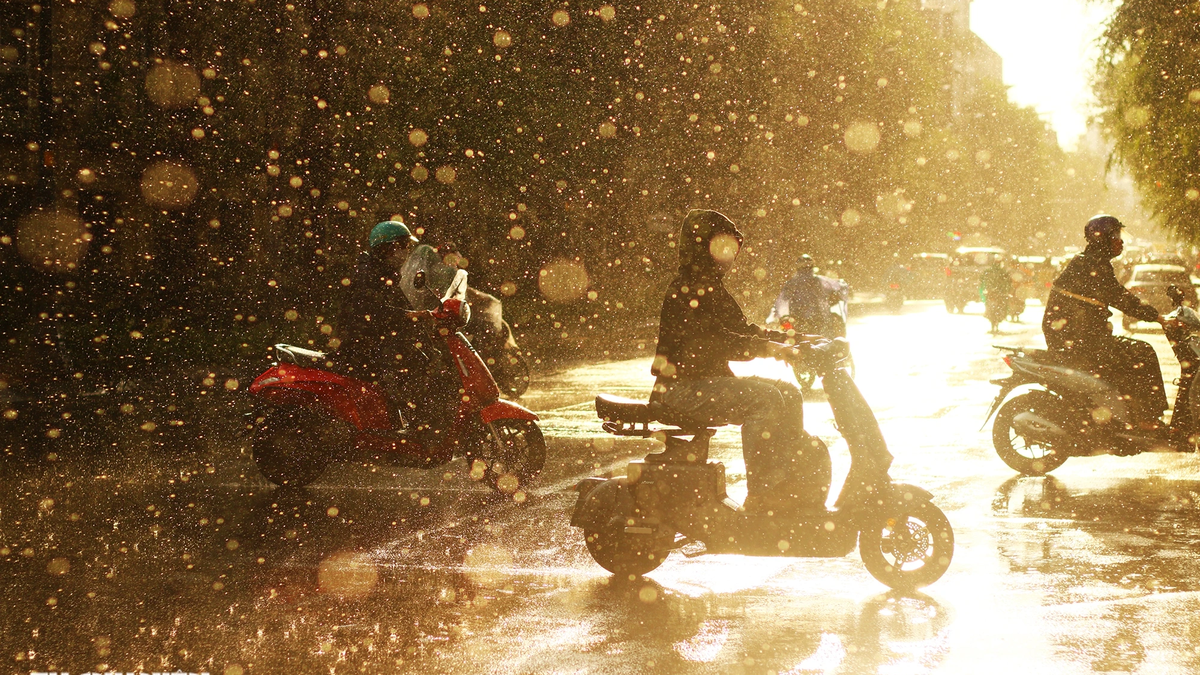
In recent years, the focus of Earth Day has shifted significantly towards addressing climate change – a challenge deemed increasingly urgent as global temperatures rise, leading to extreme weather events such as storms, floods, wildfires, and intense heatwaves.
Climate risks not only cause economic and environmental damage, but also have far-reaching impacts on social stability and the functioning of global institutions. An international report shows that between 2006 and 2025, at least 94 elections and referendums in 52 countries were disrupted by natural disasters, with 26 events being partially or completely postponed.
Many other elections have been disrupted by extreme weather events such as floods, storms, heatwaves, and landslides, all caused by human-induced global warming and climate change. In 2024 alone, extreme weather disrupted 23 elections in 18 countries.
The report details the impact of Hurricane Sandy on the 2012 US federal election, the 2023 earthquake on the Turkish presidential and parliamentary elections, the severe heatwave on the 2025 Philippine election, and the cyclones on the 2019 election in Mozambique...
According to experts, natural disasters not only make it difficult to organize elections but can also leave long-lasting social impacts, including the risk of unverified information spreading and affecting public sentiment.
In this context, researchers recommend that the electoral system be considered an essential activity that needs to be protected from environmental risks, and suggest that countries integrate this content into their national climate change adaptation plans and disaster risk reduction strategies.
Source: https://baotayninh.vn/ngay-trai-dat-2026-nhung-thach-thuc-khong-chi-tu-moi-truong-144803.html
![[Image] Hanoi's urban life under the challenge of a "scorching hot" environment](https://vphoto.vietnam.vn/thumb/1200x675/vietnam/resource/IMAGE/2026/05/25/1779706979265_nang-nong-t5-2026-minh-duy-7-4636-jpg.webp)


![[Image] Close-up view of the interchange connecting the two expressways and Long Thanh Airport.](https://vphoto.vietnam.vn/thumb/1200x675/vietnam/resource/IMAGE/2026/05/25/1779703378210_ndo_br_z7863716673926-224453a31600126cce10622af6290afd-4549-jpg.webp)




























































































Comment (0)