

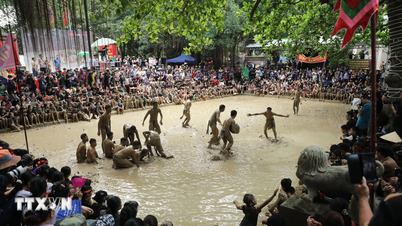
Mai Bang Temple Festival - a spiritual heritage of the residents of Cua Lo coastal area.
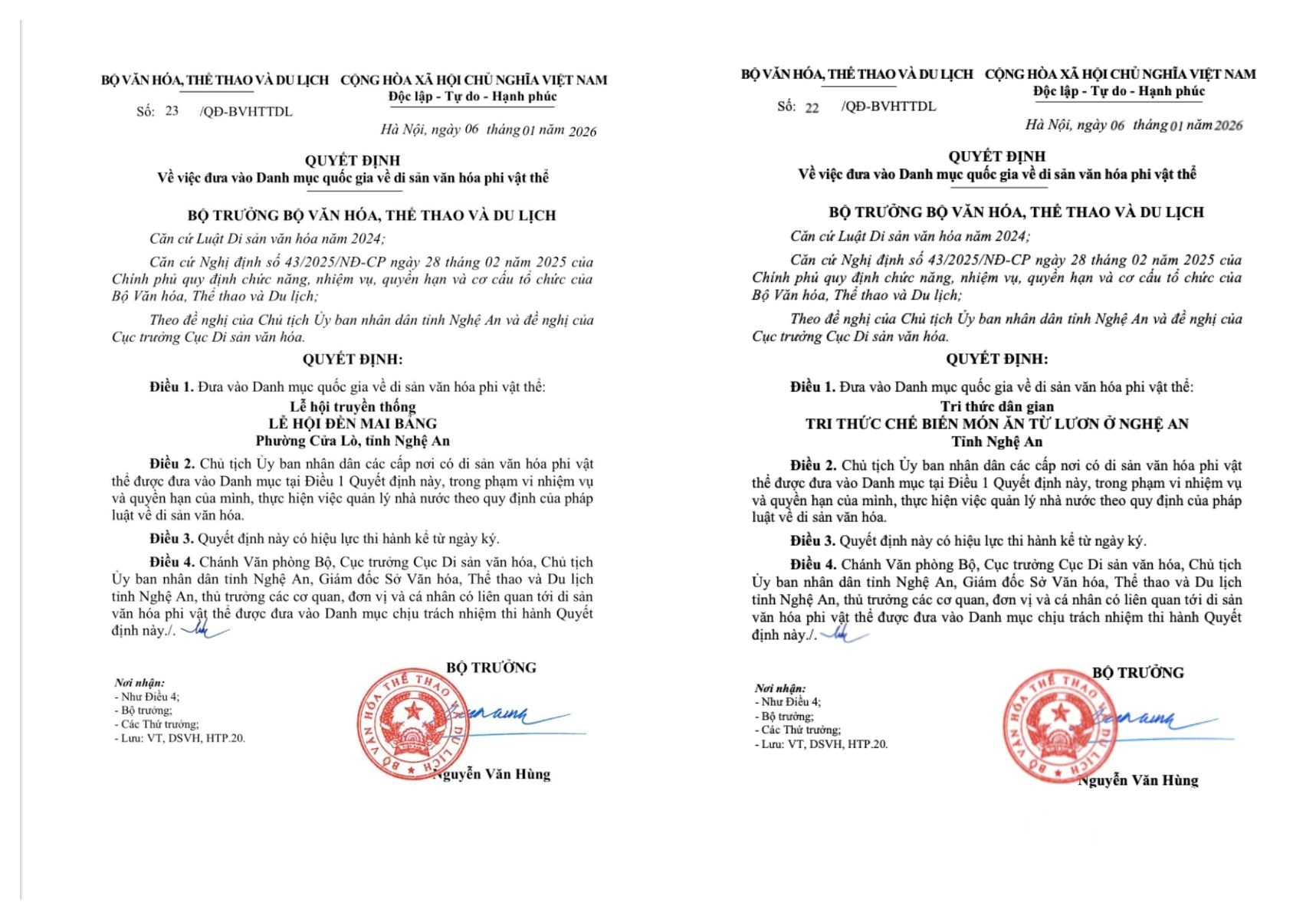
According to Decision No. 23/QD-BVHTTDL, the Mai Bang Temple Festival (Cua Lo Ward) has been officially recognized as a National Intangible Cultural Heritage. The festival is associated with the worship of Chieu Trung Dai Vuong Le Khoi - a talented general during the early Le Dynasty, who made significant contributions to the Lam Son Uprising, helping King Le Loi defeat the invading Ming army, and also assisting the people in reclaiming land, establishing villages, and stabilizing their lives.
After his death, the people of Mai Bang village erected an altar to worship him, honoring him as the village's tutelary deity. Besides Chieu Trung Dai Vuong Le Khoi, the Mai Bang temple also worships Che Thang Phu Nhan Nguyen Thi Bich Chau, Thuy Tinh Phu Nhan, and six other founding figures of the village, reflecting the deep religious beliefs and the tradition of "drinking water, remembering the source" of the coastal inhabitants.
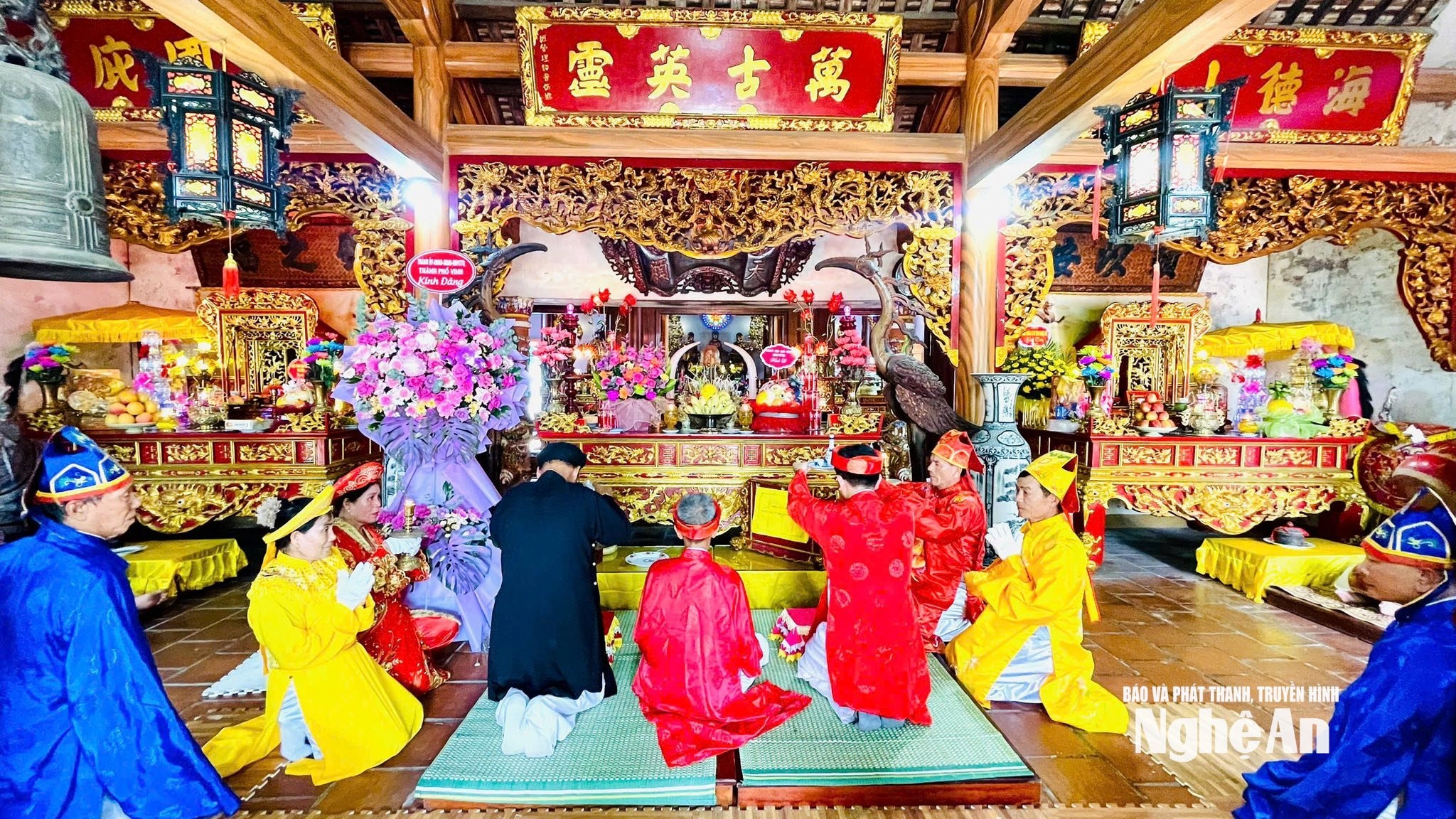
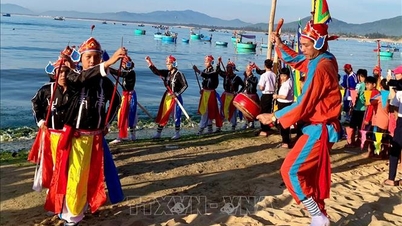
Every year, Mai Bang Temple hosts two major festivals on the 12th of February and the 3rd of May according to the lunar calendar. The festival on the 12th of February holds special significance, as it commemorates the founding of the village, serves as a prayer for a bountiful fishing season for the fishermen of Cua Lo, and is also the anniversary of the death of Lady Che Thang.
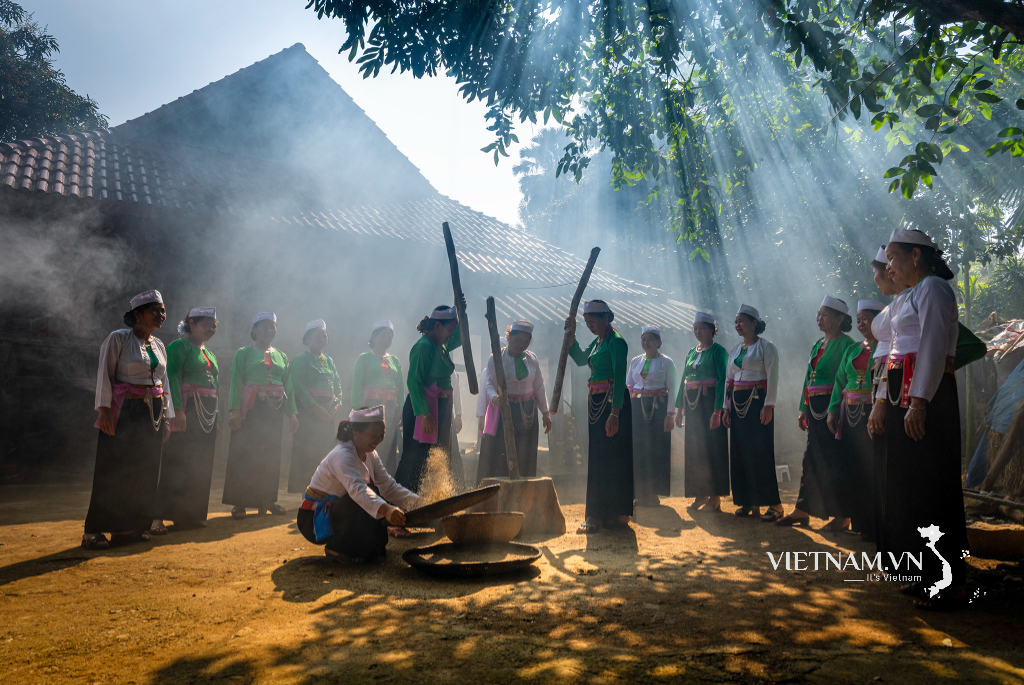
The festival consists of a solemn ceremony with rituals for praying for offspring and a good fishing season, and a procession of palanquins, and a lively celebration with many folk games such as human chess, tug-of-war, basket shaking, stick pushing, sack racing, and making "quết oản" (a type of cake offered to deities) among different clans… creating a rich and distinctive community cultural space.
The Mai Bang Temple Festival is considered a typical intangible cultural heritage of the residents of Cua Lo coastal area, contributing to preserving traditional values, fostering community solidarity, and educating patriotism for future generations.
Knowledge of eel processing - the culinary essence of Nghe An
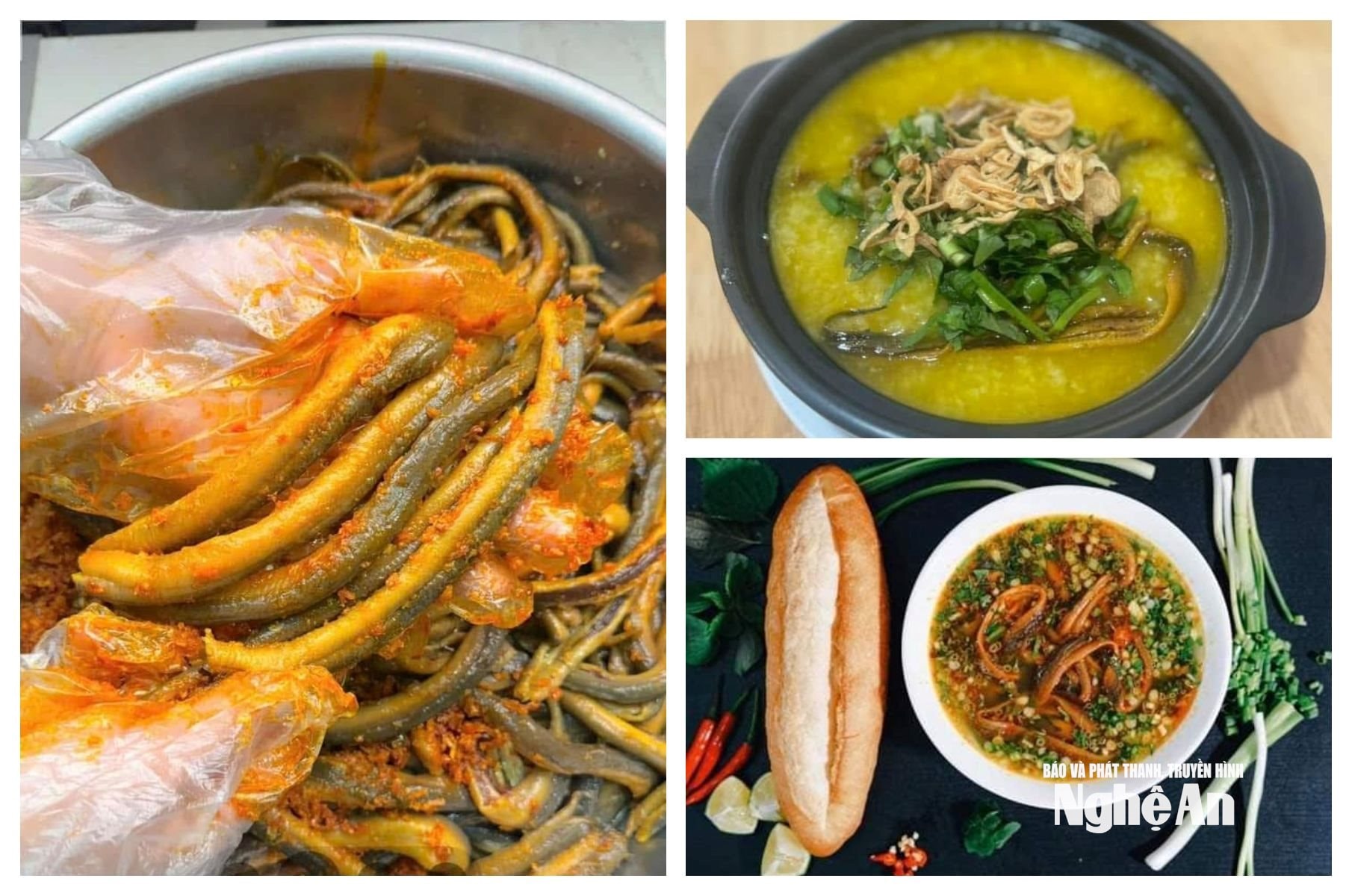
On the same day, according to Decision No. 22/QD-BVHTTDL, the knowledge of preparing eel dishes in Nghe An was also inscribed as a National Intangible Cultural Heritage. This is a treasure trove of unique folk knowledge, reflecting the flexible adaptation of agricultural communities in the North Central region to harsh natural conditions.
This culinary knowledge is clearly reflected in the diverse range of dishes such as eel porridge, eel soup, eel vermicelli, stir-fried eel, eel stewed with banana and peanuts, grilled eel, etc., with the secret lying in the meticulous preparation, the use of characteristic spices such as shallots, fresh turmeric, chili, lemongrass, and the elaborate technique of simmering the broth from eel bones. Among these, eel porridge and eel soup are considered typical dishes, creating a unique mark of Nghe An cuisine.
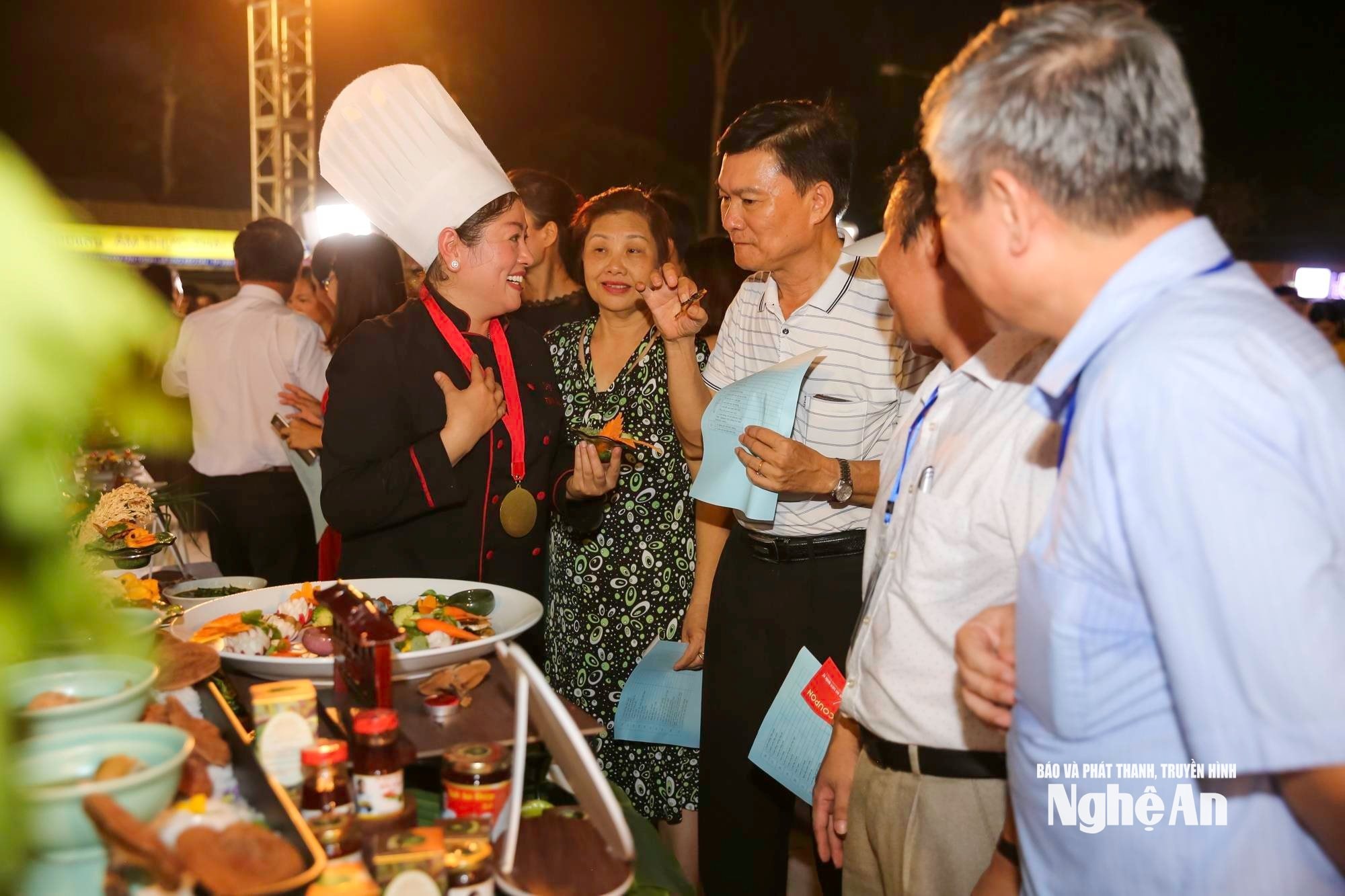
The richness of eel cuisine was affirmed at the Nghe An Culinary Culture Festival in July 2019, when the "50 Eel Dishes" event was organized and set a Vietnamese record, featuring dozens of unique eel dishes showcased by skilled artisans.
Currently, building upon its traditional flavors, eel from Nghe An continues to be processed in modern ways, catering to consumer tastes, such as crispy fried eel, dried eel, canned eel, packaged eel vermicelli, etc., contributing to the wider dissemination of this culinary heritage in contemporary life.
The fact that Nghe An simultaneously has two more national intangible cultural heritage sites not only affirms the cultural depth of this land of "exceptional people and rich history," but also opens up opportunities to preserve and promote heritage values in conjunction with sustainable tourism and cultural economic development.
Source: https://baonghean.vn/nghe-an-co-them-2-di-san-van-hoa-phi-vat-the-quoc-gia-10318741.html

![[Photo] Ba Lang An Lighthouse - the "eye of the sea" amidst the "rock museum" of Quang Ngai province.](https://vphoto.vietnam.vn/thumb/1200x675/vietnam/resource/IMAGE/2026/05/29/1780038698840_anh-man-hinh-2026-05-29-luc-14-10-42.png)
![[Image] Pleasant weather helps students enter the 10th grade entrance exam with confidence.](https://vphoto.vietnam.vn/thumb/1200x675/vietnam/resource/IMAGE/2026/05/29/1780034401612_ngay-1-thi-lop-10-minh-duy-8-5009-jpg.webp)































































Comment (0)