

If you ask fishermen what the most dangerous profession is when they go out to sea, almost 100% will say diving. Many people liken diving to "eating the food of the living world, working in the underworld," which partly illustrates the danger of this profession.
Even a small change can be dangerous.
As twilight descended upon the impoverished streets of Phu Tai ward, Phan Thiet city, Mr. Tran Thanh Son (46 years old) and his third son returned home after a day of diving. “Today was pretty good; my son and I each earned nearly 300,000 dong,” Mr. Son began, after our brief conversation. The sun, wind, and salty sea air made Mr. Son look older than his age. By the time his son reached this age, it was the fourth generation in his family to be involved in diving. Mr. Son himself has been a diver for over 30 years. Diving has given his family many things, but it has also taken a lot from them. One of his grandfathers died while diving, and an uncle suffered from decompression sickness, leading to complete paralysis. Mr. Son is originally from Ninh Hoa district, Khanh Hoa province. Around the 1990s, he followed a friend to Phan Thiet to dive, then married and settled there. When I asked about the dangers that divers can face, Mr. Son's face contorted, his eyes filled with worry. Having been a diver for 30 years, Mr. Son has experienced all the dangers of the profession, including coming close to the line between life and death.
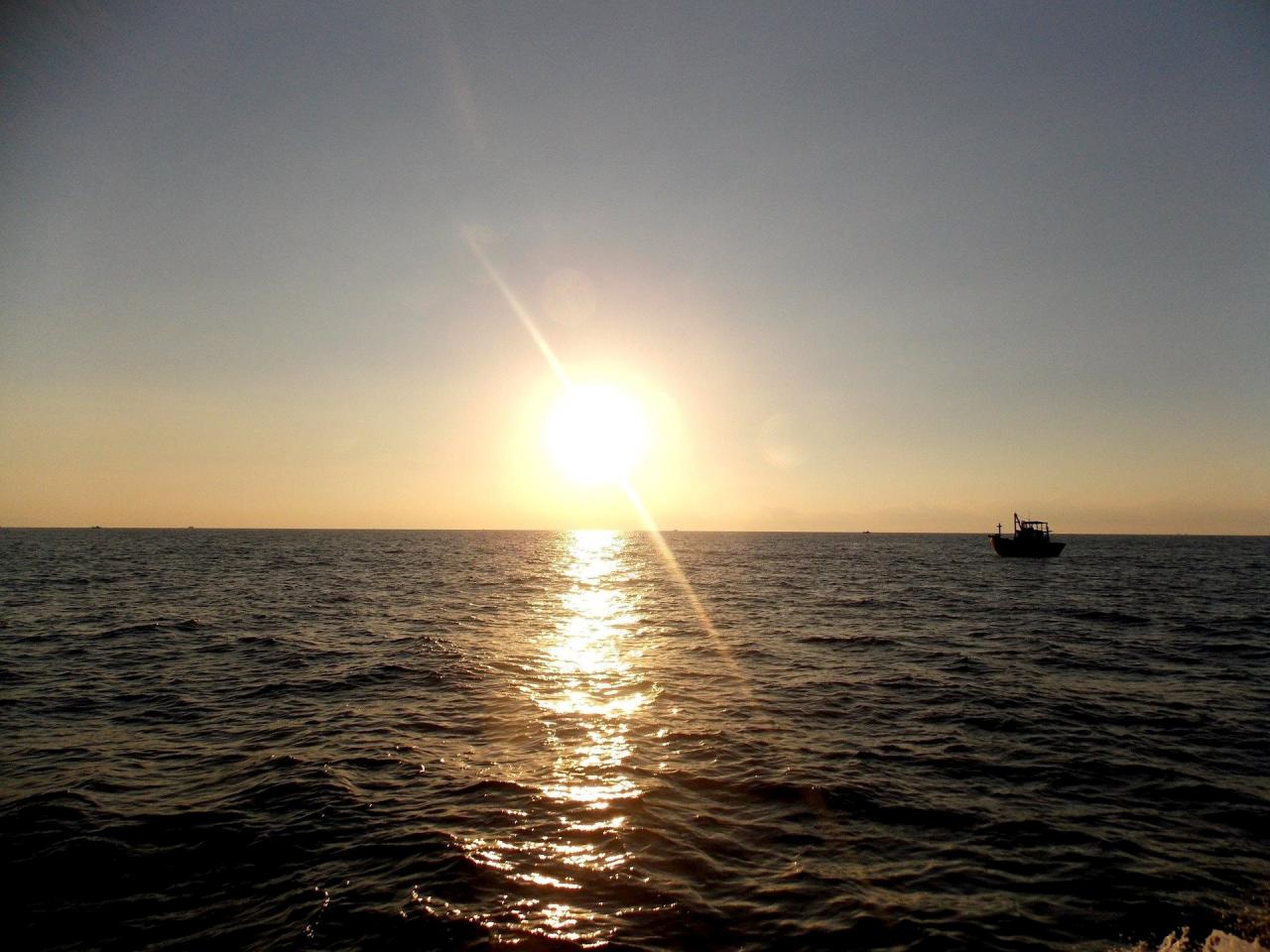
“In this profession, even a small change can endanger a diver. A large wave, another ship accidentally passing through the area where the diver is diving, a slight change in the body can create danger while at the bottom of the ocean…,” Mr. Son shared. Indeed, not only Mr. Son but all the divers I have met have similar observations when talking about the dangers of scuba diving. In the vast ocean, a fishing boat weighing tens of tons looks small, let alone a diver. Moreover, when a diver jumps into the ocean, the only thing connecting them to life is a breathing tube no bigger than a finger. In 30 years of dedication to the profession, Mr. Son has faced countless dangers. Many times, while diving underwater, a large ship passed by, and the propeller cut his breathing tube. Then there were times when, while diving and catching delicious seafood, the air blower suddenly malfunctioned and stopped. There are times when, during stormy seasons, large waves push the boat far from its original position, causing the breathing tube to break or become blocked. At such times, the diver has no choice but to cut off their equipment and quickly surface to fight for survival. But sometimes, even after surfacing, they encounter rough weather, their fellow divers can't see them, and they are left adrift in the vast ocean, their lives as fragile as a candle in the wind. "This diving profession is inherently harsh; no one can claim to be an expert. Even after years of diving at the same depth, just a moment of fatigue or external influence can cause an accident. Besides experience, what helps a diver overcome these critical situations is the belief in their ancestors' protection and divine intervention," Sơn shared.
For fishermen, finding a school of seafood at sea is a joy and a source of happiness. But for divers, while finding a spot with abundant seafood is certainly joyful, that joy is also fraught with danger, even facing death.
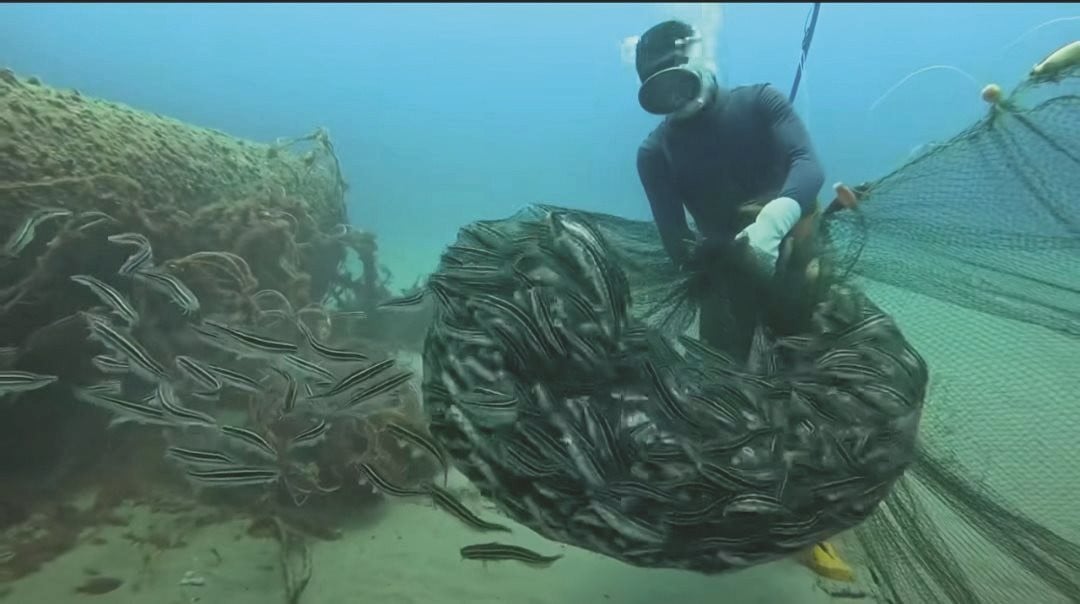
The Magic of the Ocean
Divers often share stories about the dangers of the strange pull when encountering schools of seafood. In 1995, Sơn, then only 17 years old, was diving for scallops when he stumbled upon a large school. “At that spot, the scallops were layered, and you could easily grab large ones the size of an open hand. There were so many scallops that I was completely overwhelmed. All I could think about was getting as many as possible, without realizing I had gone too far or too deep. By the time I realized it, everything had gone dark, and I fainted in the middle of the ocean,” Sơn recalled. Fortunately, a fellow diver spotted him in time and brought him to the rescue. Because he was young at the time, he quickly survived.
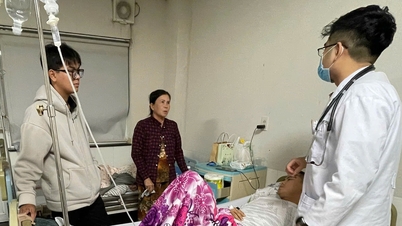
Unlike Mr. Son, a few hundred meters from his house, Mr. Duong Van Dien (born in 1968) has been paralyzed in both legs for the past 25 years due to water ingress. Mr. Dien was born in Quang Ngai province. In his late teens and early twenties, he used to dive to depths of 30-40 meters in the Hoang Sa (Paracel) Islands. He then moved to Binh Thuan province to work, where he met and settled down. On the day of the incident, Mr. Dien was diving at a depth of less than 20 meters to catch scallops. Back then, diving provided a very high income. Driven by the desire for high earnings, Mr. Dien tried to catch as many scallops as possible each time he went into the sea. “At that time, I was only 31 years old, and I was healthy, so that depth was normal for me. But unexpectedly, that day while diving, I felt dizzy and fainted in an instant. My diver saw that I hadn't come up for a long time, so he dived down and brought me up,” Mr. Dien recalled. Later, when he regained consciousness, Mr. Dien was told by his friends that when they brought him onto the boat, he had almost stopped breathing. His crewmates brought him ashore while simultaneously contacting his family to purchase a coffin and prepare for his funeral. But then a miracle happened; upon reaching the port, they discovered he was still breathing faintly and rushed him to the hospital.
In the memories of veteran divers in Binh Thuan, the most glorious and also the most tragic period for the diving profession was from 1995 to around 2000. At that time, a diver's daily income was around 500,000-700,000 VND, equivalent to about 1 or 2 taels of gold – a common occurrence. Anyone who diligently dived for a few days could easily afford a tael of gold. Seeing the high income, many people from the central provinces flocked to Binh Thuan to seek work. Initially, they only assisted in pulling ropes, but seeing the "huge" income from diving, they asked to learn the trade. Some, young and old, who had never dived before, practiced using a snorkel. After a few days, they asked to dive officially. Lacking experience and escape skills, accidents among divers were very common at that time. Every few months, someone died, and countless others suffered from decompression sickness, paralysis, and other health problems. The number of workplace accidents related to scuba diving is so high that authorities have to organize short-term training courses and conduct health checks before allowing divers to work in order to minimize incidents.
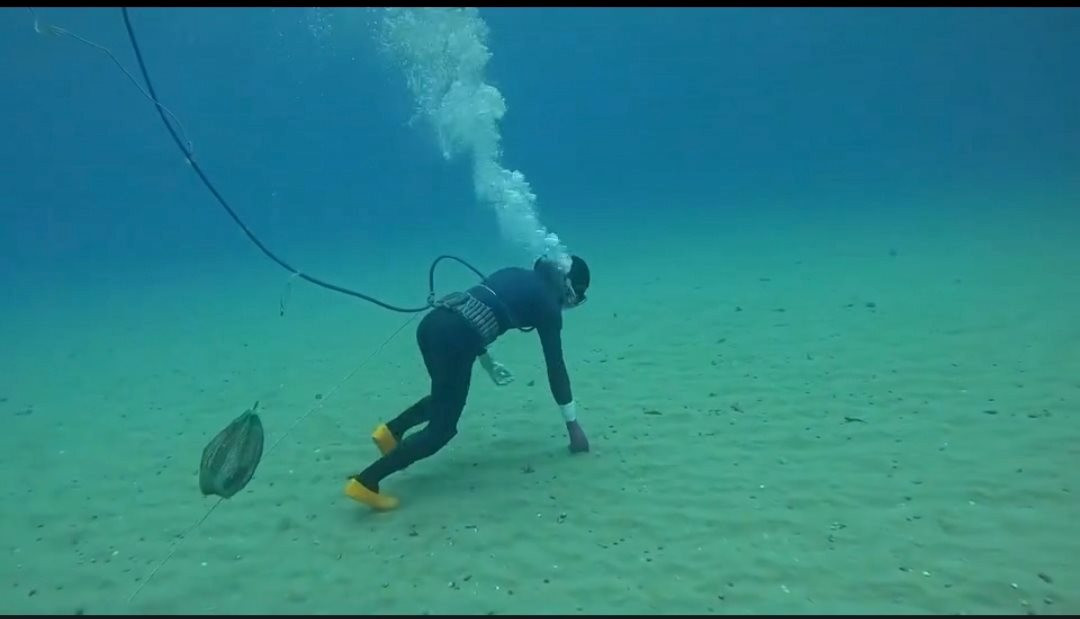
The profession of deep-sea diving has always been fraught with risks, yet some people still choose it to make a living. Some inherit the trade from their fathers, while others find it by chance, a profession that chooses them and becomes their lifelong calling. While income from diving isn't as high as it used to be, it's still somewhat better than other professions, enough for divers to support their families and raise their children. Spending all day submerged in the vast ocean where sunlight cannot reach, many people liken diving to a profession where you "eat the food of the living world but work in the underworld." But that saying also encapsulates the inherent danger of the profession. One could share a meal with someone one moment, only to be separated by death a few hours later…
In just six days, from March 23rd to 28th, three incidents of divers encountering accidents while diving occurred in the province, resulting in three fatalities. The oldest victim was 53 years old, and the youngest was only 23.
Source

![[Photo] National Assembly Chairman Tran Thanh Man working with the Standing Committee of the Law and Justice Committee](https://vphoto.vietnam.vn/thumb/1200x675/vietnam/resource/IMAGE/2026/05/21/1779378929214_ndo_br_1-4610-jpg.webp)
![[Photo] General Secretary and President To Lam presides over a working session with the Central Policy and Strategy Committee on the development of the materials industry.](https://vphoto.vietnam.vn/thumb/1200x675/vietnam/resource/IMAGE/2026/05/21/1779359935432_a3-bnd-3129-1412-jpg.webp)













































































Comment (0)