

Enhancing AI capabilities from the secondary school level.
Resolution 71-NQ/TW of the Politburo on breakthroughs in education and training development has set the goal of achieving initial results in improving technological capabilities, artificial intelligence (AI), and English language proficiency at the secondary level by 2030.
This goal is receiving significant attention from educators and researchers. It is considered a strategic direction, but it also requires specific and coordinated solutions for effective implementation.
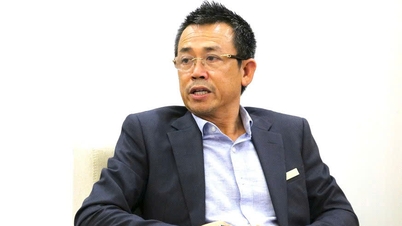
From the perspective of a researcher and educator in Computer Science , Ms. Huynh Ngoc Thai Anh (School of Information Technology and Communications, Can Tho University) believes that Resolution 71 has correctly identified the role of AI. AI is not only a tool but also a core competency for learners and researchers.
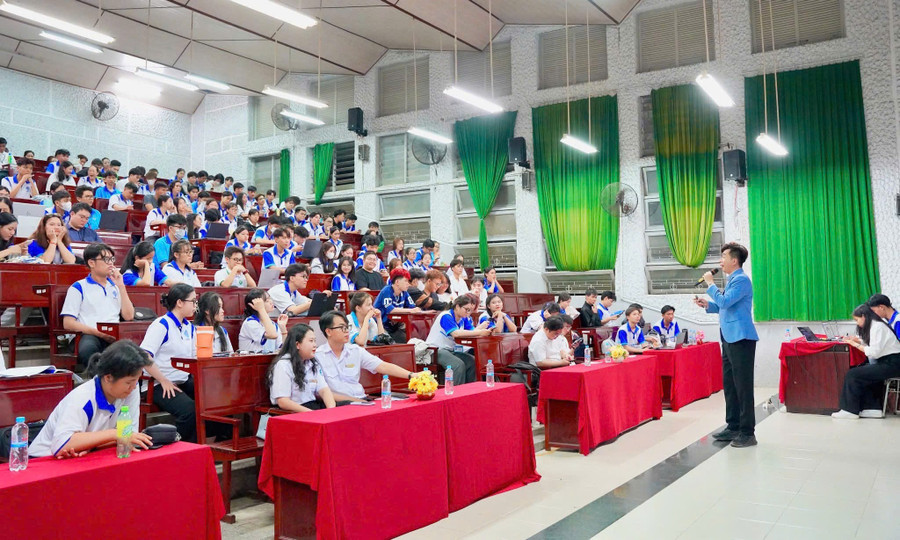
According to Ms. Thai Anh, to effectively implement this goal, Vietnam needs a national AI competency framework for students at each level. This framework should closely follow international standards such as AI4K12, or the UNESCO AI competency framework, DigComp 2, etc., in order to be measurable.
“The national AI competency framework, when implemented comprehensively, will provide students with a clear learning path: understanding the principles, using the tools, and creating products with AI. Along with that, it will provide early guidance on AI ethics, so that learners can approach it and make it a habit,” shared Ms. Thai Anh.
Promoting research, transparency, and practical application.
Regarding research and innovation, Ms. Thai Anh noted that the goals and vision outlined in Resolution 71 are a very strong driving force for higher education institutions and research centers.
The resolution aims to elevate higher education institutions to truly become centers of research, innovation, and entrepreneurship for the nation and its regions.
Specifically, there are concrete targets to strive for, such as increasing international scientific publications by 12% annually, increasing patent registrations and protection certificates by 16% annually, recruiting at least 2,000 excellent lecturers from abroad, and aiming for many universities to rank among the top in the region and the world in their respective fields. These are specific milestones to achieve.

"Based on these guidelines, universities and research centers can redefine their research strategies, develop strategies for laboratory infrastructure, build strong specialized research groups, and establish interdisciplinary and inter-university research connections," suggested Ms. Thai Anh.
However, Ms. Thai Anh also emphasized the need to promote interdisciplinary research and community-oriented approaches. AI and data science can create rapid impacts in the fields of agriculture, health and environment, and smart cities. The selection of research topics should adhere to sustainable development goals and have clear indicators of social benefit.
Furthermore, during implementation, special attention should be paid to honest evaluation, rectifying negative practices, and strictly controlling the quality of output, especially at the postgraduate level.
"In my opinion, there needs to be a publicly available and verifiable national framework of academic ethics and integrity, including rules on authorship, data governance, and source code; transparency in the use of AI in research and teaching; open publication for projects funded by public funds, along with a transparent review process and handling of violations," proposed Ms. Thai Anh.
From the perspective of researcher and educator Huynh Ngoc Thai Anh, building a national AI competency framework, promoting research linked to practice, and ensuring transparency in academia will be key to realizing the vision in Resolution 71-NQ/TW.
Source: https://giaoducthoidai.vn/nghi-quyet-71-can-khung-nang-luc-ai-quoc-gia-de-phat-trien-ai-cho-hoc-sinh-post747831.html


![[Photo] Prime Minister Pham Minh Chinh presides over a meeting on private sector economic development.](/_next/image?url=https%3A%2F%2Fvphoto.vietnam.vn%2Fthumb%2F1200x675%2Fvietnam%2Fresource%2FIMAGE%2F2025%2F12%2F20%2F1766237501876_thiet-ke-chua-co-ten-40-png.webp&w=3840&q=75)


















































































Comment (0)