

(NLĐO) - What emanates from Egyptian mummies - the oldest of which are up to 3,500 years old - is completely different from what is depicted in films.
Writing in The Conversation , Dr. Cecilia Bembibre from University College London (UCL) said that she and her colleagues from several countries conducted a daring study, which included directly smelling nine Egyptian mummies with their noses.
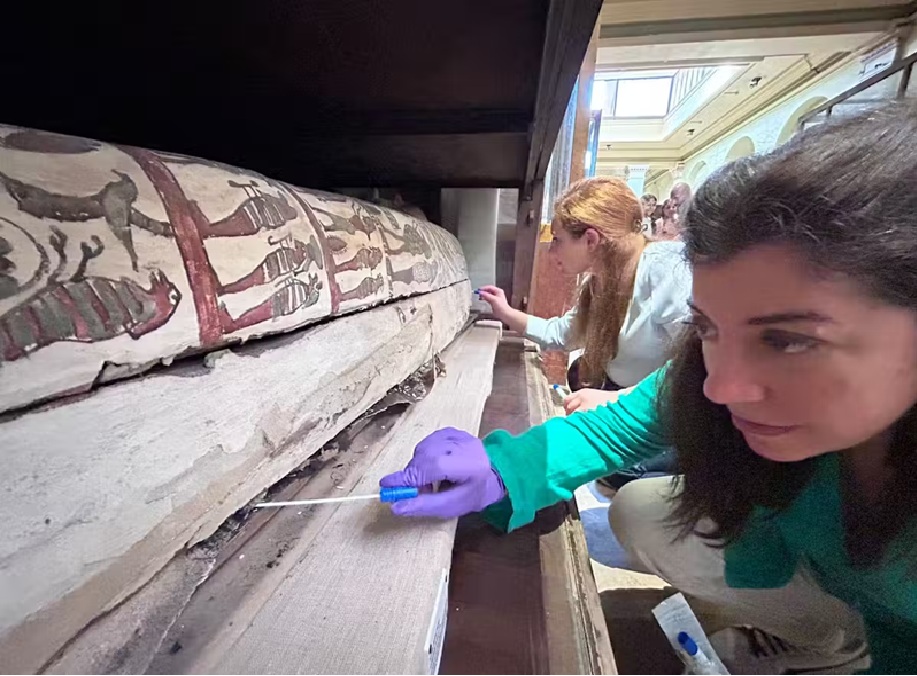
Scientists carefully extract scents from the interior spaces of sarcophagi containing Egyptian mummies - Photo: EGYPT MUSEUM
The research team assembled nine mummies from the Egyptian Museum in Cairo, the oldest dating back 3,500 years.
These mummies were preserved in various ways and were found in many different burial sites, giving scientists a comprehensive overview.
They used metal tubes containing a type of polymer that traps volatile organic compounds to collect odors from these mummies.
The metal tubes were then brought into the laboratory of the University of Ljubljana (Slovenia), where several researchers took turns smelling them, with each tube lasting 15-20 minutes.
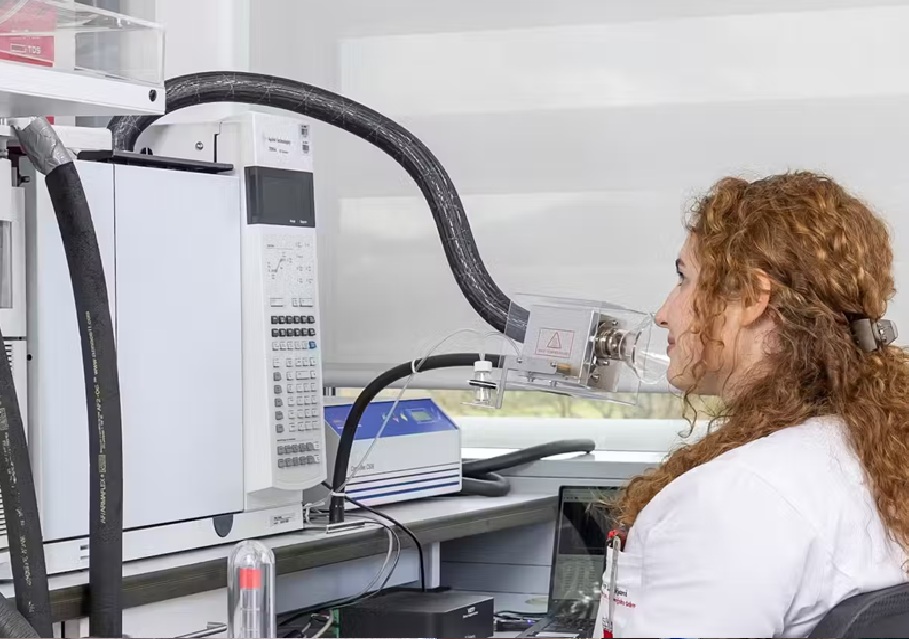
One of the scientists is experiencing the smell of Egyptian mummies - Photo: THE CONVERSATION
Initially, they braced themselves for something horrific, like in Egyptian mummy movies, or descriptions of the foul stench emanating from ancient tombs and terrifying coffins like these.
But then, they were shocked to realize that over the millennia, the coffins containing mummies had preserved the pleasant scent that the embalmers of old had tried to create.
Common descriptions reported by the olfactory group included smells of "wood," "floral," "sweet," "spicy," "old," and "plastic-like."
Some people even pointed out the scent of pine needle oil, frankincense, herbs, and cinnamon. Notably, one mummy even emitted a subtle aroma of black tea.
This scent also mingled with the faint smell of decomposed animal fat used in the embalming process, the smell of human remains, and the smell of plant-based insecticides that the museum used to preserve the mummies.
The tubes containing the fragrances were also analyzed using advanced techniques, helping to more specifically identify the composition of the mixtures and solutions that the ancient Egyptians used for this particular ritual.
Researchers are also creating a faithful chemical simulation of what they smelled from the mummies for the public who want to experience it.
By 2026, visitors to the Egyptian Museum are expected to have access to this interesting yet somewhat macabre service.
Source: https://nld.com.vn/ngui-mui-9-xac-uop-ai-cap-cac-nha-khoa-hoc-bi-soc-196250218085400201.htm


![[Photo] Prime Minister Pham Minh Chinh presides over a meeting on private sector economic development.](/_next/image?url=https%3A%2F%2Fvphoto.vietnam.vn%2Fthumb%2F1200x675%2Fvietnam%2Fresource%2FIMAGE%2F2025%2F12%2F20%2F1766237501876_thiet-ke-chua-co-ten-40-png.webp&w=3840&q=75)
























































































Comment (0)