


To restructure the healthcare system, the Provincial People's Committee directed the transfer of 55 commune-level health stations from the Department of Health to the management of the commune-level People's Committees, and the reassignment of 1,518 officials and employees to work at health stations under the commune-level People's Committees. Implementing the new model, the health stations proactively streamlined their organizational structure, assigned specific tasks to healthcare staff , and prepared the necessary conditions to meet the requirements of the new model.
In reality, the Dong Mai Ward Health Station, given the uneven distribution of the population, maintains operations at two locations (the main station in the Trai Co area and a branch station in the Duong Ngang area). Maintaining two operating locations makes it easier for residents in areas far from the center to access healthcare services. After more than six months of operation under the new model, the station's professional indicators have shown many positive results, with no medical malpractice incidents occurring. The station also maintains regular vaccination activities on the 16th, 23rd, 24th, and 25th of each month; ensuring vaccinations are administered according to procedure, monitoring children for 30 minutes after vaccination at the station, and providing guidance on home monitoring for 24 hours; while simultaneously updating data on the National Immunization Information System...

According to Circular No. 53/2025/TT-BYT, the Ministry of Health is amending regulations on the functions, powers, tasks, and organizational structure of commune-level health stations from January 2026. A new point is that, in addition to preventive tasks, these stations must also strengthen their primary healthcare services, including initial examination and treatment, and management of many non-communicable chronic diseases at the local level, helping people avoid traveling long distances or to higher-level facilities.
The Ha Long Ward Health Station has 26 medical staff, including 22 medical professionals who are doctors. The station currently carries out a wide range of tasks, from primary healthcare and treatment, expanded immunization programs, and disease prevention and control to the management of non-communicable diseases and school health services.
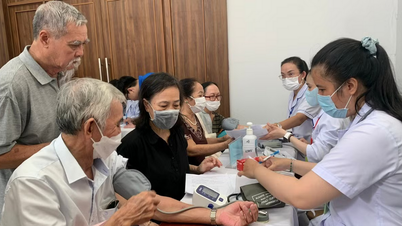
In just the first four months of this year, the station has screened nearly 8,000 people over 40 for hypertension risk; screened over 6,700 for diabetes; and screened over 2,200 women for breast and cervical cancer risk. Notably, from April 2026 to the present, the station has provided health insurance-covered medical examinations and treatment to nearly 100 people right at the facility.
Ms. Nguyen Thi Hien (Zone 6, Ha Long Ward) said: "Previously, every time we took our parents for routine check-ups or health screenings, our family had to go to the hospital or health center, and the waiting time was quite long. Now, medical examinations and medication are provided right at the ward's health station, making things much more convenient for people, especially the elderly."

The reorganized healthcare system operates stably and without interruption in medical examinations, treatment, preventive medicine, population management, food safety, and public health care. More importantly, the new model initially helps shorten work processes, increase interconnectedness in direction and management, and enhance the role of the grassroots level in public health care.
To ensure that primary healthcare truly becomes a "health shield" right from the outset, the issue of infrastructure and equipment is also a major concern for the public. Ms. Nguyen Quynh Thuong, Director of the Ha Long Ward Health Station, shared: Although assigned 22 functions and tasks, the unit currently only has 24 out of 90 necessary medical equipment items, mainly basic equipment such as blood pressure monitors, thermometers, and blood glucose meters. Important paraclinical equipment such as ultrasound machines, electrocardiographs, and basic blood testing machines have not yet been invested in... this significantly affects the examination, treatment, and service to the people.
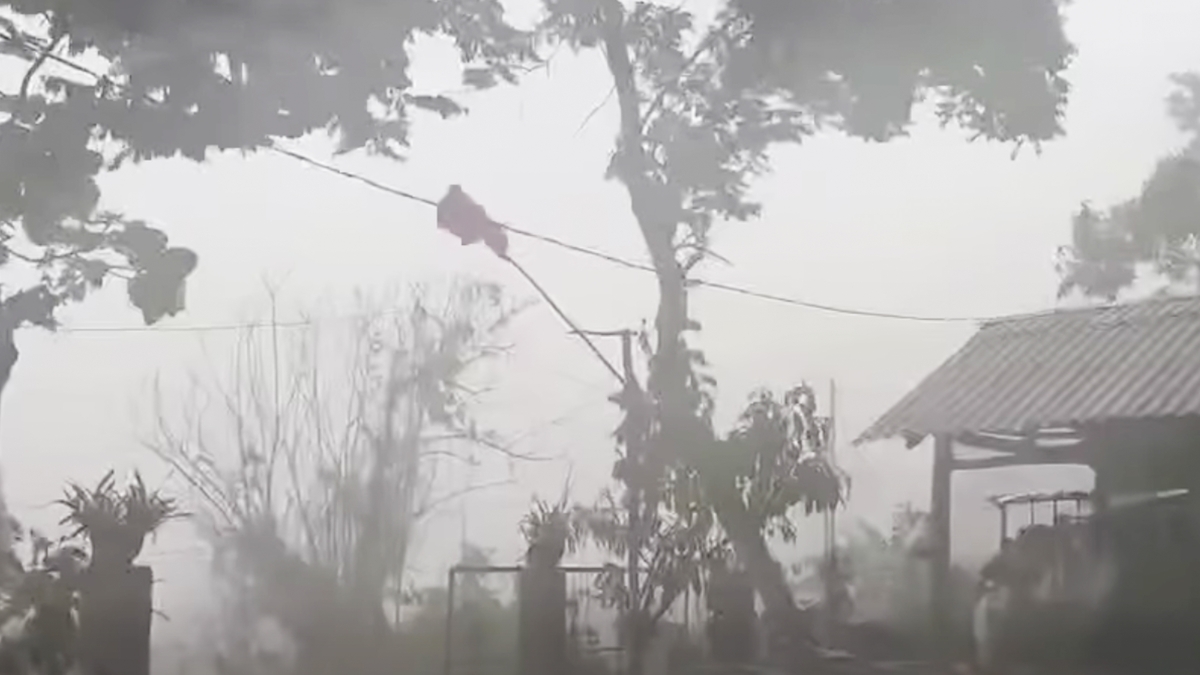
Meanwhile, at the Dong Mai Ward Health Station, the main station currently has an area of 2,004m², and the branch station has an area of 2,368.6m². Many facilities are dilapidated, especially after Typhoon Yagi in 2024, affecting professional activities…

In the 2026-2030 development plan, the focus of healthcare will shift from treatment to prioritizing disease prevention; improving the capacity of grassroots healthcare; and placing people at the center, aiming for equity in healthcare. With the goal of ensuring sufficient human resources to fully implement the health station model, and to improve the quality of examination and treatment for people at the grassroots level, on May 21st, the health sector deployed 113 doctors from hospitals to commune-level health stations to address the shortage of high-quality personnel at the grassroots level, while also supporting on-the-job training and capacity building for these stations.
Besides increasing human resources, health centers now need to be equipped with standardized equipment and infrastructure. When the grassroots level is strong enough, people will receive better healthcare from an early stage and remotely, reducing the burden on higher-level hospitals.
Source: https://baoquangninh.vn/nguoi-dan-tiep-can-y-te-thuan-loi-hon-3409075.html
![[Photo] The heat at the fireworks display site on the opening night of the Da Nang International Fireworks Festival 2026](https://vphoto.vietnam.vn/thumb/1200x675/vietnam/resource/IMAGE/2026/05/27/1779889741485_ndo_br_z7872039145157-fecaba5112f39e8352544099d7ef4738-5140-jpg.webp)

![[Photo] The courage of new recruits of Brigade 144 on the training ground.](https://vphoto.vietnam.vn/thumb/1200x675/vietnam/resource/IMAGE/2026/05/27/1779881651341_anh-man-hinh-2026-05-27-luc-18-32-52.png)























































![[Photo] The courage of new recruits of Brigade 144 on the training ground.](https://vphoto.vietnam.vn/thumb/402x226/vietnam/resource/IMAGE/2026/05/27/1779881651341_anh-man-hinh-2026-05-27-luc-18-32-52.png)



















Comment (0)