

Acute pancreatitis is a dangerous and recurrent disease, and if not treated promptly, it can be fatal.
Having just recovered from a critical condition after days of treatment for acute pancreatitis, Mr. NTH ( Hanoi ) shook his head and refused all invitations to year-end drinking parties. His doctor's advice about the increase in cases of acute pancreatitis and alcohol poisoning during the holiday season further strengthened his resolve not to repeat the mistake. This also serves as a warning to many during the Tet holiday season, when the demand for food and alcohol increases sharply.
Dangerous diseases resulting from drinking habits
Mr. NTH still can't forget the emergency hospital stay for acute pancreatitis, a near-fatal experience. Before being admitted, he experienced severe abdominal pain, was unable to eat or drink, and the pain radiated to his chest, sides, and back. Upon admission, the plasma extracted from his body was milky white due to extremely high blood lipid levels, indicating severe, life-threatening acute pancreatitis.
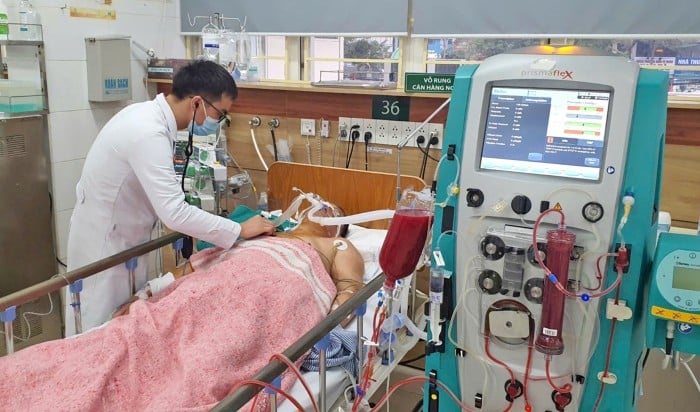 |
| Daily alcohol consumption is a common cause of acute pancreatitis. (Illustrative image) |
He stated that the cause of his condition was his daily beer-drinking habit, especially at year-end parties. This excessive alcohol consumption led to acute pancreatitis, a dangerous disease that can be fatal if not treated promptly.
According to doctors, acute pancreatitis is a condition in which the pancreas becomes suddenly inflamed and swollen. If left untreated, it can lead to multi-organ failure, pancreatic necrosis, and infection, with a mortality rate ranging from 5-15%, and potentially up to 20% depending on the cause, severity, and the patient's health condition.
The habit of drinking excessive amounts of beer and alcohol increases blood lipid levels, causing narrowing of the pancreatic duct, preventing digestive enzymes from being secreted into the small intestine and instead causing them to accumulate in the pancreas, leading to inflammation. Especially during Tet (Lunar New Year), when the demand for beer and alcohol increases, cases of acute pancreatitis often rise, with rapid and dangerous developments.
Acute pancreatitis is a dangerous and easily recurrent disease, and if not treated promptly, it can be fatal. However, one of the major problems is that the symptoms of acute pancreatitis are easily confused with other conditions such as gastritis, cardiovascular problems, or biliary tract diseases. This leads many people to be complacent, self-treating without going to the hospital, which worsens their condition.
When experiencing symptoms such as persistent upper abdominal pain, pain that worsens after eating high-protein or fatty foods, or after drinking alcohol, patients should go to the hospital for timely examination and treatment.
During the year-end period, hospitals frequently receive serious cases of alcohol poisoning, especially methanol poisoning. Recently, Nghe An Friendship General Hospital has admitted many cases of severe alcohol poisoning, including deep coma, particularly methanol poisoning.
A typical example is the case of Mr. LXD (48 years old, Vinh City) who was hospitalized with headache, blurred vision, and fatigue after drinking alcohol.
Test results showed that his blood methanol concentration was 63.85 mg/100ml. He received intensive treatment and fortunately recovered, while a friend of his, who also drank the same alcohol, unfortunately died from severe poisoning.
According to Dr. Nguyen Trong Toan, from the Toxicology Department of Nghe An Friendship General Hospital, in recent years, the department has received many patients with alcohol poisoning, mostly men of various ages. In particular, many patients suffered severe methanol poisoning, falling into a deep coma and requiring mechanical ventilation.
At the Poison Control Center of Bach Mai Hospital, cases of alcohol poisoning during Tet (Lunar New Year) are quite common. Dr. Nguyen Trung Nguyen, Director of the Center, said that methanol poisoning usually has two stages: a latent stage (from a few hours to the first 30 hours) and a stage with clearly visible symptoms. Initial symptoms are often mild and easily overlooked, causing patients to be unaware of the danger of the poisoning.
Symptoms of methanol poisoning include: headache, nausea, vomiting, diarrhea, dizziness, disorientation, cyanosis of the lips and fingernails, difficulty breathing, seizures, coma, and can lead to death if not treated promptly.
During the year-end season, when celebrations and parties are frequent, people need to pay special attention to protecting their health. The habit of drinking alcohol not only increases the risk of acute pancreatitis but can also cause methanol poisoning, leading to serious complications.
When experiencing unusual symptoms such as severe abdominal pain, shortness of breath, or nausea after drinking alcohol, patients should quickly go to a medical facility for timely diagnosis and treatment. Remember, prevention and early detection of illness are always the most important factors in protecting lives during the holiday season.
Connective tissue disease is rare but can easily lead to dangerous complications.
Mixed Connective Tissue Disease (MCTD) is a rare autoimmune disease characterized by clinical symptoms that overlap with those of several other autoimmune diseases, including systemic lupus erythematosus, systemic scleroderma, and polymyositis.
This disease is associated with the presence of antinuclear antibodies against ribonucleoprotein (RNP) antigens, and although rare, it can cause serious complications if not diagnosed and treated promptly.
Recently, Medlatec General Hospital received patient NTH (30 years old) for examination due to an unusual red rash on both cheeks. Medical history revealed that Ms. H. had suffered from unexplained thrombocytopenia for the past 10 years and was undergoing maintenance treatment with Medrol 2mg daily.
Upon examination, the doctor discovered skin lesions with indistinct erythema on both cheeks, taut, discolored skin, no scaling, and no blisters.
Test results showed the patient was positive for multiple autoimmune antibodies, including ANA (antinuclear antibody), Anti-nRNP/Sm, Anti-DsDNA, and several others.
Based on clinical and paraclinical results, Ms. H. was diagnosed with mixed connective tissue disease. She was prescribed a personalized treatment plan and advised to avoid direct sunlight to reduce the risk of exacerbating the condition.
According to Dr. Tran Thi Thu, a dermatologist at Medlatec General Hospital, mixed connective tissue disease has a prevalence rate nine times higher in women than in men, and most patients develop the disease in adulthood.
MCTD is characterized by the overlap of symptoms with other autoimmune diseases, such as systemic lupus erythematosus, systemic sclerosis, polymyositis, and rheumatoid arthritis.
Although the exact cause of the disease has not been determined, risk factors have been identified. Genetic factors play a significant role; people with relatives who have autoimmune diseases are at higher risk of developing MCTD.
Certain genes, such as HLA-DR and HLA-DQ, if altered, can cause the immune system to mistakenly identify normal body tissues as "enemies," leading the immune system to attack its own body.
In addition to genetic factors, environmental factors such as viral infections (EBV, CMV), exposure to toxic chemicals (silica dust, pesticides), and ultraviolet (UV) radiation can also trigger abnormal immune responses. The hormone estrogen can also affect immune system function and increase the risk of developing autoimmune diseases in women.
The symptoms of MCTD are highly variable and can vary from patient to patient. The early stages of the disease often present with nonspecific symptoms such as fatigue, muscle pain, joint pain, and mild fever.
However, one of the characteristic signs of MCTD is Raynaud's syndrome, characterized by fingers becoming pale, cold, and then turning bluish-purple when exposed to cold or emotional stress.
If left undetected and untreated, the disease can damage multiple organs in the body and lead to serious complications such as myocarditis, mitral valve prolapse, interstitial pneumonia, pulmonary hypertension, autoimmune hepatitis, nephrotic syndrome, glomerulonephritis, aseptic meningitis, and cauda equina syndrome.
Symptoms can progress gradually over time, severely impacting quality of life and even threatening life if not diagnosed and treated promptly.
To reduce the risk of developing the disease and to effectively control it, Dr. Thu advises patients to see a specialist when they experience unusual symptoms and to have regular health checkups to detect complications early.
Additionally, patients should avoid direct sunlight, use sunscreen, refrain from smoking, and keep warm in cold weather. A balanced diet, omega-3 supplementation, gentle exercise, and stress management through relaxation techniques such as meditation or yoga are also helpful measures.
MCTD is a complex autoimmune disease that is difficult to diagnose because its symptoms overlap with those of other autoimmune diseases. Differentiating MCTD from overlapping syndromes and differentiated autoimmune diseases such as systemic lupus erythematosus, systemic sclerosis, or dermatomyositis is a major clinical challenge.
Because MCTD can progress to differentiated autoimmune diseases after many years, accurate monitoring and diagnosis are crucial to help patients receive effective treatment and prevent dangerous complications.
Endometriosis and the groundbreaking radiofrequency ablation treatment method.
Endometriosis is a fairly common condition among women of reproductive age, seriously affecting their quality of life.
Previously, surgery was often the only solution for treating endometriosis, but now, minimally invasive radiofrequency ablation (RFA) is offering new hope to many women, helping to eliminate tumors and effectively reduce pain.
Ms. HPH (43 years old, Bac Giang) is one of the fortunate patients who have been successfully treated using radiofrequency ablation. Returning to the hospital for a follow-up examination after choosing this method to treat endometriosis in the abdominal wall, Ms. H. was delighted with the very positive results. The MRI results showed that the tumor had completely disappeared, and she no longer felt the abdominal pain she had before.
Ms. H. shared, "Immediately after undergoing radiofrequency ablation, my pain symptoms significantly decreased. A month after treatment, I no longer suffered from pain during my menstrual cycle." Ms. H.'s quality of life has improved remarkably, bringing immense joy to her and her family.
Similarly, Ms. NTL (38 years old, Hanoi) has also had two cesarean sections. However, in the past year, she has continuously felt abdominal pain and discovered a growing lump in the area of the old surgical scar whenever her menstrual period is approaching.
Worried, Ms. L. went for a check-up at Hanoi Medical University Hospital and was diagnosed with endometriosis in the abdominal wall. After treatment with radiofrequency ablation, Ms. L. no longer felt pain and could no longer feel the mass in her abdomen.
Sharing information about radiofrequency ablation, Dr. Nguyen Thai Binh, from the Center for Diagnostic Imaging and Interventional Radiology, Hanoi Medical University Hospital, said that this is a novel technique for treating endometriosis in the abdominal wall muscles, not yet common worldwide, and being implemented for the first time in Vietnam.
This method uses high-frequency waves to destroy lesions and tumors without the need for surgery, allowing for faster patient recovery.
By making a small needle puncture in the abdominal wall, the doctor will use high-frequency waves to burn away individual points of the tumor until it completely disappears.
This is a minimally invasive procedure that does not require surgery, minimizing pain and complications, and allowing for rapid patient recovery. After the procedure, patients will be in stable condition and experience no complications, able to resume normal activities and work from the following day.
Dr. Thai Binh added that before applying this method, patients often had to undergo surgery, sometimes even having to cut the rectus abdominis muscle, causing pain and a long recovery time.
The rate of residual lesions and the need for re-operation is also quite high. However, with radiofrequency ablation, patients only need local anesthesia, not general anesthesia, and can go home immediately after the procedure or stay in the hospital for only one day.
Endometriosis is a condition in which endometrial cells migrate, forming masses outside the uterine lining. These masses can appear in locations such as the pelvic peritoneum, ovaries, or abdominal wall, especially in areas with previous surgical scars.
The condition can cause severe pain, especially during menstruation, significantly impacting patients' daily lives. Statistics show that one in ten women suffers from this condition.
Pain is the most common and easily recognizable symptom of endometriosis; however, the disease can also cause menstrual irregularities and even infertility. Depending on the location and extent of the lesions, the pain symptoms can vary, affecting each patient differently.
To control the disease and prevent serious complications, doctors recommend that women of reproductive age have regular check-ups and proactively seek medical attention immediately if they experience any unusual symptoms such as severe abdominal pain, menstrual irregularities, or difficulty conceiving. Early detection and timely treatment can help patients avoid dangerous complications and protect their reproductive health.
Radiofrequency ablation (RFA) is currently proving to be an effective and minimally invasive solution for women with endometriosis, especially in cases where the lesions cause pain and discomfort. With advancements in medicine, women have increasingly more safe treatment options, helping to improve their quality of life and protect their reproductive health.
Source: https://baodautu.vn/tin-moi-y-te-ngay-131-nguy-co-mat-mang-vi-ruou-bia-cuoi-nam-d240418.html
























































![[Video] Sunset at Lap An Lagoon – Where the sun sets over the fishing nets](https://vphoto.vietnam.vn/thumb/1200x675/vietnam/resource/IMAGE/2026/05/31/1780192137701_beach-landscape-sea-water-nature-grass-745871-pxhere-com.jpeg)









































Comment (0)