

On October 1st, the Labor and Trade Union Magazine, in collaboration with the Vietnam Press Museum, organized a seminar on the theme: "Journalist Nguyen Duc Canh and Vietnamese Revolutionary Journalism" and a ceremony to receive the statue of journalist Nguyen Duc Canh.
This is a meaningful program to commemorate the 95th anniversary of the first issue of the Red Trade Union Magazine (now the Labor and Trade Union Magazine) published (October 1, 1929 – October 1, 2024), with Comrade Nguyen Duc Canh as Editor-in-Chief.
Forged and proletarianized within the ranks of the working class, and especially having studied the "Revolutionary Path" of leader Nguyen Ai Quoc, Comrade Nguyen Duc Canh deeply absorbed Marxism-Leninism. Through concrete actions, he widely disseminated Marxism-Leninism among the working class.
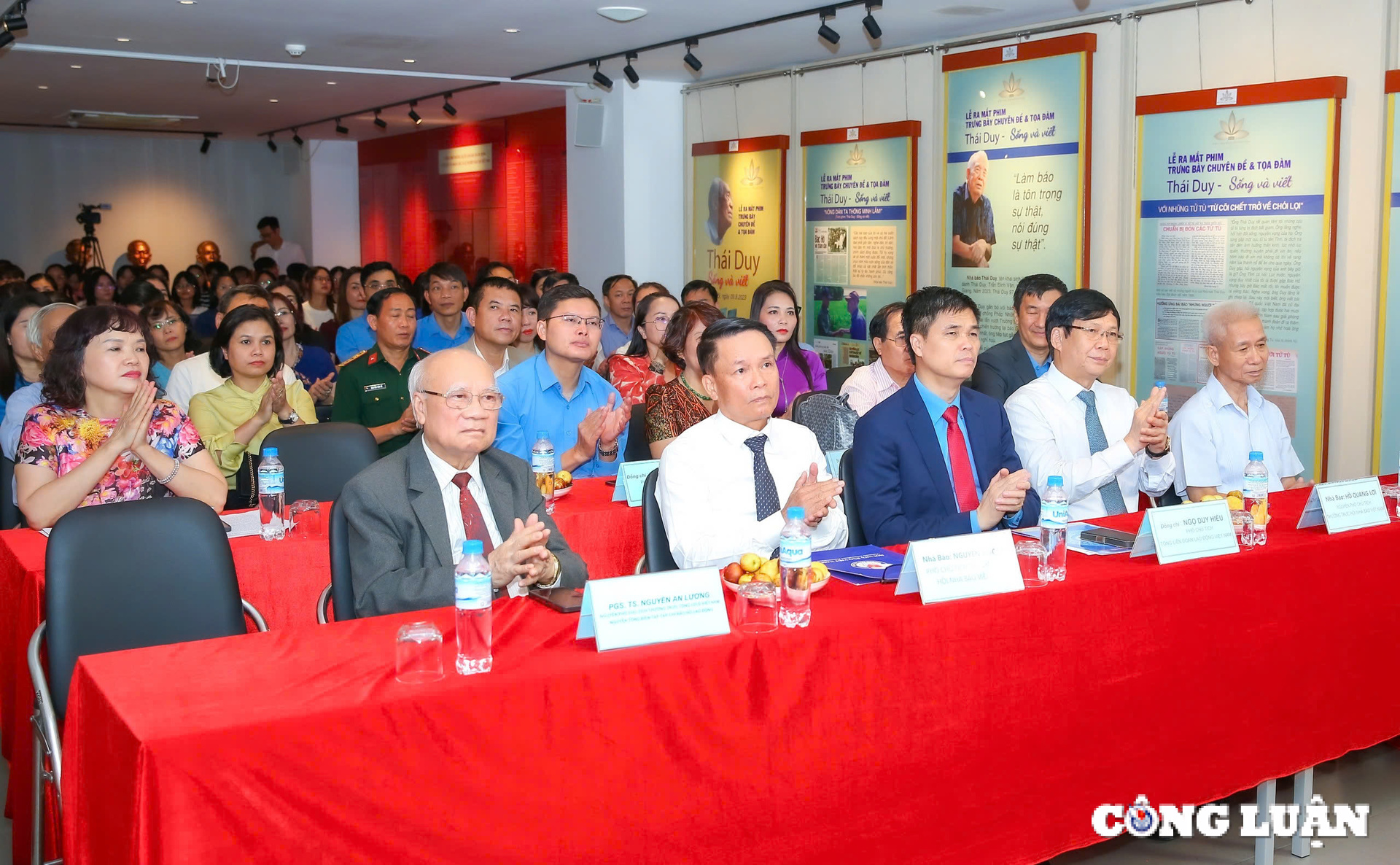
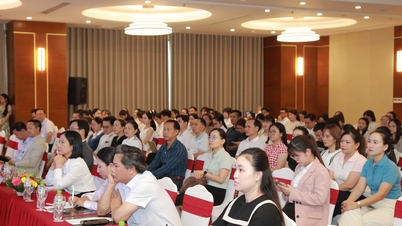
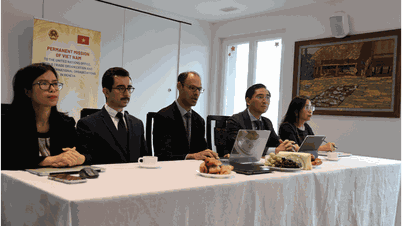
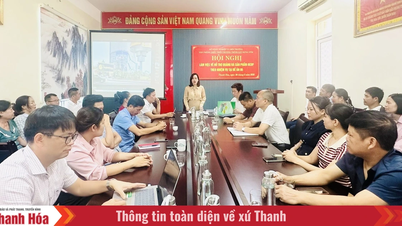
Delegates attending the seminar.
Recognizing the crucial importance of the press in the revolutionary movement, Comrade Nguyen Duc Canh used the press as a sharp weapon, actively directing and promoting propaganda and mobilization of workers to unite in the class struggle. He made significant contributions to the founding of the Communist Party of Vietnam ; he was also the provisional President of the General Confederation of Trade Unions of Northern Vietnam and the first Editor-in-Chief of the Labor Newspaper and the Red Trade Union Magazine (now the Labor and Trade Union Magazine).
Speaking at the seminar, Comrade Nguyen Duc Loi - Standing Vice Chairman of the Vietnam Journalists Association - shared that the seminar and the unveiling of the statue of journalist Nguyen Duc Canh at the Vietnam Press Museum today is very significant, coinciding with the 95th anniversary of the founding of the Red Trade Union Magazine and in the atmosphere of the nationwide press community's vibrant activities leading up to the 100th anniversary of Vietnam's Revolutionary Press Day.
"I expect the content of the event will highlight the contributions of journalist Nguyen Duc Canh to Vietnamese revolutionary journalism, to revolutionary propaganda and mobilization among the people, and to the struggle against colonialism and counter-revolutionary forces."
At the same time, it further clarifies the immense value of the journalistic legacy he left behind, helping present and future generations of journalists to be more aware of the importance of learning, professional growth, and striving to cultivate the character and integrity of a revolutionary journalist,” Comrade Nguyen Duc Loi expressed.
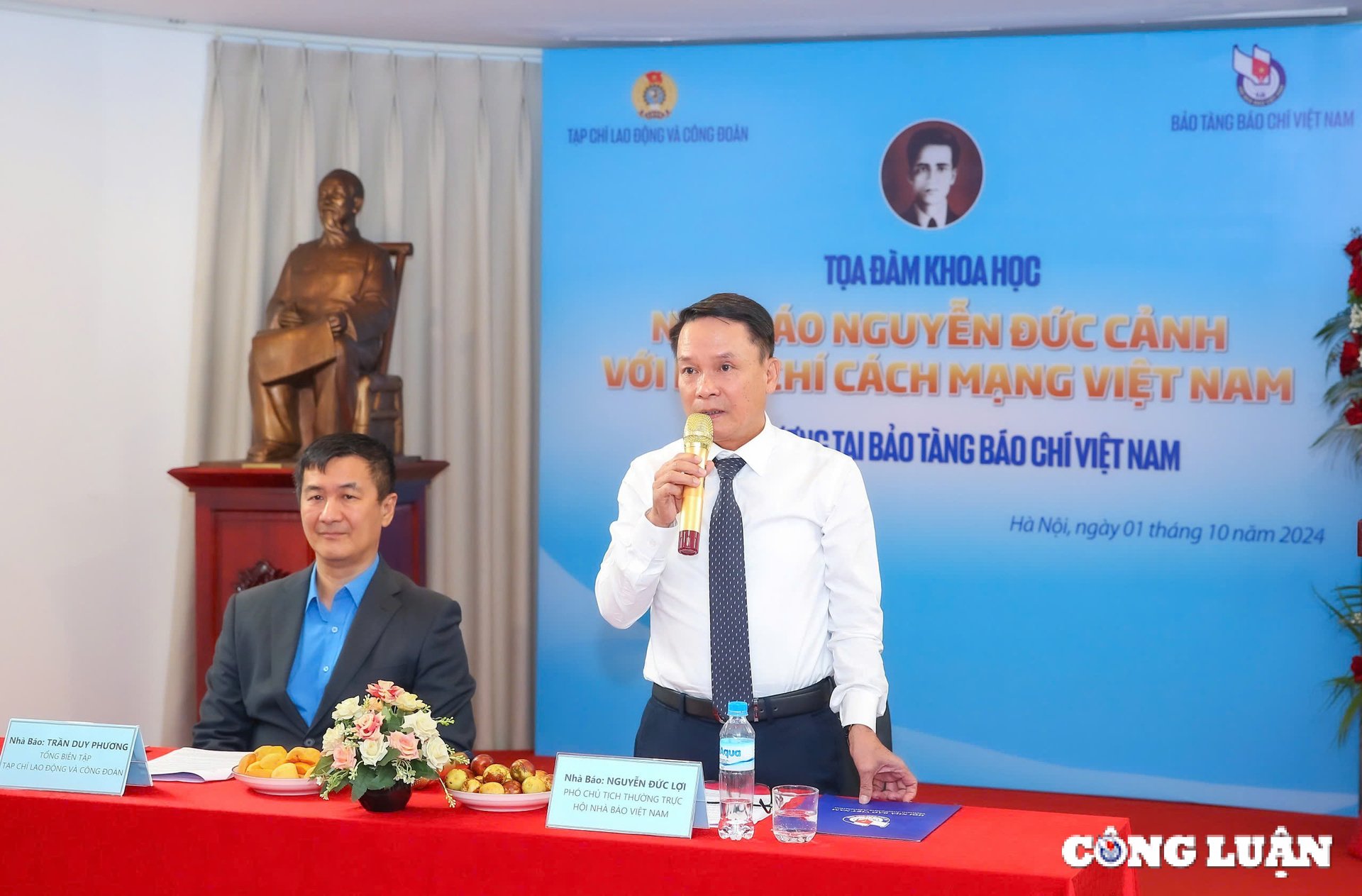
Comrade Nguyen Duc Loi – Standing Vice Chairman of the Vietnam Journalists Association and Comrade Tran Duy Phuong - Editor-in-Chief of the Labor and Trade Union Magazine, chaired the seminar.
Journalist Tran Thi Kim Hoa, in charge of the Vietnam Press Museum, said that during the years 2015-2019, while developing the exhibition outline for the historical spaces of journalism from 1925-1945, everyone struggled to find a way to honor this unique historical reality.
Until its public debut, the exhibition had a particular focus on the journalistic weapon in the class struggle of our revolutionary leaders – journalists. One of them was Nguyen Duc Canh – leader of the General Red Trade Union of Northern Vietnam, the first Secretary of the Hai Phong City Party Committee, who directly wrote articles, managed the Union's newspaper and magazine, and was the first Editor-in-Chief of the Labor Newspaper and the Red Trade Union Magazine. At that time, he was only 21 years old.
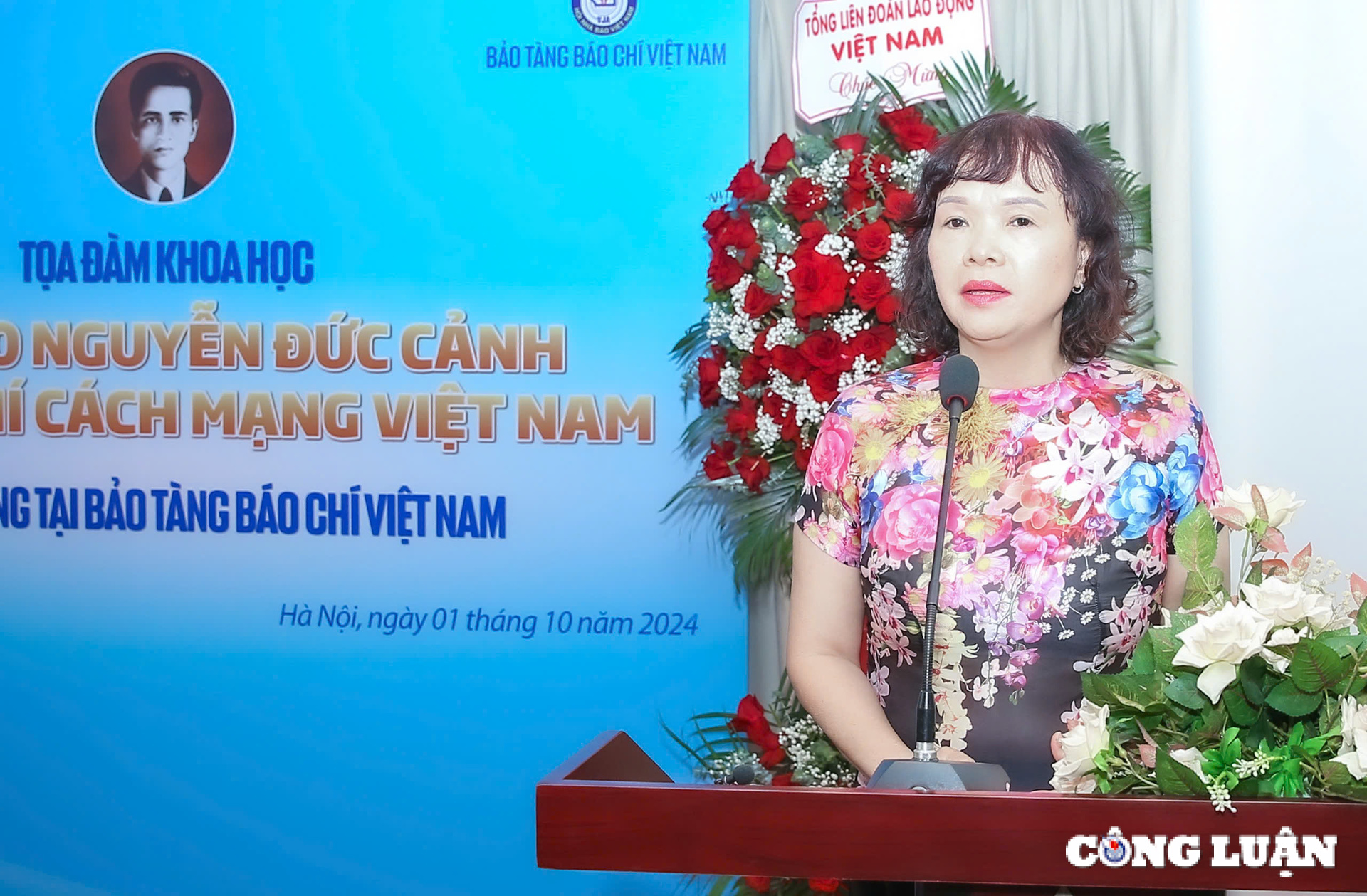
Journalist Tran Thi Kim Hoa, in charge of the Vietnam Press Museum, shared her insights at the event.
Journalist Tran Thi Kim Hoa shared that Nguyen Duc Canh, born in 1908 in Nam Dinh, was expelled from high school in 1925 for participating in the movement demanding the release of Phan Boi Chau. He had two years before embarking on the arduous path of revolution. During that time, he worked as a secretary at the Hung Ky photo studio, a teacher at the private Cong Ich school on Bach Mai street, a typesetter at the Mac Dinh Tu printing house, and then attended a political training course in China organized by the General Headquarters of the Vietnam Revolutionary Youth League.
The young revolutionary had the opportunity to hone his political awareness and acquire the necessary practical skills so that when the revolution needed him, he could confidently take on the responsibility of directing the press, writing articles, and organizing the publication of newspapers…
Perhaps, under his leadership, despite the difficulties and rudimentary nature of the early stages, both the Labor and Red Trade Unions were given meticulous attention to content. For example, the first issue of the Red Trade Union (published on October 1, 1929) included sections such as *Theories*; *Experiences in Struggle*; *Correspondence*; and *News*—sections very characteristic of the magazine genre.
“His presence in the exhibition area of Vietnamese Journalism 1925-1945 continues to shine a light on a personality, a talent – a model of righteousness who lived, fought, and sacrificed for the people and the country, including the revolutionary journalism of Vietnam! ”, said journalist Tran Thi Kim Hoa.
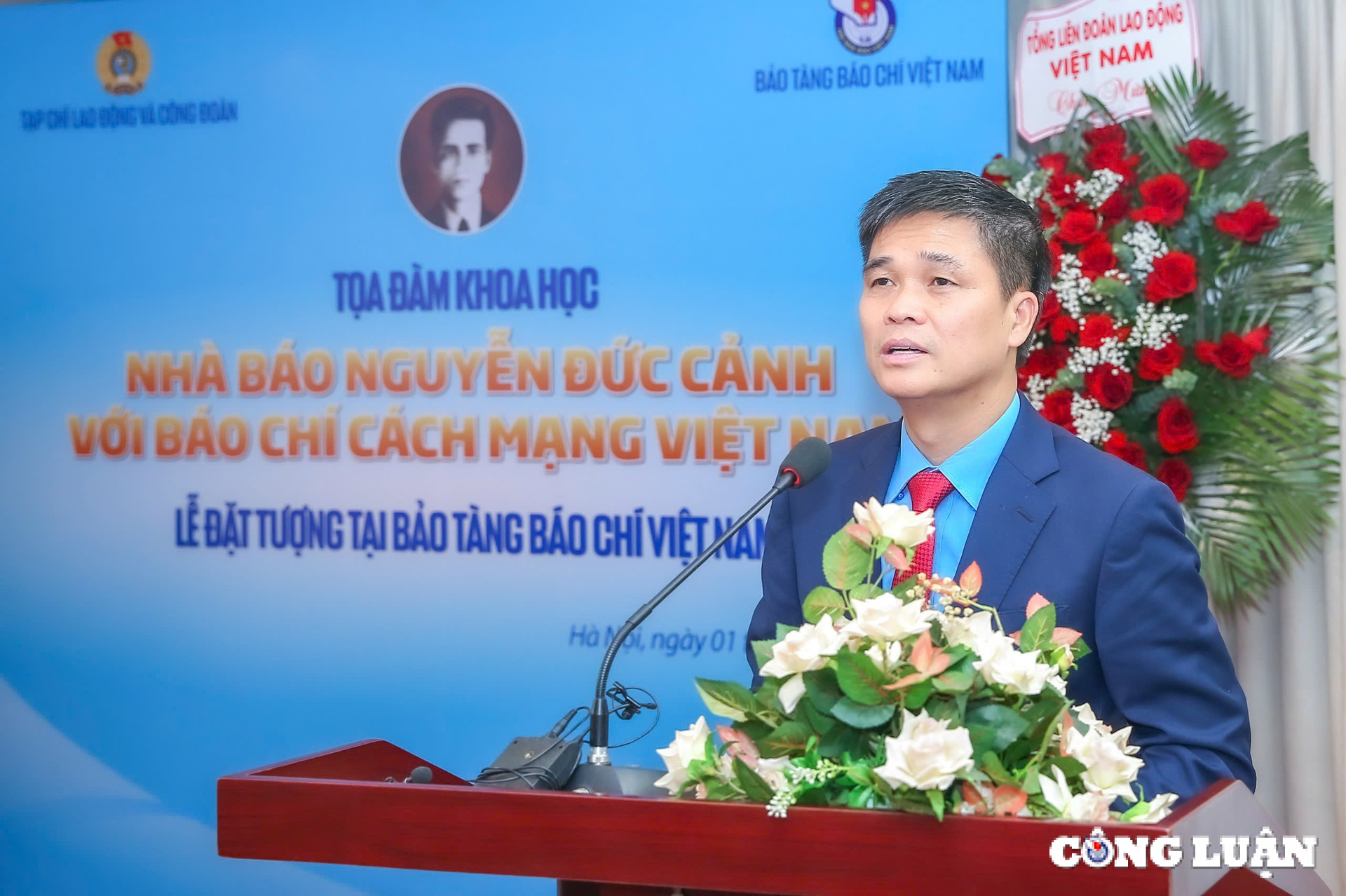
Comrade Ngo Duy Hieu - Vice President of the Vietnam General Confederation of Labor, delivered the concluding remarks.
At the seminar, delegates shared touching stories and valuable information, contributing to a clearer understanding of Comrade Nguyen Duc Canh's immense contributions to the revolutionary Vietnamese press; they also exchanged ideas and studied the Red Trade Union Magazine (now the Labor and Trade Union Magazine) from the perspective of being the first research and theoretical magazine in the history of the revolutionary Vietnamese press.
In his concluding remarks at the seminar, Comrade Ngo Duy Hieu, Vice President of the Vietnam General Confederation of Labor, emphasized that Comrade Nguyen Duc Canh was one of the pioneering revolutionary leaders of the Party, a staunch communist, and also a great journalist of the Vietnamese revolutionary press.
To date, based on published documents, it can be affirmed that the Red Trade Union Magazine (first issue published on October 1, 1929) was the first research-oriented and theoretical magazine in the history of revolutionary journalism. "The birth of the Red Trade Union Magazine was a milestone in the history of Vietnamese revolutionary journalism, revealing the horizon and prospects of the proletariat and the revolution. This demonstrated the immense political determination and propaganda of the General Red Trade Union of Northern Vietnam and the Indochinese Communist Party, with leader Nguyen Duc Canh as its soul," Comrade Ngo Duy Hieu observed.
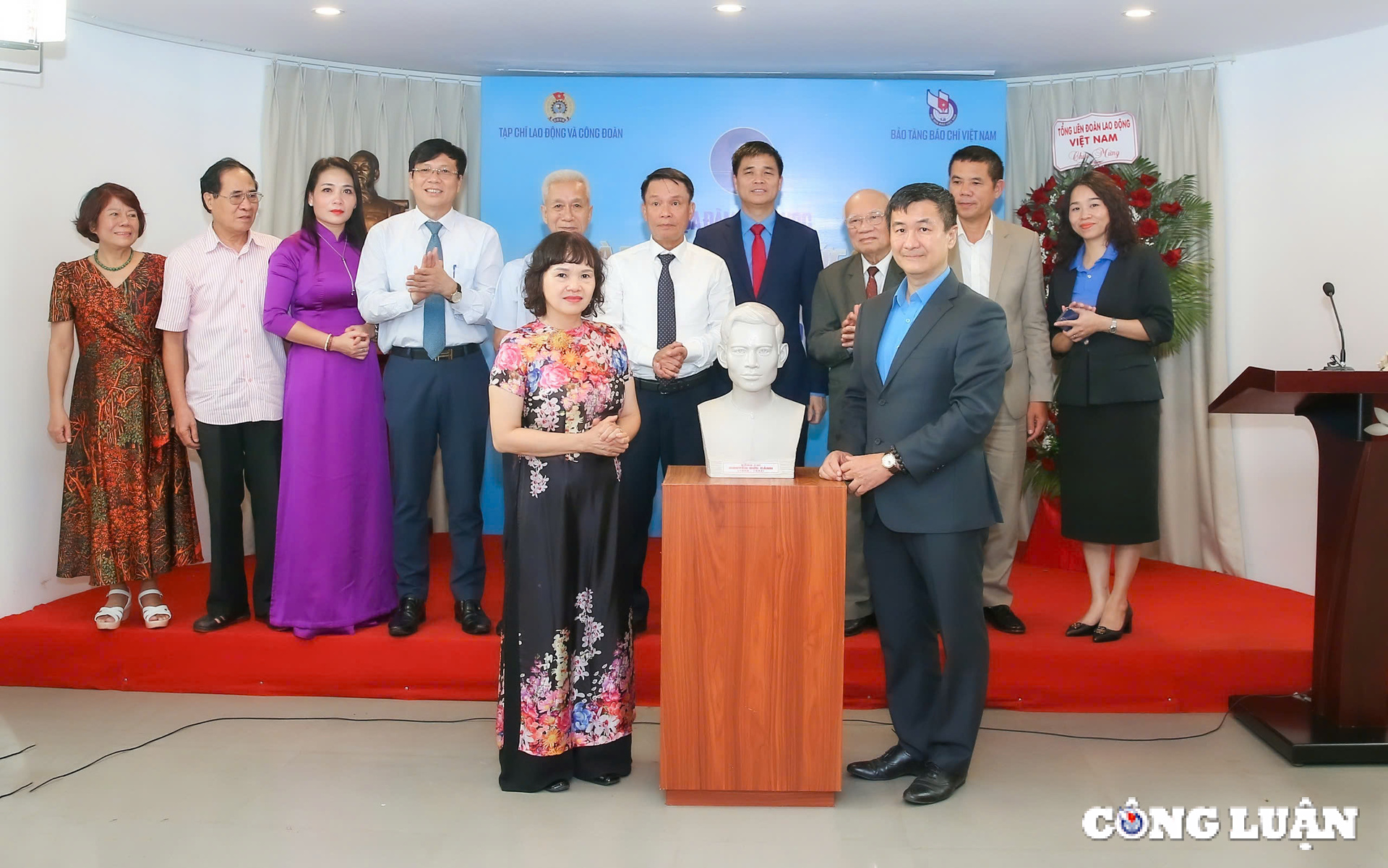
The Labor and Trade Union Magazine presented a bust of Comrade Nguyen Duc Canh to the Vietnam Press Museum.
According to the Vice President of the Vietnam General Confederation of Labor, the decision to publish the Red Trade Union Magazine (although only the first two issues remain) reflected the theoretical and journalistic level of the Indochinese Communist Party and the General Red Trade Union of Northern Vietnam, represented by Comrade Nguyen Duc Canh. It can be affirmed that the aspiration of Nguyen Duc Canh and his comrades was to create the first revolutionary magazine, even if it was only within the territory of the Red Trade Union organization.
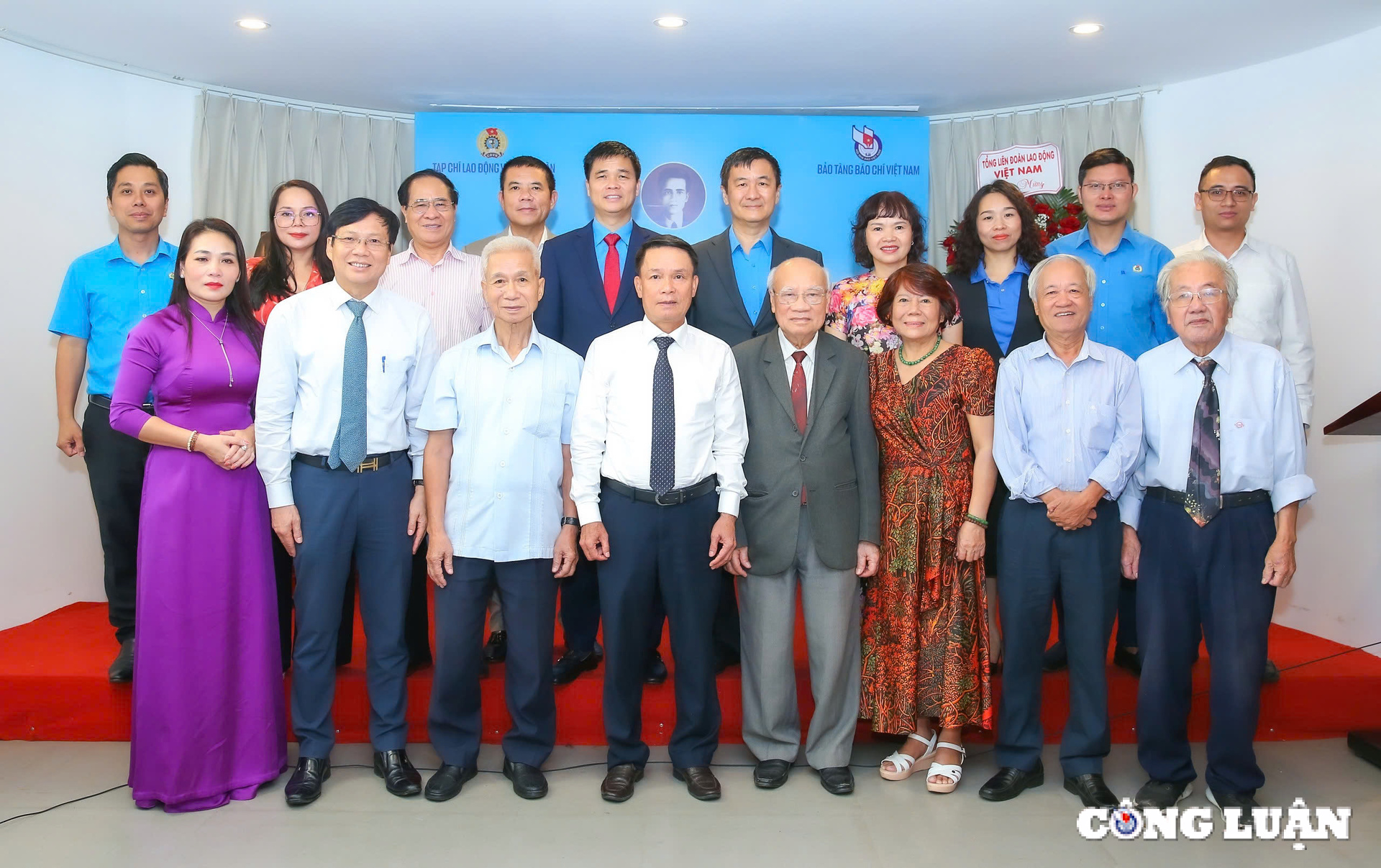
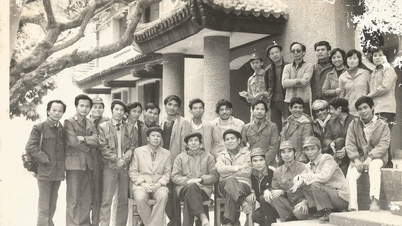
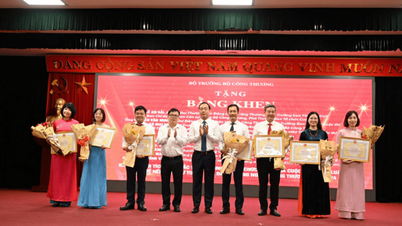
The delegates took a commemorative photo.
Comrade Ngo Duy Hieu stated that, in the process of national renewal, revolutionary journalism continues to be a sharp weapon on the cultural and ideological front. However, in the trend of commercialization of journalism, driven by profit, competitive pressure, and the struggle for information and readers, journalistic activities still reveal some weaknesses and shortcomings.
Promoting exemplary journalistic figures, the pioneers of Vietnamese revolutionary journalism such as Nguyen Ai Quoc, Truong Chinh, Nguyen Duc Canh, etc., is extremely necessary to educate the current generation of journalists on political integrity, professional ethics, and revolutionary journalistic style.
As part of the program, the Labor and Trade Union Magazine donated a bust of Comrade Nguyen Duc Canh to the Vietnam Press Museum to supplement the exhibits in the room showcasing the press period from 1925-1945.
Hoa Giang - Son Hai
Source: https://www.congluan.vn/nha-bao-nguyen-duc-canh--nguoi-gieo-mam-cho-su-ra-doi-va-phat-trien-nhung-to-bao-cua-giai-cap-cong-nhan-post314714.html
![[Photo] The courage of new recruits of Brigade 144 on the training ground.](https://vphoto.vietnam.vn/thumb/1200x675/vietnam/resource/IMAGE/2026/05/27/1779881651341_anh-man-hinh-2026-05-27-luc-18-32-52.png)
![[Photo] The heat at the fireworks display site on the opening night of the Da Nang International Fireworks Festival 2026](https://vphoto.vietnam.vn/thumb/1200x675/vietnam/resource/IMAGE/2026/05/27/1779889741485_ndo_br_z7872039145157-fecaba5112f39e8352544099d7ef4738-5140-jpg.webp)








































![[Photo] The courage of new recruits of Brigade 144 on the training ground.](https://vphoto.vietnam.vn/thumb/402x226/vietnam/resource/IMAGE/2026/05/27/1779881651341_anh-man-hinh-2026-05-27-luc-18-32-52.png)















Comment (0)