

How should a car that has been submerged in water be handled?
Speaking to reporters, Mr. Hung, the owner of Dr.car auto repair shop in Hanoi, said that in recent days, a large number of flooded cars have been brought to his garage, overwhelming the facility and even leaving him without enough tow trucks to transport them to the workshop.
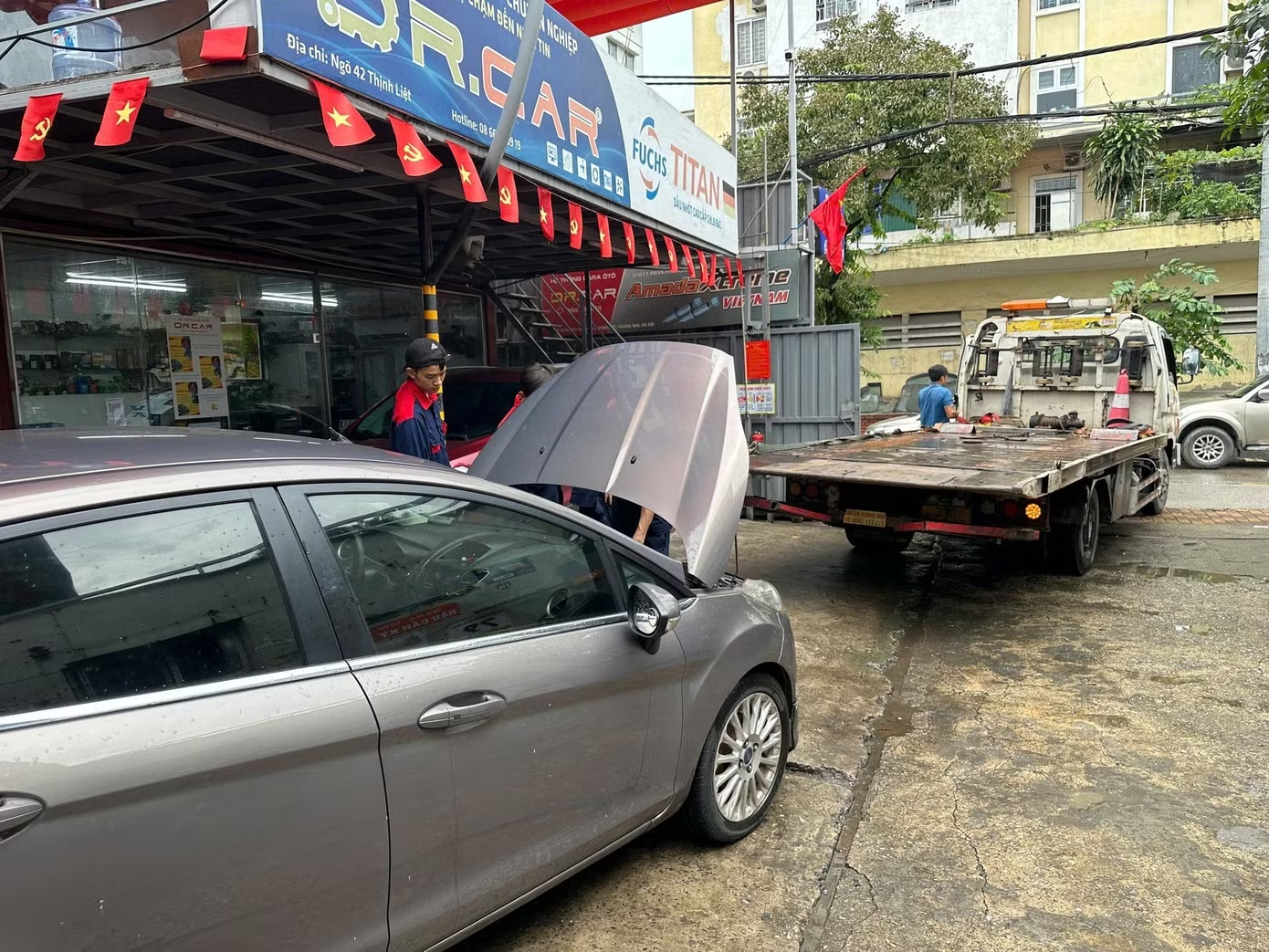
According to Mr. Hung, repairing a car that has been flooded is a complex process and will take several days to complete. The repair costs can range from tens to hundreds of millions of VND, depending on the car model.
"For common vehicles, especially those with low ground clearance, flooding and water entering the floor often damage the control boxes located under the seats. The cost to replace this part is around 10 million VND. The cost of removing the floor mats for cleaning, deodorizing, and drying is only about 2 million VND."
"In cases where the car suffers 'hydrostatic lock,' bent or broken connecting rods, the engine will have to be removed for repairs, costing around 20-30 million VND for a standard car. For luxury cars, like German Mercedes, the repair cost can be around 200 million VND," Mr. Hung shared.
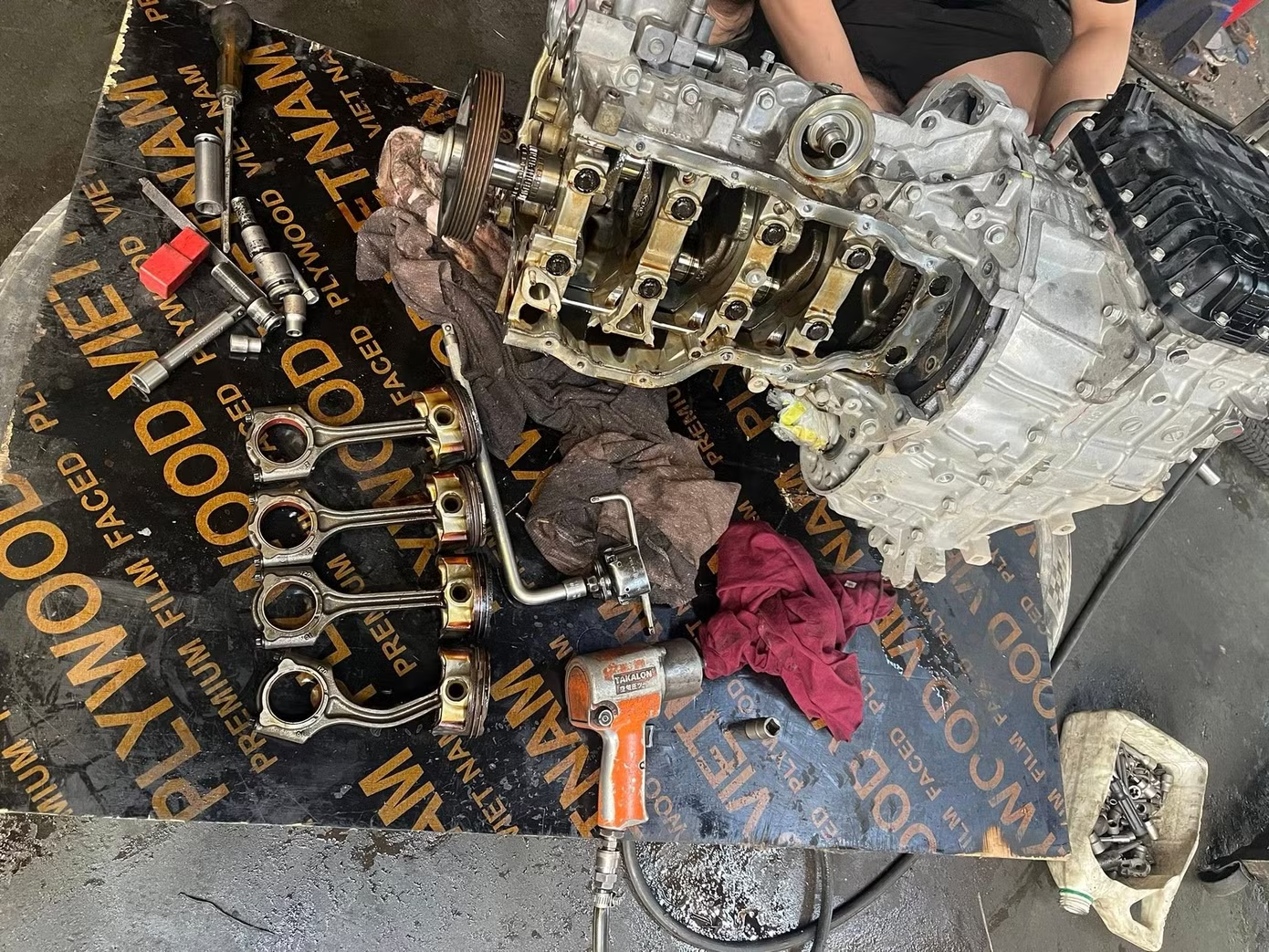
According to Mr. Hung, inspecting and repairing the control boxes under the floor is an extremely important step. This is because when the car is flooded, water can seep into the connectors on the electrical system.
These components can become damp, and if left for too long, there is a risk of condensation, which could cause short circuits and fires, posing a safety hazard. Therefore, technicians must inspect and handle control boxes very carefully.
According to Mr. Hung, car users today have the knowledge and experience to handle situations when their vehicles are submerged in water, so they usually don't try to restart their cars after they stall due to flooding, thus reducing the risk of hydrolock.
For vehicles parked in underground garages that are only slightly flooded but not driven, users typically only need to have the floor and control panels inspected, dried, and the interior cleaned.
Regarding the resale value of a flooded car, Mr. Hung said that if the car was only slightly flooded, without needing to dismantle important parts or remove the engine, and only requiring interior cleaning, then it would be almost unaffected.
"For cars with only minor water damage to the floor, if handled properly, they can remain almost like 'stock' vehicles because only the interior needs cleaning. In reality, it's similar to a new car where the customer wants to add extra features; mechanics will still remove the floor and seats for installation – that's perfectly normal."
Meanwhile, if water gets into the engine compartment, it risks having to remove the engine and gearbox for repairs, meaning the car is "no longer in its original condition." In that case, the car will definitely lose value when resold," Mr. Hung said.
The depreciation rate can be as high as 30% compared to a car of the same age and model without problems. The newer and more modern the car, especially luxury or German cars, the higher the depreciation rate will be.
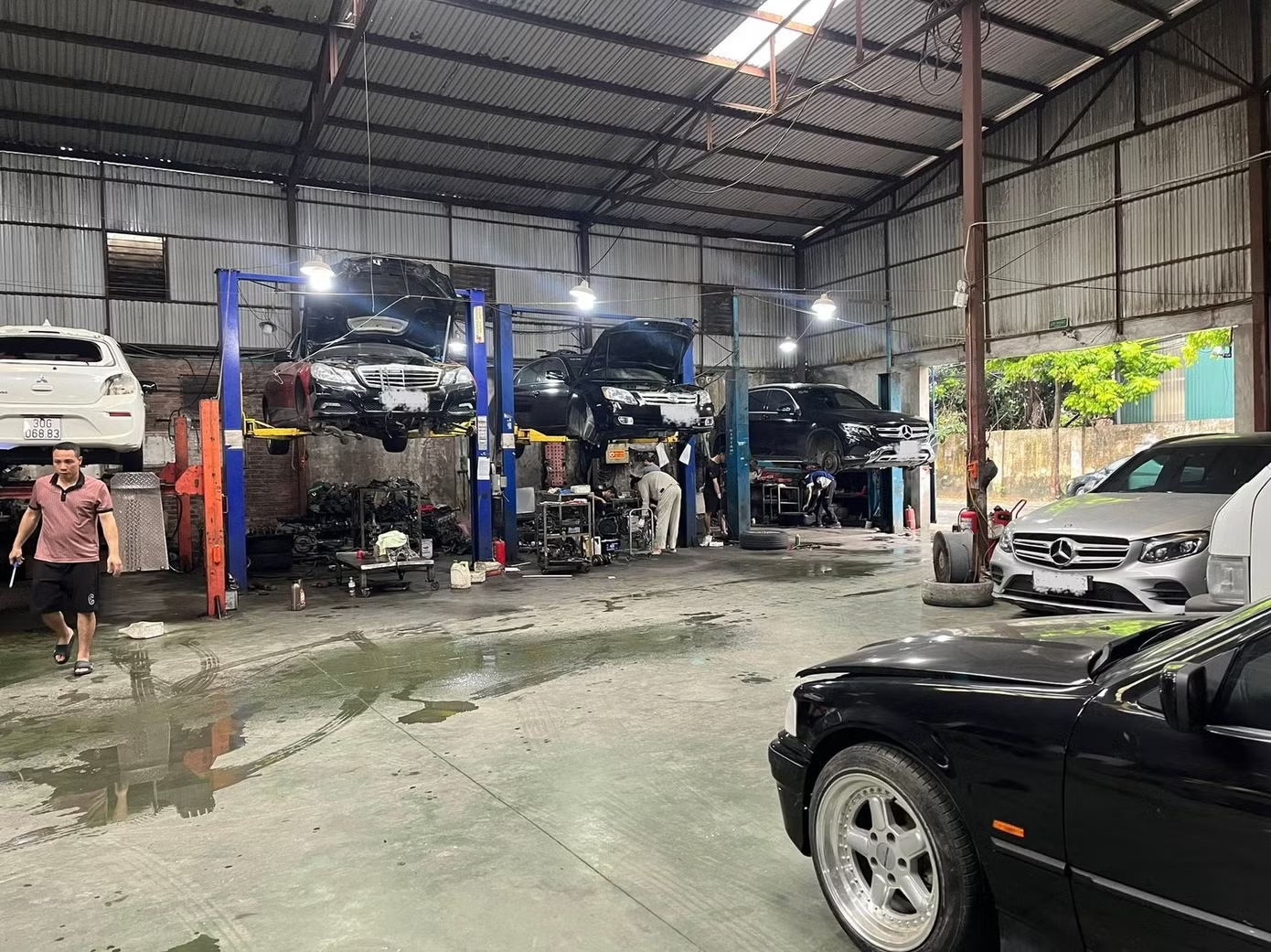
Sharing the same view as Mr. Hung, Mr. Hiep, a technician at a used car service workshop in Hanoi, said that cars that have been flooded often see a significant price drop, potentially up to half of their original value depending on the condition and type of vehicle.
Of these, vehicles that have had their engines overhauled will depreciate the most when resold, because even after repairs, buyers will still have concerns about the durability and stability of the electrical system and engine.
Tips for identifying cars that have been flooded.
For those planning to buy a used car, checking whether the vehicle has ever been flooded or suffered water damage is extremely important. Below are some identifying signs to help avoid the risk of buying a low-quality vehicle.
First, even after thorough cleaning, cars that have been flooded often retain a distinctive musty smell in the cabin. When the doors are closed and you smell carefully, buyers can easily detect the difference compared to a normal car.
Next, details such as screws, door hinges, seat rails, or the chassis are often the first places to show signs of rust. If these parts are abnormally oxidized, there is a high probability that the car has been flooded.
Another clear sign is condensation or clouding on the headlights and taillights. When a car is submerged, water can get into the lighting system, creating condensation or stains inside the lamp housing.
Inspecting the engine compartment is especially important. If you find wrench marks or re-welding marks on the engine block, it's highly likely that the engine and transmission bolts were removed for overhaul after the water damage incident.
At the same time, the wiring system and connectors also need to be thoroughly inspected. If you find any signs of oxidation, discoloration, or corrosion on the connectors under the hood or in the fuse box, it's almost certain the car has been exposed to water.
Experts advise that before buying a used car, buyers should request the maintenance history from the previous owner, then have the car thoroughly inspected using specialized equipment to assess the condition of the engine, transmission, and electrical system. A thorough test drive is also recommended to check the stability of the steering wheel, accelerator, and brakes, as well as to detect any unusual noises.
Source: https://tienphong.vn/nhan-dien-xu-ly-o-to-bi-ngap-nuoc-post1783587.tpo
![[Image] Close-up view of the interchange connecting the two expressways and Long Thanh Airport.](https://vphoto.vietnam.vn/thumb/1200x675/vietnam/resource/IMAGE/2026/05/25/1779703378210_ndo_br_z7863716673926-224453a31600126cce10622af6290afd-4549-jpg.webp)
![[Image] Hanoi's urban life under the challenge of a "scorching hot" environment](https://vphoto.vietnam.vn/thumb/1200x675/vietnam/resource/IMAGE/2026/05/25/1779706979265_nang-nong-t5-2026-minh-duy-7-4636-jpg.webp)





























































































Comment (0)