

(Dan Tri Newspaper) - The Kashiwazaki-Kariwa nuclear power plant is preparing the final steps to restore its two reactors after a long period of closure due to the Fukushima disaster.
According to an announcement from Tokyo Electric Power Company (Tepco), reactor number 6 at the Kashiwazaki-Kariwa power plant in Niigata Prefecture is expected to be injected with nuclear fuel next June to restart operations.
Previously, reactor number 7 was refueled in April. However, to fully restore reactors number 6 and 7, local approval and the construction of evacuation routes as requested by Niigata Prefecture are required.
In the context of the need for energy diversification, Japan views the restarting of nuclear reactors as a crucial part of its energy strategy. The reactivation of the Kashiwazaki-Kariwa plant is part of this strategy.
On December 7th, Chugoku Electric Power Company announced that it had restarted the Shimane nuclear power plant in western Japan, which had been shut down immediately after the Fukushima disaster.
The restart of the plant's 820MW reactor No. 2 has brought Japan's number of operational reactors to 14, with a total capacity of over 13.2GW.
Previously, all of Japan's nuclear reactors were forced to shut down following the Fukushima Dai-Ichi nuclear power plant disaster in 2011. According to Energy News , in September, the Japanese government approved a plan to accelerate the recovery process of the Kashiwazaki-Kariwa nuclear power plant operated by Tepco.
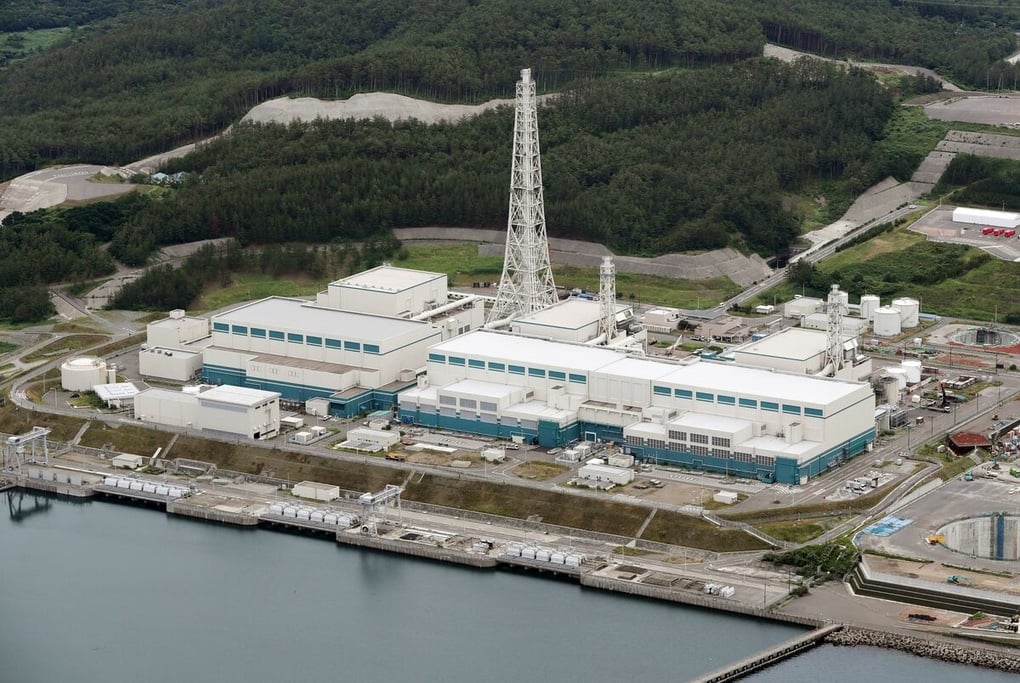
Units 5, 6, and 7 of the Kashiwazaki-Kariwa Nuclear Power Plant (Photo: Niigata).
The Kashiwazaki-Kariwa Nuclear Power Plant, located between Kashiwazaki City and Kariwa Village in Niigata Prefecture, is the world's largest nuclear power plant, covering an area of approximately 4.2 million square meters and with a total installed capacity of 8.2 GW. Inaugurated in 1985, the plant has seven reactors with capacities ranging from 1.1 GW to 1.3 GW.
Following the Fukushima nuclear power plant disaster in 2011, the Kashiwazaki-Kariwa plant was shut down for an extended period. The restoration of this plant is seen as a significant step in Japan's nuclear power recovery policy.
Source: https://dantri.com.vn/kinh-doanh/nhat-ban-day-manh-khoi-dong-lai-cac-lo-phan-ung-hat-nhan-20241210123842700.htm


![[Photo] Reception to welcome General Secretary and President To Lam and his wife on their State visit to the Philippines](https://vphoto.vietnam.vn/thumb/1200x675/vietnam/resource/IMAGE/2026/06/01/1780295488620_vna-potal-chieu-dai-chao-mung-tong-bi-thu-chu-tich-nuoc-to-lam-va-phu-nhan-tham-cap-nha-nuoc-toi-philippines-8798060-7855-jpg.webp)

![[Photo] General Secretary and President To Lam and the President of the Philippines hold talks.](https://vphoto.vietnam.vn/thumb/1200x675/vietnam/resource/IMAGE/2026/06/01/1780286997787_anh-man-hinh-2026-06-01-luc-11-09-43.png)


























































![[Infographic] Key policies effective from June 2026](https://vphoto.vietnam.vn/thumb/402x226/vietnam/resource/IMAGE/2026/06/01/1780300598551_2_20260601144253.webp)











Comment (0)