

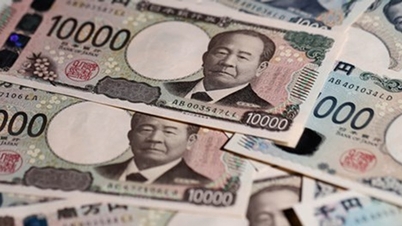
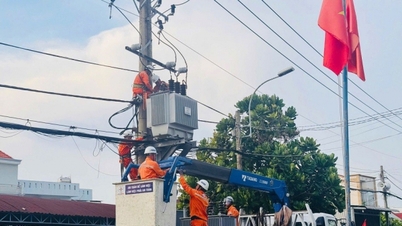
Of that amount, approximately 500 billion yen from the reserve fund will be used to support households in paying their electricity bills, especially during the summer when demand for air conditioning increases sharply.
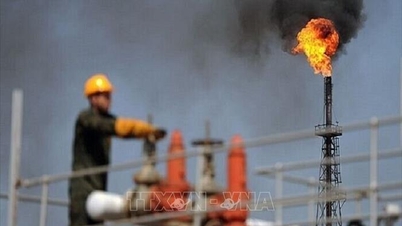
Previously, Japan had reinstated fuel subsidies and continued to spend hundreds of billions of yen each month to keep fuel prices stable, due to rising oil prices following tensions in the Middle East and disruptions to shipping through the Strait of Hormuz.
However, these measures are raising concerns about the burden of public debt and the long-term financial pressures on the world's third-largest economy .
Regarding the financial plan, Japanese Prime Minister Sanae Takaichi stated that the budget would be raised through the issuance of additional government bonds. However, she affirmed that the total debt level would not increase beyond the initial plan. This was because, thanks to strong tax revenue growth, the government was able to reduce the amount of bond issuance equivalent to what was initially planned for 2025. This explanation aimed to reassure the market, given that Japanese bond yields are at their highest level in 30 years due to concerns about inflation and public debt.
Although Japan is heavily reliant on oil supplies from the Middle East via the Strait of Hormuz, the Prime Minister said that efforts to diversify suppliers have helped import levels reach approximately 80% of the same period last year, enough to ensure supply until Spring 2027.
Notably, Ms. Takaichi affirmed that she would not ask people to restrict energy use to avoid hindering economic activity. At the same time, the government is also considering adjusting fuel subsidies to maintain retail prices at around 170 yen/liter, aiming to balance supporting the public while reducing national financial pressure.
Source: https://vtv.vn/nhat-ban-xay-dung-goi-ho-tro-nang-luong-10026052615382566.htm

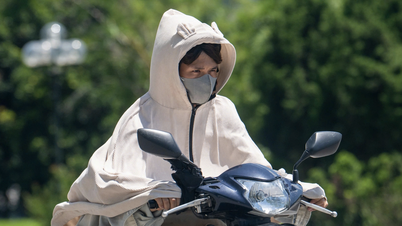
![[Photo] The heat at the fireworks display site on the opening night of the Da Nang International Fireworks Festival 2026](https://vphoto.vietnam.vn/thumb/1200x675/vietnam/resource/IMAGE/2026/05/27/1779889741485_ndo_br_z7872039145157-fecaba5112f39e8352544099d7ef4738-5140-jpg.webp)
![[Photo] The courage of new recruits of Brigade 144 on the training ground.](https://vphoto.vietnam.vn/thumb/1200x675/vietnam/resource/IMAGE/2026/05/27/1779881651341_anh-man-hinh-2026-05-27-luc-18-32-52.png)





























































![[Photo] The courage of new recruits of Brigade 144 on the training ground.](https://vphoto.vietnam.vn/thumb/402x226/vietnam/resource/IMAGE/2026/05/27/1779881651341_anh-man-hinh-2026-05-27-luc-18-32-52.png)



















Comment (0)