


People in Ho Chi Minh City are eagerly awaiting the policy of free bus fares - Photo: QUANG DINH
The proposal for free bus services was quickly implemented by the Ho Chi Minh City Department of Construction following the directive from the Secretary of the Ho Chi Minh City Party Committee, Tran Luu Quang, at the 5th City Party Committee Conference, term 2025-2030, demonstrating Ho Chi Minh City's determination to ensure that its citizens can soon benefit from this advantageous and humane policy.
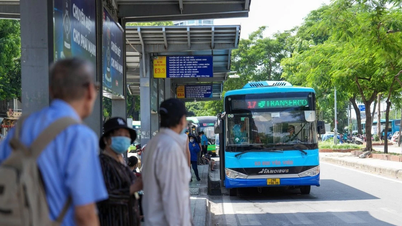
Buses are becoming increasingly modern.
According to the Ho Chi Minh City Department of Construction, after the merger, the city has 180 bus routes (including 109 subsidized routes and 71 non-subsidized routes) with 42 transport companies participating in public passenger transport by bus.
Of the 2,432 vehicles in operation, 1,185 are electric buses and 153 are CNG-powered buses (reaching 55% of vehicles using environmentally friendly fuel).
According to the resolution proposal, free bus fares will be waived on 135 bus routes operating in Ho Chi Minh City. The total cost for the remaining eight months of 2026 is approximately 930 billion VND, and the resolution is expected to be submitted for approval in April.
From 2002 to the present, in implementing the city's policy of encouraging public passenger transport, the Department of Construction has approved subsidy policies and policies to exempt or reduce bus fares for certain citizens from the city's budget. Accordingly, bus fares have been waived for children under 6 years old; the elderly, people with disabilities, and those who have contributed to the revolution.
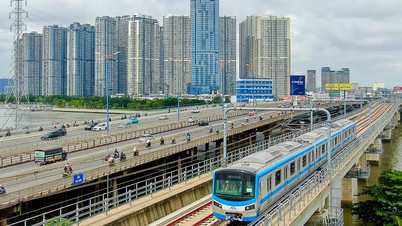
When the Ben Thanh - Suoi Tien metro line 1 is put into operation, Ho Chi Minh City will offer 100% free fares on 17 connecting bus routes from December 24, 2024 to January 20, 2025, using its budget. Statistics show that passenger numbers during the free period are 34% higher than after the program ends.
100% of bus fares will be waived during holidays in 2025 such as April 30th, May 1st, September 2nd, New Year's Day 2026, Lunar New Year 2026, and election day, funded through social contributions. This will result in a 20-28% increase in passenger volume, depending on the holiday, compared to the same period in 2024.
In addition, banks, card organizations, e-wallets, and businesses also organize many promotional programs, discounts, and free bus fares through the electronic ticketing systems installed on bus routes.
Dong Thi Thuy Tien, a third-year student at the University of Social Sciences and Humanities in Ho Chi Minh City, is a frequent bus passenger. She currently travels on bus route 170 from her dormitory in Zone B to the university, with a fare of approximately 3,000 VND per trip. According to Thuy Tien, the quality of the buses has significantly improved compared to the past, from the space to the service attitude.
"Previously, every time I took the bus, it felt quite stuffy, the space was cramped, and sometimes there was an unpleasant smell. But now, the buses are cleaner, more spacious, and especially air-conditioned, so it's very pleasant to ride, especially in Ho Chi Minh City's year-round hot weather," Thuy Tien said.

Choosing the bus (route 36 Ben Thanh - Thoi An) to commute to work has helped Van Anh (25 years old) save a considerable amount of money - Photo: KY PHONG
This will encourage more people to use buses.
According to Thuy Tien, not only have the material conditions improved, but the service attitude of the staff is also a point of satisfaction for passengers. "When boarding the bus, passengers are usually greeted. When getting off the bus, passengers also receive thanks accompanied by a friendly attitude, creating a more comfortable feeling than before," Thuy Tien commented, adding that another notable change that she finds convenient is the payment method.
Previously, passengers had to prepare small change, sometimes facing inconvenience when they didn't have enough or weren't paying in time. Now, electronic payment makes this process much quicker and easier. "Not needing cash or receiving paper tickets like before makes things much more convenient," Thuy Tien said.
According to Thuy Tien, Ho Chi Minh City's implementation of free bus services will contribute to creating more motivation for certain groups of passengers, especially students or those who need flexible transportation. The cost of bus travel is already quite low, so whether or not it's free isn't the only deciding factor.
"For me, personal commuting habits and schedules still play a crucial role. For policies to be more effective, they need to be accompanied by improvements in convenience and responsiveness to transportation needs, thereby gradually attracting more people to switch to using public transport," Tuy Tien shared.
Tran Nguyen Dinh Khang, a second-year student at Ho Chi Minh City University of Technology and Education, also said there are many bus options from the dormitory in Zone B to the university. Specifically, Khang can take route 53 for about 3,000 VND but the journey takes almost an hour, or combine routes 99 and 170 and transfer to route 8 to shorten the journey time to about 15-20 minutes with a cost of about 6,000 VND.
According to Khang, the quality of buses has improved significantly compared to before. "The space is cleaner, and the seats are more comfortable. Previously, some buses were quite messy, even with extra items like pots, pans, mops, or water containers, making them feel cramped and unhygienic. Now, with air conditioning, the experience of riding the bus in hot weather is much more pleasant," Khang said.
Commenting on the free bus policy, Khang believes it could encourage people to use public transportation more, due to the convenience and the lack of travel costs. However, according to Khang, free is not the only factor. "It's crucial to ensure that the quality of service doesn't suffer when it's free," Khang said.
According to Khang, the city needs to continue expanding routes and increasing operating frequency, especially during peak hours when the demand for transportation from students is high. Shortening waiting times between trips or between connecting routes is also an important factor in making bus travel more convenient. "If waiting times are long or passengers have to transfer to other routes that are not consistent, they will easily become discouraged," Khang shared.
Free services must go hand in hand with quality.
Regarding the proposal to offer free bus fares, many experts believe it is a significant economic boost. However, for people to truly switch from private vehicles to buses, Ho Chi Minh City needs to implement a well-structured plan, from reviewing and restructuring the route network to organizing smaller bus routes that "infiltrate" residential areas to pick up passengers, while also tightening supervision of service quality.
According to Mr. Le Trung Tinh, Chairman of the Ho Chi Minh City Passenger Transport Association, the policy of free fares must go hand in hand with improving service quality.
Mr. Tinh believes that the reason people once "turned their backs" on buses stemmed from poor service attitudes. Therefore, this issue needs to be strictly controlled; only then will free or subsidized services be effective.
"In particular, the management agency must not relax supervision after the bidding process to avoid situations where businesses fail to maintain consistent service quality," Mr. Tinh said, adding that to attract more bus users, it is also necessary to review the entire system to adjust routes, frequency, and operating hours to suit actual needs.
Simultaneously, investing in green infrastructure, developing electric buses, and establishing charging station systems are considered crucial factors in enhancing the experience and moving towards a modern, environmentally friendly public transportation system.
Meanwhile, Dr. Nguyen Bao Thanh from Van Lang University argues that "time cost" is the decisive factor in transportation choice. If buses are inconvenient and do not guarantee punctuality, people will be reluctant to use them. Therefore, Dr. Thanh proposes increasing the density of bus stops and expanding the network into branch routes using smaller buses to shorten the travel distance for passengers.
"Furthermore, punctuality must be considered a prerequisite, requiring a modern operational management system with electronic display boards showing bus arrival times and integrated fast payment methods such as QR codes. At the same time, 'soft' factors such as clear sidewalks and conveniently and aesthetically designed bus stops also need to be improved to encourage people to access buses more easily," Mr. Thanh suggested.
Many experts also believe that free fares are just the beginning to attract interest. The key to retaining passengers in the long term lies in a wide network, professional, punctual, and closely monitored service. "When buses become a convenient and reliable option, people will naturally reduce their reliance on private vehicles," one expert asserted.
Prioritize infrastructure, expand the network.
According to Mr. Khuong Kim Tao, former Deputy Chief of the Office of the National Traffic Safety Committee, supporting costs to encourage people to switch from private vehicles to public transport, initially buses as Ho Chi Minh City is implementing, is a correct and reasonable policy, especially in the context of the city aiming to limit private vehicles using fossil fuels.
However, for people to truly switch from private to public transport, Mr. Tao believes that while fares are important, they are not everything. Another crucial factor is to "pave the way" for the development of buses, including the condition of using electric buses instead of those running on fossil fuels.
Initially, existing routes can be utilized to prioritize bus operations. Simultaneously, consideration should be given to expanding infrastructure on routes that are too narrow and unsuitable for bus services. When bus travel becomes more convenient and faster, people will be more inclined to use public transportation.
Bus operations should also follow market mechanisms, creating conditions for businesses to participate in investing and developing services. Instead of allocating a certain number of vehicles to each company, a "benchmark" should be used to determine which companies have the capacity to participate in operation and receive reasonable price support at each stage.
The simplified procedure is in accordance with the law and practice.
The Department of Construction has determined that developing policies to support users of public bus transportation and policies to support the operating costs of public bus transportation through a streamlined procedure is in line with legal regulations and the actual needs of the people.
According to the agency, in the context of fluctuating and persistently high fuel prices due to the ongoing war in the Middle East, free bus fares will provide timely support for people using public transportation by bus, aiming to reduce traffic congestion and limit environmental pollution from private vehicle emissions.
Offering free bus fares also saves transportation costs, ensures energy security, enhances community connectivity, and contributes to building Ho Chi Minh City into a livable, civilized, modern, and compassionate city. Therefore, this agency has submitted a proposal to the Ho Chi Minh City People's Committee for consideration, and to the Ho Chi Minh City People's Council for approval, to apply a simplified procedure in drafting a resolution on supporting users of public bus transportation.
Develop feeder buses and ensure quality service.
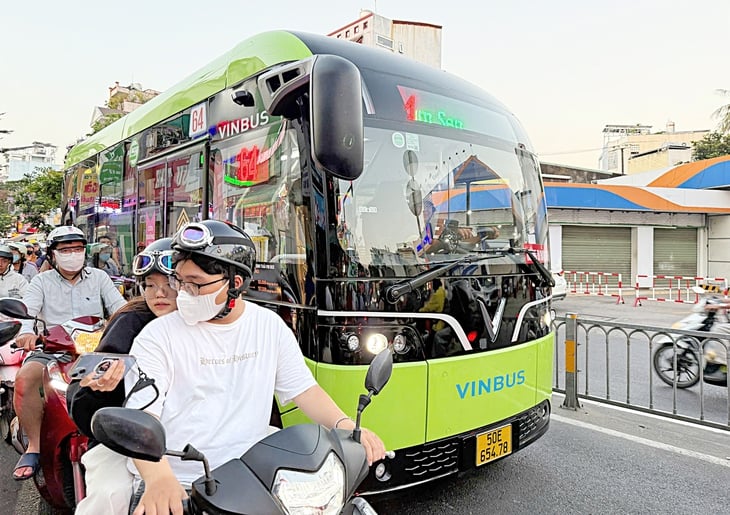
Offering free bus fares will provide timely support for people using public transportation, and help reduce environmental pollution from emissions from private vehicles. - Photo: LE PHAN
Mr. An stated that previously, these routes were not subsidized, and people used them according to their personal needs, therefore they were not included in the free travel plan.
So, when fares are completely free for 135 bus routes, how will the city operate to ensure transparency in the financial aspects?
- One advantage of the city's bus system is that the digital infrastructure is relatively stable. With Mastercard's support, the Public Transport Management Center has installed card readers on 120 out of 180 bus routes, covering more than 2,432 buses, as part of the integrated electronic ticketing system for public transport by 2025.
We have also developed a multi-modal, interconnected cashless payment management software system (bus, metro, river bus, public bicycle) using bank cards, credit cards, and various e-wallets.
In addition, the MultiGo application helps people easily look up bus routes, provide feedback, buy tickets, and make payments on public transport; it also issues MultiPass cards for multi-method payment on public transport...
We expect to complete the installation of the electronic ticketing system across the city's entire bus network in the second quarter of this year. Therefore, once it's free, we will charge according to the standard rates set by the State. The traditional ticketing system will still be maintained to manage traffic flow and track the actual number of passengers for financial reporting.
* Another issue of great concern to the public is the provision of feeder buses (smaller buses) connecting smaller streets to larger roads for easier access. Has the department considered this?
- This is something the department has considered and planned for. This week, we will hold a meeting on this topic, which could be called a smart flexible bus system. It's similar to a ride-hailing app. Depending on the area, people can book a ride and a bus will pick them up and take them to a major bus route. However, this model is currently still in the policy research phase to ensure seamless integration.
* Connecting and facilitating people's needs, such as creating clear sidewalks, public bicycles, electric vehicles, and pedestrian walkways, is something the department alone cannot accomplish. What are your assessments and suggestions?
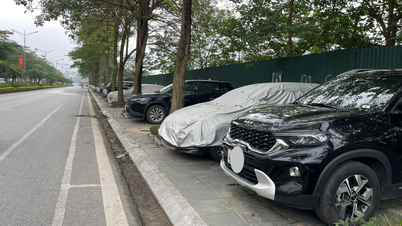
- That's right, we need the cooperation of local authorities and the police to manage the sidewalks and make it easier for people to access buses.
* With 135 bus routes now completely free, how can the quality of service be ensured when transport companies are no longer under pressure to retain customers through quality?
- We assure you that this will not happen. The bidding documents already contain very strict regulations regarding service quality. Drivers and attendants must all receive thorough training in conduct and adherence to regulations. We will closely monitor this.
Speaking to Tuoi Tre newspaper, Mr. Bui Hoa An, Deputy Director of the Ho Chi Minh City Department of Construction, said that in addition to the 135 free bus routes, the remaining routes are inter-provincial routes, serving people traveling between provinces, and not for daily commuting like inner-city buses.
Source: https://tuoitre.vn/nhieu-gui-gam-cho-xe-buyt-mien-phi-20260407082520322.htm
![[Photo] The heat at the fireworks display site on the opening night of the Da Nang International Fireworks Festival 2026](https://vphoto.vietnam.vn/thumb/1200x675/vietnam/resource/IMAGE/2026/05/27/1779889741485_ndo_br_z7872039145157-fecaba5112f39e8352544099d7ef4738-5140-jpg.webp)
![[Photo] The courage of new recruits of Brigade 144 on the training ground.](https://vphoto.vietnam.vn/thumb/1200x675/vietnam/resource/IMAGE/2026/05/27/1779881651341_anh-man-hinh-2026-05-27-luc-18-32-52.png)





































![[Photo] The courage of new recruits of Brigade 144 on the training ground.](https://vphoto.vietnam.vn/thumb/402x226/vietnam/resource/IMAGE/2026/05/27/1779881651341_anh-man-hinh-2026-05-27-luc-18-32-52.png)















Comment (0)