

After a period of implementing the Land Law, according to some opinions, there are still quite a few obstacles and difficulties in the process of implementing the new regulations.
Many obstacles need to be removed for the Land Law to be implemented effectively.
After a period of implementing the Land Law, according to some opinions, there are still quite a few obstacles and difficulties in the process of implementing the new regulations.
The 2024 Land Law is expected to improve land management and use in Vietnam, contributing to socio-economic development and protecting the legitimate rights of the people.
However, after a period of implementation, numerous obstacles and difficulties remain in the process of deploying the new regulations. These problems stem not only from the lack of consistency between legal documents, but also from the enforcement mechanisms, management capacity, and local practices.
Delay in issuing implementing guidelines.
Despite the efforts of the Government and ministries to develop implementing guidelines, many provisions of the Land Law have not yet been fully implemented.
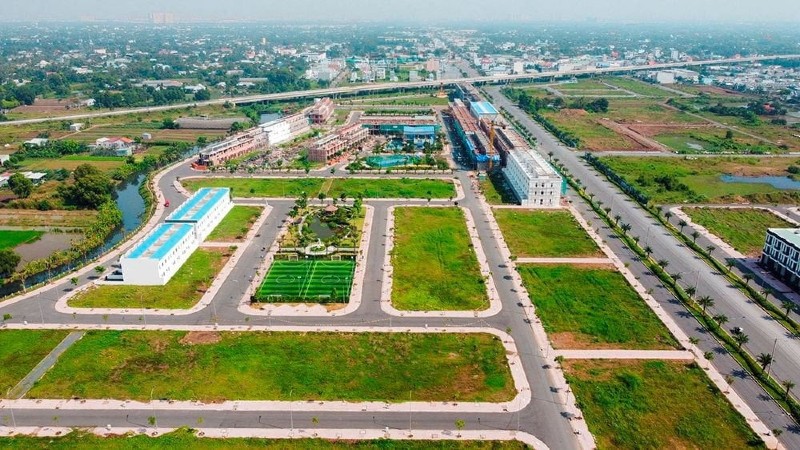 |
| Land prices are one of the important factors affecting the development of the real estate market and investment projects. However, the current mechanism for determining land prices still has many shortcomings, easily leading to disputes between parties in land transactions. |
To date, only about 59 out of 63 provinces and cities have issued detailed guiding documents, while the decrees and circulars of ministries and sectors are still being finalized. This creates difficulties for localities in implementing the Law, affecting the process of resolving issues related to land use rights, compensation, resettlement support, and the issuance of land use right certificates (red books).
One of the major issues in implementing the amended Land Law is the identification and recognition of people's land use rights. Procedures for issuing land use right certificates (red books) still face many difficulties due to overlapping regulations and a lack of synchronization between different levels of management. Furthermore, the application of land use planning in localities remains lax, leading to wasted land resources and delays in project implementation.
According to Mr. Nguyen Van Dinh, Vice Chairman of the Vietnam Real Estate Association (VnREA), the issuance of land ownership certificates is still facing many difficulties, and many projects lack complete and clear legal documents, leading to difficulties for people in land transactions.
Mr. Dinh proposed the need to improve the national land database and synchronize land information systems between localities to minimize administrative procedures. At the same time, state management agencies need to create specific guidelines and simplify the process of issuing land use right certificates, creating favorable conditions for citizens and businesses.
Another issue pointed out by many experts and managers is the difficulty in land clearance for development projects. Dr. Nguyen Minh Phong, an economic expert, commented that land clearance is a difficult problem because it involves complex issues such as compensation, resettlement, and the consent of the people.
This is one of the factors that can slow down the progress of infrastructure development projects. Many large projects are stalled because of the inability to agree on reasonable compensation prices with the people.
According to Mr. Phong, to resolve this issue, it is necessary to build a transparent and fair compensation mechanism, while also strengthening propaganda and mobilization efforts to ensure that people understand and agree with the land acquisition policy. In addition, it is necessary to build resettlement areas with complete infrastructure to ensure that people can stabilize their lives immediately after their land is acquired.
Obstacles related to land pricing mechanisms.
Land prices are one of the important factors affecting the development of the real estate market and investment projects. However, the current mechanism for determining land prices is still very inadequate, easily leading to disputes between parties in land transactions.
Ms. Le Thi Thanh Ha, Director of the Department of Natural Resources and Environment of Ho Chi Minh City, shared that land prices in different areas frequently change, and unclear valuation factors make it difficult for residents and investors to feel secure.
Ms. Ha argued that a stable and transparent land pricing mechanism is needed. Publicly disclosing land price information, updating it regularly, and integrating it into a common data system would help minimize land price inflation and increase transparency in transactions. Along with this, preferential policies are needed for social real estate projects, especially housing for low-income earners.
In Hanoi , according to the head of the Department of Natural Resources and Environment, in some areas, land prices are lower than market prices, insufficient to cover the costs and resources invested in creating land reserves (including land clearance costs, infrastructure construction investment, etc.).
To address the issue of land prices being lower than market prices, the People's Committees of districts, counties, and towns have stipulated bidding increments and multiple rounds of auctions (with a mandatory number of rounds) to ensure that the starting price of each subsequent round is close to the market price.
However, the Land Law and the Law on Auctioning Assets still do not fully address issues such as low deposit amounts (equal to 20% of the starting price); there are no regulations strictly prohibiting collusion to inflate or manipulate prices, leading to situations where auction participants bid higher than the market price to win the auction, then fail to pay the winning bid (abandon the deposit) or do not continue bidding in the next round, causing the auction to fail and disrupting market prices.
Currently, there are no regulations requiring individuals to complete the construction of their own houses through land auctions. This leads to situations where land remains unused, left fallow, causing difficulties in planning management, detracting from urban aesthetics, and wasting land resources.
Some districts, counties, and towns are still under pressure to collect revenue from land use rights auctions to meet capital needs for socio-economic development, so they continue to organize auctions to allocate land to individuals for housing construction.
Besides administrative procedures and land prices, monitoring and inspecting land use also faces many difficulties. Mr. Nguyen Trong Hoai, Deputy Director of the Land Management Department (Ministry of Natural Resources and Environment), said that localities currently lack effective monitoring mechanisms, leading to land waste, abandoned land, or land used for purposes other than intended.
Mr. Hoai argued that a strict, transparent, and fair monitoring mechanism is necessary to ensure that land is used for its intended purpose and efficiently.
Land management agencies also need to apply information technology in land data management, thereby helping to monitor and inspect land-use projects more effectively.
When asked, some businesses stated that one of the major obstacles to real estate and infrastructure development projects is delays in legal procedures and land clearance. Many projects are stalled, especially housing projects, due to administrative procedures, lack of consensus on compensation, and resettlement.
To effectively implement the 2024 Land Law, some experts believe that relevant authorities need to make greater efforts in addressing these difficulties.
Specifically, it is necessary to strengthen the issuance of detailed guidance documents and organize training courses for officials at all levels on the new regulations in the amended Land Law. This will help localities grasp the information and effectively implement the provisions of the law.
Completing the land database ensures its consistency and accuracy. Applying information technology in land management will help save time and costs and reduce errors in management.
Issuing clearer and more detailed legal documents on methods for determining land prices and compensation when land is expropriated is necessary. Authorities also need to strengthen supervision and inspection of land use.
It is believed that only when these solutions are implemented synchronously and decisively can the 2024 Land Law maximize its effectiveness and create favorable conditions for the country's development.
Source: https://baodautu.vn/batdongsan/nhieu-rao-can-can-duoc-go-de-luat-dat-dai-di-vao-cuoc-song-d237876.html



![[Photo] General Secretary and President To Lam presides over a meeting on preparations for the review of one year of operation of the three-tiered government system.](https://vphoto.vietnam.vn/thumb/1200x675/vietnam/resource/IMAGE/2026/06/02/1780391821195_a1-bnd-4595-9717-jpg.webp)



























































































Comment (0)