

Ground bee pupae marinated in black olive pulp and wrapped in sticky rice is a traditional dish in Dien Bien during the cold season at the end of the year.
As autumn arrives with its cool breezes, black olives (Prunus mume) are in season in the Northwest mountainous region in general, and Dien Bien in particular. From September until before the Lunar New Year, locals also harvest ground bee larvae. Visiting Dien Bien during the colder months, tourists have the opportunity to enjoy a local specialty dish: steamed black olives and ground bee larvae served with sticky rice.

Ground bee pupae and black olives wrapped in sticky rice.
Owning a restaurant in Noong Chứn village, Nam Thanh ward, Dien Bien Phu city, Ms. Dao Thi Nhung (33 years old) was invited by the Vietnam Culinary Culture Association (VCCA) to participate in the Hanoi Autumn Festival 2023 (September 29 - October 1). Besides familiar dishes from the traditional Black Thai ethnic group's meals such as grilled carp, minced pork wrapped in banana leaves and grilled, smoked buffalo meat, wild vegetable salad, and five-colored sticky rice, Ms. Nhung brought a dish of ground bee larvae marinated in black olives.
According to Ms. Nhung, this is a "specialty dish for cold days" in Dien Bien. Ground bees are poisonous but are loved and sought after for their nutritional value. "Bee pupae are a rare delicacy of the Northwest mountains, available only once a year," Ms. Nhung said.
People in Dien Bien choose silkworm pupae that are neither too young nor too old, milky white in color, and about the size of a little finger. When harvested, the pupae are still encased in wax. They are carefully removed and dipped in hot water to firm up the flesh. Then, they are rinsed in diluted salt water to disinfect and remove the slime, and finally rinsed with clean water. After being cleaned, the pupae are steamed for about 5-7 minutes. This method helps the pupae retain their original shape and color.
The black olives used in this dish, along with steamed ground bee larvae, must be wild olives, small, tapering at both ends, with smooth, spotless skin and a white powdery coating. The olives are placed in boiled water cooled to about 50°C for over half an hour until soft. The olives are then broken in half by hand to separate the seeds and flesh. The flesh is purplish-pink, with a rich, slightly sour aroma.

After steaming, the ground bee pupae retain their shape and milky white color.
The main ingredient for sticky rice is mountain-grown glutinous rice, with large, round, plump grains. The rice is soaked in water for about 3-4 hours, then steamed for 30-40 minutes over low heat.
The proper way to eat this dish is to mash the bee larvae together with the black olive pulp. "You can mash them by hand, but using a mortar and pestle will make it smoother and finer," Ms. Nhung said. Then, take a handful of sticky rice, flatten it into a round shape, and place the bee larvae and black olive pulp mixture in the middle, wrapping it up to form a ball. The pinkish-purple color of the black olive pulp stands out against the white of the sticky rice and bee larvae, making the dish visually appealing.
Diners can savor the rich, creamy taste of the ground bee larvae, the nutty flavor and slightly sour and astringent taste of the black olive, and the chewy, fragrant, and sweet texture of the sticky rice. Mr. Tran Manh (Hanoi) said this dish was "the most impressive" among the traditional meals of the Black Thai people in Dien Bien. According to him, most other dishes are seasoned with mắc khén seeds, but the sticky rice with black olive and bee larvae is prepared by steaming, preserving its original flavor. "Mashing the bee larvae allows even those who are afraid of insects to enjoy it," Mr. Manh said.
Watching the traditional meal of the Black Thai ethnic group being showcased at the Hanoi Autumn Festival, Ms. Pham Minh Hang (42, Hanoi) was captivated by this "dish made from insects." However, due to the limited supply of bee pupae, she couldn't sample much. "The dish was a bit bland for my taste, but I could clearly feel the rich, creamy flavor," she said.

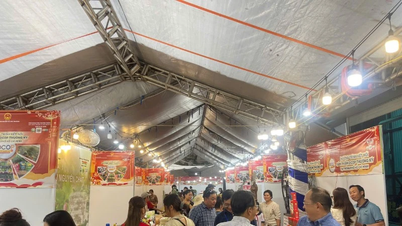
A traditional meal of the Black Thai ethnic group at the Hanoi Autumn Festival on September 30th at the Hanoi Children's Palace.


According to researchers, wild bee pupae contain many fats, sugars, amino acids, vitamins, and minerals such as calcium and phosphorus. Bee pupae are beneficial for people suffering from nervous exhaustion and insomnia.
Although bee larvae are a nutritious and generally harmless food, some people may experience allergic reactions due to their individual sensitivities. Therefore, diners should try a small amount first; if they do not experience symptoms such as itching, facial flushing, dizziness, abdominal pain, or vomiting, they can continue eating, according to the information portal of the District 5 Health Center, Ho Chi Minh City.
Fermented ground bee larvae with black olives, served with sticky rice, is a dish combining local produce, preserved by the Black Thai ethnic group in Dien Bien for generations. This dish is indispensable in the traditional meals of the Black Thai people during festivals, New Year celebrations, engagement ceremonies, and especially when entertaining honored guests.
Text and photos: Quynh Mai
source






























































Comment (0)