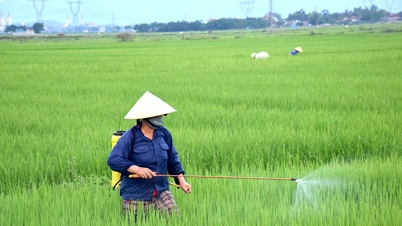
Sticky rice is considered to be the first source of starchy food for the Vietnamese people, dating back to when the nation's ancestors began their agricultural culture of planting and harvesting three or four thousand years ago.

Perhaps that is why, during anniversaries and Tet (Vietnamese New Year), when remembering, praying for, and honoring the ancestral values of our forefathers, glutinous rice, not regular rice, is always the ingredient used to prepare offerings for Vietnamese people.

The glossy, pristine sticky rice dishes are solemnly placed on altars amidst fragrant incense smoke, and then taken down to the dining tables and banquet tables—a tradition passed down through thousands of years of Vietnamese New Year celebrations and ancestral worship.

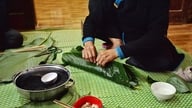
The method of using glutinous rice to make cakes has been passed down since the time of the Hung Kings when the nation was founded. The first glutinous rice cakes of ancient Vietnamese culture had a foundation and inspiration for two crucial aspects: "Shaping" and "Packaging," stemming from the ancient practice of using bamboo tubes to hold glutinous rice mixed with just enough water, then "lam" (cooking with heat) into fragrant, delicious cylindrical "rice in bamboo" sticks. Therefore, using leaves to wrap glutinous rice into cylindrical cakes, then "steaming" (boiling) them, is the method used to create the traditional cakes of the ancient Vietnamese people.

Because, the abundant foliage in tropical and subtropical natural environments has always been a generous and familiar friend to the lives of farmers. As for the cylindrical shape, for three or four thousand years, it has been recognized by fertility cults in the spiritual lives of the inhabitants – the masters of ancient agricultural civilizations – as resembling the procreative organ for survival and procreation of men. Therefore, it was chosen to be elevated and sanctified into a symbol, and worshipped in rituals within this type of belief system.

These cylindrical cakes, wrapped in leaves and called "Tay cakes" in Northern Vietnam (cakes with "Tay" ends, shaped like a pestle, cakes of the Tay people), and "Tet cakes" in Southern Vietnam (cakes for Tet), originated in that context and, from there, became evidence of a rather typical and interesting characteristic of Vietnamese culture. While in regions with Hindu civilizations and cultures, such as Chenla and Champa, people used art and stone sculpture to represent and venerate the male genitalia, transforming it into majestic and powerful "Lingas," in Vietnam, the inhabitants of fertility cults expressed it through... food, in... delicious and filling cakes!
Heritage Magazine