


"Late" and "scarred" are arguably the two most apt adjectives to describe her short stories. And "Will Carry On " is a collection that exemplifies this. Not a new collection, this work comprises 21 short stories carefully selected by Dạ Ngân – from the most recent, a story of the same name written during the city's social distancing period in the 2020 pandemic, to the work that brought her fame in Vietnamese literature in 1985, " The Dog and the Divorce." A selection spanning four decades that have continuously stirred the minds of readers, this work holds significant meaning: it allows those who have loved Dạ Ngân to reflect on her journey, but also provides an opportunity for future generations to begin entering a realm of Dạ Ngân's own unique emotions.
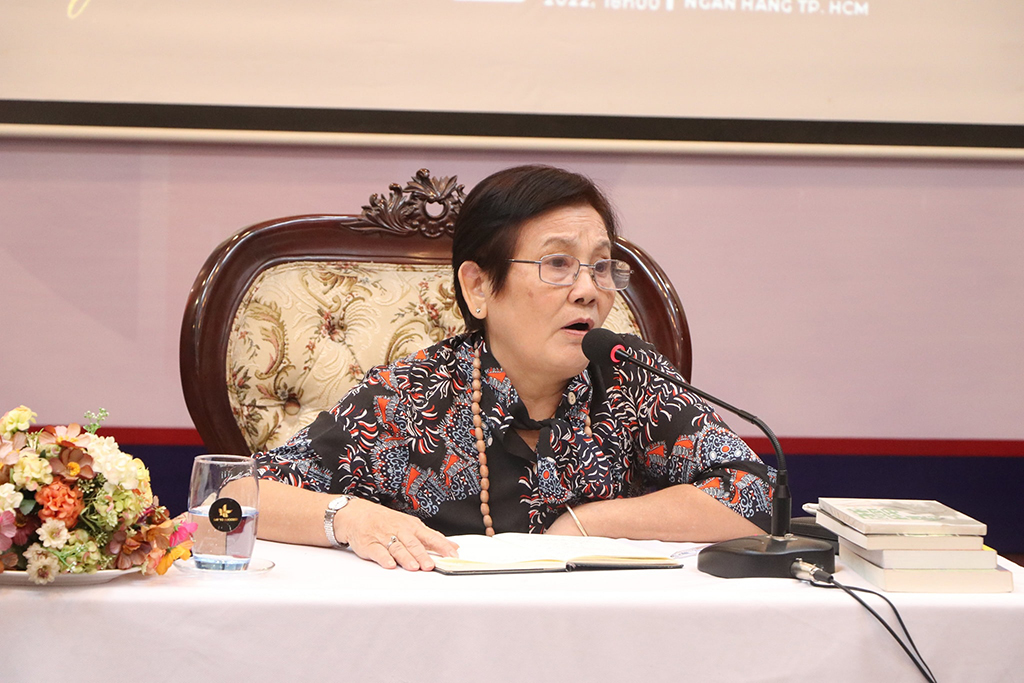
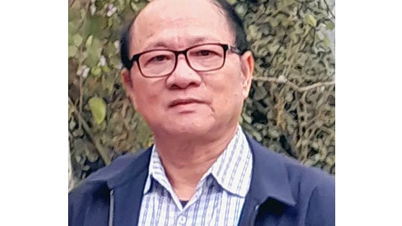
Writer Dạ Ngân
A woman's heart
In her 21 short stories, it's not difficult to see two recurring themes in her writing career, one of which is the plight of women. Many critics have noted that through the short novel *A Small Family * and the short story * The Dog and the Divorce* , Dạ Ngân has already established her place in the hearts of readers. Their commonality lies in the fact that they both feature women as the main characters, thereby highlighting the hidden and difficult-to-understand emotions and thoughts of women. Dạ Ngân doesn't just sketch the surface; she delves deep into the core to explore the joys, sorrows, loves, and hates of life.
"Late" and "scarred" are arguably the two most apt adjectives to describe her short stories. And " Will Carry On " is a collection that exemplifies this. Not a new collection, this is a compilation of 21 short stories carefully selected by Dạ Ngân – from the most recent, a story of the same name written during the city's social distancing period in the 2020 pandemic, to the work that brought her fame in Vietnamese literature in 1985, " The Dog and the Divorce."
The aforementioned characters in Dạ Ngân's short stories are often small and full of flaws. They are not "strong women" but rather very relatable. Her strength lies in her writing, which is as natural as breathing. She doesn't embellish them into easily important characters. Their world is the fields, villages, families, and responsibilities. They withdraw into traditional customs and silently endure the hardships of the times. In the eyes of others, they appear motionless, but inwardly, a constant undercurrent of turmoil rages. They exist simultaneously between good and beauty, between ugliness and selfishness, between superficial hypocrisy and the inscrutable, complex inner world…
For Dạ Ngân, it was this very source that enriched her own literary style. There, you find beauty in their sensitivity, sacrifice, empathy, and understanding of those around them, whether familiar or unfamiliar, in short stories like "The Soldier's Wife," "At the End of the Earth," "Who Is from Hanoi ," "On the Woman's Rooftop," etc. But at the same time, they always carry the opposite aspect. These are the people in a family who, in the name of various things—tradition and standards, love and sacrifice—prevent their children from finding love ("A House Without a Man") . It is also the jealousy and pain when a "companion" in a "life without a husband" has now found a new haven, in "Late Virgin," "Unconsciously, the Long River."
But even so, there's reason for empathy – the pain and loss that wars inflict upon them. While Dạ Ngân's writings depict the lives of ordinary people, to put it more dramatically, these are also anti-war works. This isn't seen from a male perspective, focusing on bloodshed and violence; in this collection, we see it through the losses of women. They sometimes acted irrationally, letting anger consume them… but ultimately, nothing remains but pain that belatedly brings happiness.
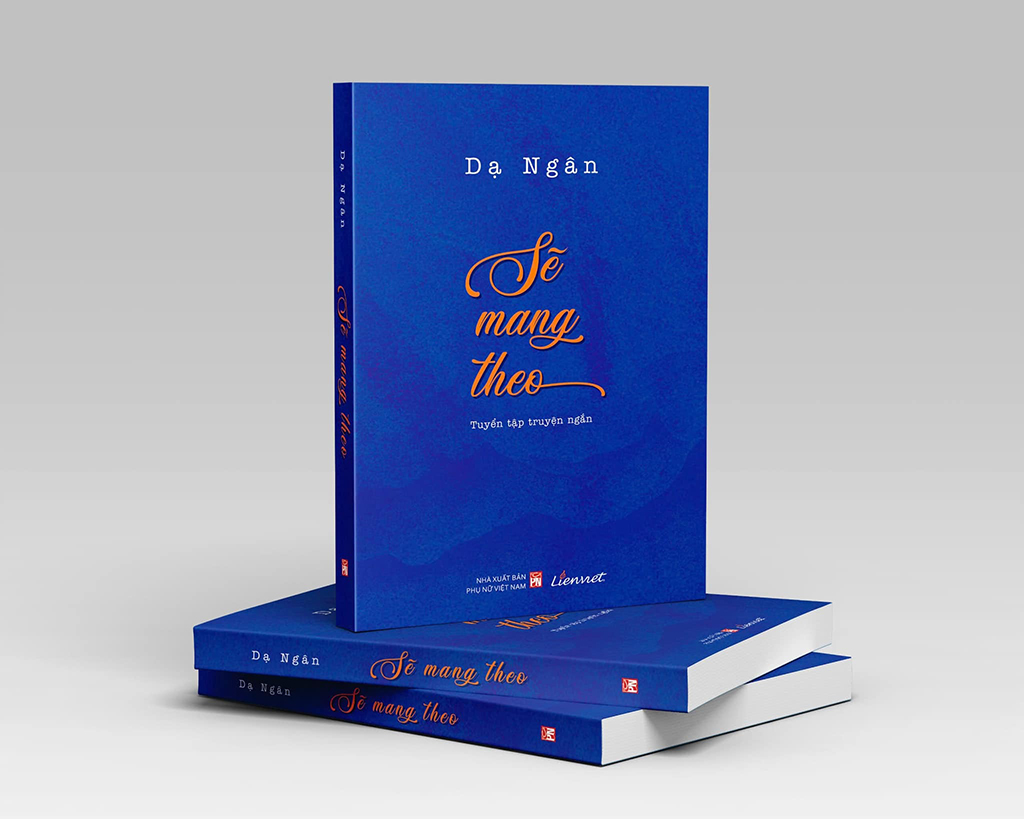
The cover of the book "Will Carry It With You," published by Lien Viet Books and Vietnam Women's Publishing House.
The shape of the war
Beginning her writing career in 1980, Dạ Ngân saw around her the wounds of the post-war period. These were separations in many senses, from the unrequited love between soldiers and the home front in "Silent Love," "Spring Maiden, " etc., to the lingering pain after the brutality had ended, with disabilities pushing them apart ("The Sorrow of the White Pillow") and psychological damage of varying degrees ("Our Pit") .
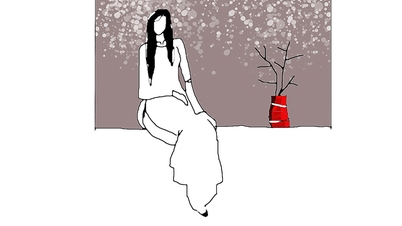
In "The Sorrow of the White Pillow," which has been translated into English and included in the Longings anthology of 22 short stories by 22 prominent Vietnamese female writers in 2024, Dạ Ngân writes about the trauma that prevents a man from fathering a child and consequently leads him to reject his wife. For years, the wife has only known how to replace the pillowcases annually, even knowing that keeping the bed clean wouldn't change the marriage. The woman in her short story is like the white color and the pristine cotton filling – fresh, clean, and yearning for love, but the war has brought sorrow into her mind, and she will rest her head on it every sleepless night.
The post-war period also brought about sudden changes in people, as fate led them down tangled paths, leaving many in awkward situations or unsure of what to do, as in the case of the shared husband in "Even If We Have to Live Less ." We also see this in the short story chosen to accompany this collection, where shy feelings now give way to difficult decisions for the sake of the next generation, so that the promise "Come back, okay?" becomes "Go away, okay?"…
Through her poignant short stories, Dạ Ngân can be considered one of the authors with the ability to explore the psychology of women with great emotion, allowing us to better understand, love, and appreciate them. At the same time, through these stories, we see a shared pain of the entire nation, where "wars are intertwined like the loops of a tangled rope; no matter what is said, it is still blood and bones, even if the rope grows longer," in an effort to prevent a repetition of such brutality.
Writer Dạ Ngân, whose real name is Lê Hồng Nga, was born in 1952 in Long Mỹ, Hậu Giang. She worked as a journalist in the Southwestern war zone for nine years and began writing in 1980. She has published eight collections of short stories (in addition to nine co-authored stories), three novels, and seven collections of essays. Many of her works have been translated into English, French, and other languages.
Source: https://thanhnien.vn/sach-hay-nhung-hanh-phuc-eo-theo-va-muon-man-185250207201641661.htm

![[Photo] General Secretary To Lam attends the opening session of the Peace Council on Gaza.](https://vphoto.vietnam.vn/thumb/1200x675/vietnam/resource/IMAGE/2026/02/19/1771516865192_tbttolam5-jpg.webp)





























































Comment (0)