During the war years, letters and diaries became a bridge between the front lines and the home front, a place where soldiers on the battlefield could express their thoughts, feelings, and hopes for peace. And when the past closed, those letters became memories that would last forever.
In the past, the soldiers' equipment when they went to the battlefield, besides weapons and backpacks, also included pens, diaries, and paper for writing letters. These letters became a source of strength, encouragement, and motivation for those who stayed behind and those who went to war.
Like millions of outstanding young people, upon turning 18, Mr. Bui Dinh Chien (from Hamlet 3, Khanh Tien Commune, Yen Khanh District) volunteered to join the Youth Volunteer Force, and later became a soldier in the Liberation Army on the Southern battlefield.
In 1973, taking advantage of his leave, he married his neighbor, Pham Thi Hong An, and then returned to the battlefield just 12 days after his wedding. Therefore, he poured all his longing and thoughts into his letters. "At that time, handwritten letters were the only means of communication between me and my family. Because of the war, sometimes it took months for a letter to arrive, so each time I received a letter, I felt a little closer to the front lines and the home front. Receiving letters from my wife strengthened my resolve and gave me more motivation to fight," Mr. Chien recalled.
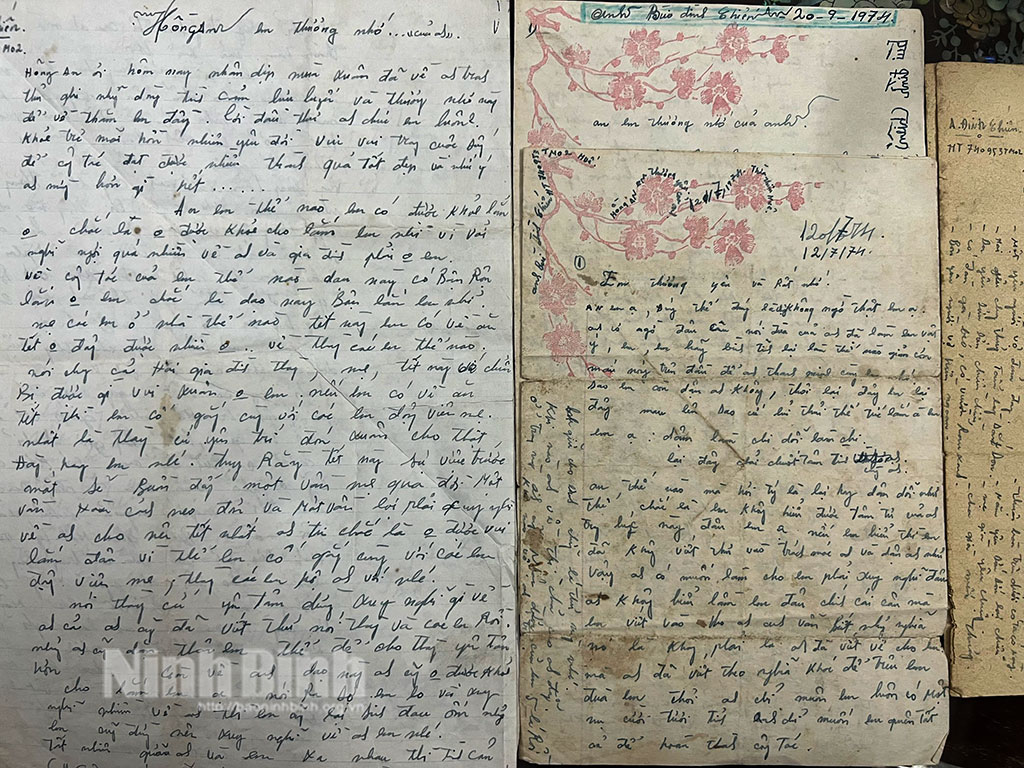
The letters, meticulously written by the soldier, recounted the battle situation to his wife, expressing his longing for home and his unwavering belief in a future reunification of the country, with North and South reunited as one family. In a letter he wrote to his wife on July 2, 1974, he wrote: "...An! How quickly time flies, it's already been six months since we last met. Those six months have passed, yet they also feel long; the days and months drag on endlessly. Do you know why? I'm sure you understand, and your feelings right now are similar to mine... Every time I think of you, I wish I had a magical strength to push all the American invaders, Thieu's puppets, and the traitors back to the open sea. Then our country would be unified, and the people of North and South would be reunited. Both regions would be free and independent. I'm sure that you and I would be together forever. Don't you think so? So don't be sad, cheer up, and don't think about me anymore. Work hard, be enthusiastic about your job, and be happy so that our parents can rest easy."
He wished his wife to be optimistic and take care of her health. In a letter dated July 12, 1974, he wrote: "I only want you to have no worries and I don't want your heart to be constantly filled with sadness and sorrow. I only want you to always forget all the troubles of life, like a bird always singing and hopping on a fragrant flower branch, under the bright morning sun, to forget everything. Only then will your health be ensured for a long time."
For Mrs. An, her husband's letters of encouragement were a source of joy and comfort during their years of separation. In return for his affection from the front lines, she shared with him the situation of their family and hometown, expressing her longing for him while they were apart, and reminding him to strive to complete his mission, hoping for his victorious return. Each letter written from the battlefield to the home front had its own context, mindset, and state of mind, but all shared a common theme: life, struggle, thoughts, feelings, and the intense longing for loved ones.
Fifty years have passed since his son's sacrifice, but Mr. Ta Van Ruong (92 years old, Hamlet 4, Khanh Thuy Commune, Yen Khanh District) - the father of martyr Ta Van Minh - still remembers every line of the letters his son wrote. In 1972, as the war intensified, responding to the call of the Central Committee of the Communist Party, young Ta Van Minh (born in 1954), despite not being of legal age, enthusiastically volunteered for military service.
In early 1973, while on a mission, he bravely sacrificed his life on the battlefield south of Quang Tri . For Mr. Ruong, the memories of his eldest son are the letters he sent home. The first letter he sent home was on September 21, 1972, informing him of his whereabouts, his studies and training, and expressing his longing for his family and the sacrifices his parents made in raising him; he encouraged his mother and parents: "...We've been in Thanh Hoa for over two weeks now, and we're currently studying tactics. In just over half a month, I'll have to leave the North and temporarily leave my parents and grandmother. I have to leave my five beloved and innocent younger siblings... Grandmother and parents, please rest assured and don't worry about me so much that it affects your health. Although I'm going to fight far away, I believe I will return..."
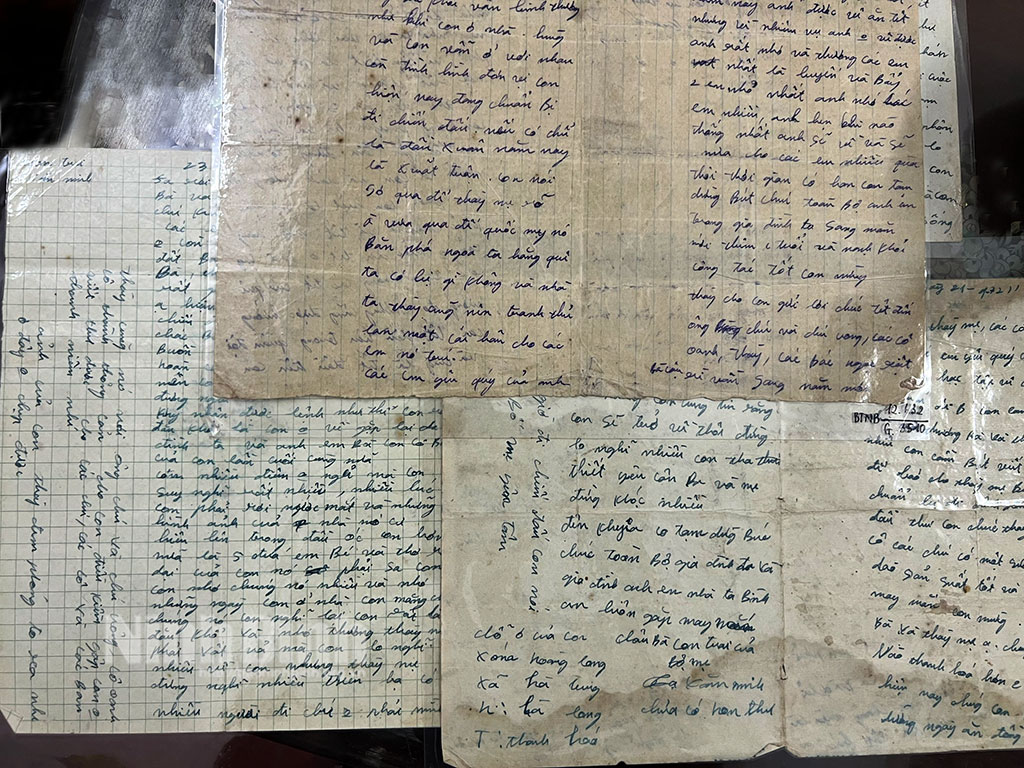
In a letter sent at the end of 1972, he wrote: "Although I couldn't celebrate Tet in my hometown, I did get to experience my first Tet in the army, and also my first Tet away from home… My unit is preparing to go into battle, and if possible, we will be deployed in early spring this year. My dear siblings! I'm sure you're all looking forward to Tet now, and you're also hoping I can come home this year, but because of my duties, I can't. I miss you all very much, especially Luyen and Bay – the two youngest. I miss you all so much, and I promise that when we are reunified, I will come home and buy you lots of gifts."
The youth of martyr Ta Van Minh ended at the age of 19, but his mementos are still preserved and cherished to this day. The stories told through the letters of veteran Bui Dinh Chien and martyr Ta Van Minh are pieces among the countless shared lives of those who overcame war to bring independence, freedom, and happiness to the nation. These letters, to this day, retain their value in terms of the extraordinary willpower, resilience, and noble ideals of the older generation, contributing to the great victory of the nation.


The Ninh Binh Museum currently houses hundreds of letters and diaries written by officers, soldiers of the armed forces, and their families and relatives during the war. Ms. Pham Thi Nhu, Deputy Director of the Provincial Museum, said: "Since 2010, we have started a project to collect war relics, including letters and battlefield diaries. Since then, hundreds of letters and diaries have been collected by the Museum or donated by veterans and families of fallen soldiers. These are valuable historical documents that the Museum always preserves, protects, and displays to visitors."
These time-worn letters hold sacred significance not only for the families of fallen soldiers and veterans but also for society as a whole. They serve as a link between the past and the present, helping the younger generation to deeply feel and fully understand the era of bombs and bullets, and the people involved in the war.
Text and photos: Hong Minh
Source