

1. Tracing back through history, from over 300 years since the formation of Saigon - Gia Dinh - Ho Chi Minh City, the seventh art (cinema) was introduced to this city very early. The first film screening was held in October 1898, just three years after the world's first film screening organized by the Lumiere brothers (1895). From the documentary films of 1899 recording the rhythm of life in Saigon to the first feature film made by Vietnamese filmmakers, "Complete with Love" (1937), cinema has always been an integral part of urban life.
After the country was reunified, the city's film industry brought together a powerful creative force from both the North and South. The Liberation Film Studio (now Liberation Film Joint Stock Company) and the Nguyen Dinh Chieu Film Studio played a leading role with many works that left their mark on an entire era. Classic films were successively produced: The Wild Field, Miss Nhip, The Monsoon Season, Love of Cu Chi Land, Memories of the Suburbs, The Flame of Krong Jung, Returning to the Sand and Wind, The Land of Hon Dat, The Upside Down Card Game, The Flood Season…
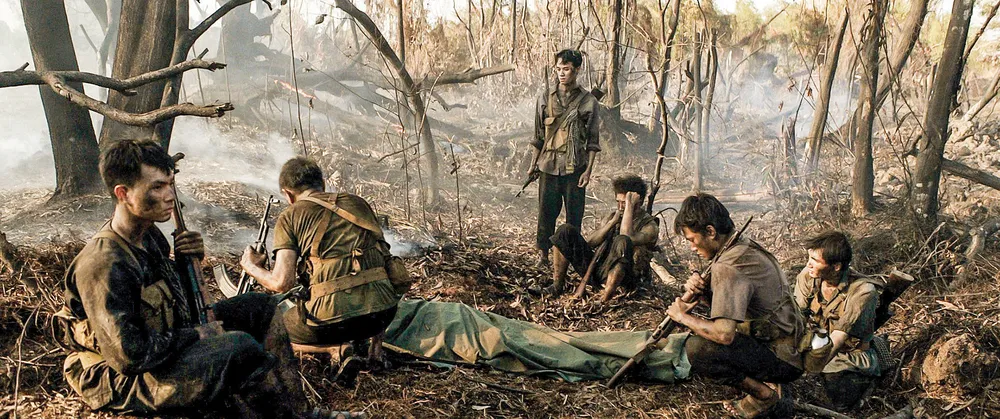
From its inception to the present day, the unique character of Ho Chi Minh City's cinema has been its works imbued with a sense of freedom, multi-layeredness, and the vibrant spirit of life in the region. Recently, "Quan Ky Nam " recreated a post-liberation Ho Chi Minh City with its complex social issues, viewed through a lens of subtle realism. "Song Lang" (Best Film about Ho Chi Minh City at HIFF 2024) transported viewers back to the 1980s, depicting a life intertwined with traditional Vietnamese opera troupes.
Films like "Cô Ba Sài Gòn" or " Em và Trịnh" recreate vivid glimpses of memories or prevailing cultural trends. "Sài Gòn anh yêu em," "Sài Gòn trong cơn mưa," "Trời sáng rồi ta ngủ đi thôi," "Bố già," "Nhà bà Nữ," "Giao lộ 8675 "… portray a vibrant and diverse city. The city's cinema tells stories not only through skillful craftsmanship and modern techniques, but also through memory, through its very breath, and… intense love.
2. Reflecting on the past and present, one of the key factors contributing to the success of Ho Chi Minh City's cinema is its filmmakers. They grew up in the cradle of revolutionary cinema in the countryside – people who made films "empty-handed," developing film with ice on boats, present on battlefields everywhere, recording every frame with courage and passion. They include Khuong Me, Mai Loc, Vu Son, Ly Cuong, Nguyen Danh…
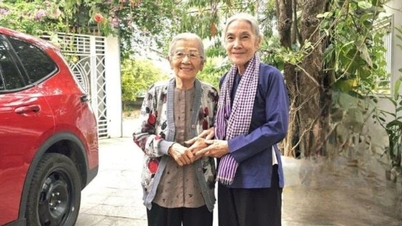
That generation is left with only one living witness – cinematographer Ho Van Tay, now over 90 years old. Then there are filmmakers after 1975 such as Huy Thanh, Le Hoang Hoa, Hong Sen, Le Mong Hoang… with a series of works recreating the fierce war and the chaotic post-war period… This is the thread of inheritance, nurturing the foundation for a film industry.
In the transformation of Vietnamese cinema, from directors like Le Hoang and Phuoc Sang in the early 2000s, the entry of a generation of Vietnamese-born directors such as Tran Anh Hung, Charlie Nguyen, Victor Vu, Ham Tran, Kathy Uyen, and Ngo Thanh Van, along with the rise of domestic directors like Vu Ngoc Dang, Luu Huynh, Bui Thac Chuyen, Nguyen Quang Dung, Ly Hai, Phan Gia Nhat Linh, and Tran Thanh, has contributed to shaping the current Vietnamese film market.
Today, a new generation of directors—Tran Thanh Huy, Pham Ngoc Lan, Pham Thien An, Duong Dieu Linh, and others—have added new milestones to Vietnamese cinema's presence on the world film map. They confidently step out, expanding their networks to enhance learning, share experiences, and promote collaboration. Many Vietnamese films produced through international collaborations bear the mark of contemporary world cinema. Vietnamese films today are also gradually conquering international audiences, not just the Vietnamese diaspora abroad, through widespread commercial distribution.
3. Ho Chi Minh City has officially been recognized as a Global Creative City for cinema. Mr. Jonathan Baker, Head of the UNESCO Office in Vietnam, assessed that Ho Chi Minh City's greatest strength is the vitality of its young generation. Their creativity and willingness to explore new forms of expression are gradually forming a dynamic environment for cinema in particular and the cultural sector in general. This energy is clearly evident in many creative spaces in Ho Chi Minh City and will continue to be a crucial driving force for the city's development as a creative city in the field of cinema.
Major film events such as the Vietnam Film Festival, or previously the Ho Chi Minh City International Film Festival (HIFF 2024), and film awards like the Golden Kite Awards and the Green Star Awards, are not only celebrations for professionals in the industry but also the clearest manifestation of the enthusiasm, interest, and support of the public in Ho Chi Minh City. The atmosphere of these "cinematic springs" has been formed over the years.
The vibrant film industry in Ho Chi Minh City is not only evident during major events, but also within the hearts of its avid audiences. Audiences are a powerful reflection of any film industry. Without audiences, there would be no artistic glory. Project presentations and film premieres are always packed with spectators, flashing lights, eager eyes following artists on the red carpet, and films selling out – all of this is the lifeblood of cinema, defined by the power of its audience.
According to the Ho Chi Minh City Department of Culture and Sports, the city currently has 935 film businesses with 9,294 employees, generating revenue of approximately US$500 million per year and contributing 0.43% to the city's GRDP. The city has 10 cinema systems, 52 cinema complexes with 295 screening rooms, and 184 creative spaces that serve as professional art venues alongside cultural spaces catering to community needs.
Source: https://www.sggp.org.vn/nhung-mua-xuan-dien-anh-post838190.html


![[Photo] The General Secretary, President and his wife lay flowers at the Ho Chi Minh Monument in Manila.](https://vphoto.vietnam.vn/thumb/1200x675/vietnam/resource/IMAGE/2026/05/31/1780219759477_anh-man-hinh-2026-05-31-luc-16-29-07.png)















![[Video] Sunset at Lap An Lagoon – Where the sun sets over the fishing nets](https://vphoto.vietnam.vn/thumb/340x192/vietnam/resource/IMAGE/2026/05/31/1780192137701_beach-landscape-sea-water-nature-grass-745871-pxhere-com.jpeg)





















































Comment (0)