

These are the roads in the far west of the country, where every patrol step is soaked with sweat, mountain winds, forest mist, and silently extends the vow to protect the land.
From the A Pa Chai Border Guard Post, the road to the border winds along the mountain slopes. In the early morning, mist blankets the horizon, and the earthen roofs of the local people's houses peek out from behind the trees. The wind from the mountain crevices blows fiercely, sometimes dry and harsh, sometimes carrying a chill that penetrates deep through clothing. The soldiers in their green uniforms walk with backpacks on their shoulders, rifles firmly in their hands, their eyes observing the border, their ears listening to every sound of the mountains and forests.
At the border junction, the terrain is unforgiving. Some sections of the path are narrow, with a sheer cliff on one side and a deep ravine on the other. Jagged rocks, slippery red soil after rain, and overgrown weeds obscure the footprints of those who have gone before. Every step must be firm and calculated. Those behind follow the steps of those ahead; a nod or a glance is enough for the entire patrol team to understand each other's intentions. On these paths, camaraderie needs no words, but is evident in every gesture: helping each other up a slope, sharing a sip of water, checking shoelaces and backpack straps before continuing the patrol.
 |
| The patrol routes of the officers and soldiers of A Pa Chai Border Guard Station (under the command of the Dien Bien Provincial Border Guard) are always rugged. |
During the rainy season, patrol routes in A Pa Chai become more arduous. Water from upstream causes streams to rise rapidly, mud clings to trousers, and each slope seems longer. Some patrols require stopping by the stream bank, waiting for the water to recede before crossing. Field meals are hastily prepared in the forest, the smoke from damp branches stinging the eyes. But it is precisely during these pauses that the soldiers feel more acutely the harshness of the border region and understand why every stretch of road they travel cannot be taken lightly.
In the cold season, the far west takes on a different kind of harshness. Frost obscures the paths, and the wind blowing through the mountain crevices is so biting it numbs the hands. During patrols, the entire team seems to be enveloped in a white mist; even those just a few steps ahead are blurred in the fog. Laughter and conversation are stifled in the vast expanse of the mountains and forests. In that cold, the soldiers' hands grip their rifles tightly, not just to hold onto their weapons, but as if to strengthen their faith in the mission they bear.
But the roads in the far west don't just lead to border markers and the border line. They also open paths down to the villages, to the lives of the Ha Nhi people living on the frontier of the Fatherland. The road from the outpost to the village has its own unique beauty in every season. Sometimes it's the scent of ripening rice wafting from the terraced fields. Sometimes it's the smoke from the kitchen fires swirling around the earthen roofs of the houses. Sometimes it's the clear voice of children calling out "soldier" from the porch, then running after them for a while, asking about the patrol, about the backpack, about the distant border markers on the mountaintop.
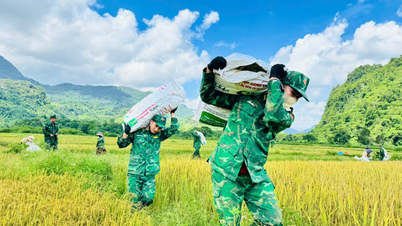
For the soldiers of the A Pa Chai Border Guard Post, going down to the villages is also part of their mission to protect the border. Border guards come to the people not only to disseminate legal information and encourage their participation in protecting the border and boundary markers, but also in very ordinary things: helping repair roofs damaged by the wind, taking the sick to the health station, helping the villagers clean up roads, carrying rice, and clearing waterways after the rain... On some evenings, by the fire in a smoke-stained earthen house, the soldiers sit and listen to the village elders tell stories of protecting the land and the village; stories of the old, rarely traveled paths that now bear the footprints of border guards and the footsteps of villagers going to the market and to the fields.
 |
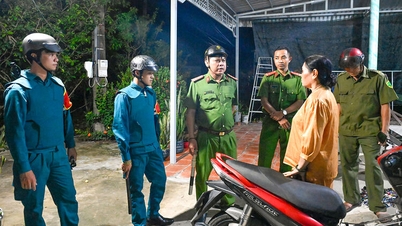
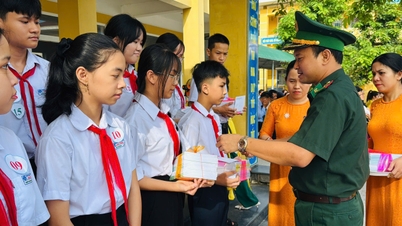
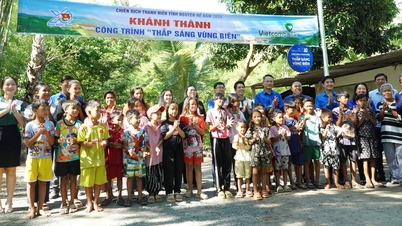
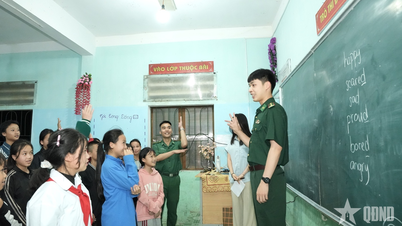
| In addition to patrolling and controlling the border, the A Pa Chải Border Guard Station also does a good job in community outreach. |
These stories are not boisterous, but they endure like a stream at its source. The soldiers understand that the border is not only guarded by boundary markers, patrols, or operational maps. The border is also guarded by the people's hearts, by the people's trust in the Party committee, the government, and the army. When the people treat border guards like family, when every unusual piece of information in the area is reported promptly, and when each boundary marker is looked after by the people together, then the people's support in the far west becomes even stronger.
There are routes so frequently traveled that the officers and soldiers know every bend, every tree, every rock by heart. But strangely, each time they pass through, the emotions are different. Some days they are excited because they hear news of a family escaping poverty, or that the children in the village are attending school more regularly. Other days they are quiet and somber after a long night on duty, when the entire unit is bracing itself against the complex weather conditions. The road never gets old; only the soldiers gain more experience and become more resilient with each climb.
In their memories, every path is associated with a face, a memory. It's the camaraderie of comrades braving the jungle rain, encouraging each other along the way. It's the Ha Nhi mother hastily handing a handful of hot sticky rice to a soldier before he sets off. It's the village elder seeing the task force off to the edge of the village, advising them to be careful on the journey as if they were his own children. These images have accompanied the soldiers through countless seasons of rain and sunshine, becoming a quiet but precious spiritual baggage.
Night in A Pa Chai has its own unique paths. It's the road from the guard post back to the unit, the thin moonlight falling on the mountain slopes, the chirping of insects in the deep valley. The soldiers walk slower, clearly feeling each breeze, each layer of mist clinging to their shoulders. In that moment, the border is no longer a rigid geographical concept, but becomes a vibrant living space, where the homeland is present in every inch of land, every breeze, every peaceful house behind them.
 |
The A Pa Chai flagpole – a symbol of sovereignty at the westernmost point of the Fatherland – is protected day and night by the officers and soldiers of the A Pa Chai Border Guard Post. |
Time passed, some soldiers left A Pa Chai to take on new assignments, while others continued their service in the far west. But the paths remained, silently waiting for familiar footsteps. Today's footprints overlap yesterday's, a testament to the enduring legacy of generations of border guards. Without fanfare or ostentation, they quietly stayed close to the roads, the villages, and the people, maintaining peace and security along the border.
The border is not only guarded by majestic boundary markers, but also by the persistent footsteps along every patrol route. For the soldiers of the A Pa Chai Border Guard Post, every road they travel is a part of their responsibility, their faith, and their love for the Fatherland. The rugged, silent, yet profound paths in the far west of the country stretch endlessly through the mountains and clouds, connecting villages to the border, and linking the hearts of the soldiers to every inch of sacred land on the Fatherland's frontier.
Source: https://www.qdnd.vn/nuoi-duong-van-hoa-bo-doi-cu-ho/nhung-neo-duong-noi-cuc-tay-to-quoc-1037856
![[Image] Hanoi's urban life under the challenge of a "scorching hot" environment](https://vphoto.vietnam.vn/thumb/1200x675/vietnam/resource/IMAGE/2026/05/25/1779706979265_nang-nong-t5-2026-minh-duy-7-4636-jpg.webp)
![[Image] Close-up view of the interchange connecting the two expressways and Long Thanh Airport.](https://vphoto.vietnam.vn/thumb/1200x675/vietnam/resource/IMAGE/2026/05/25/1779703378210_ndo_br_z7863716673926-224453a31600126cce10622af6290afd-4549-jpg.webp)





































































Comment (0)