Individual articles, shocking reports, and then lengthy series and columns touched upon the deepest pains and aspirations of the people. From there, the flame of reform was ignited, strong and enduring.

Look directly at the truth, speak the truth clearly.
In the years before the Doi Moi (Renovation) period, economic difficulties, scarcity of goods, natural disasters and crop failures, along with weaknesses in management, bureaucracy, and corruption, pushed people in many areas into poverty.
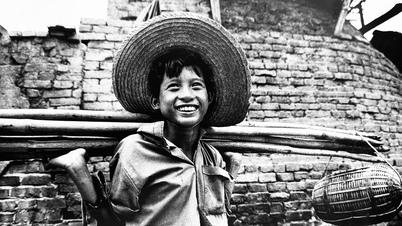
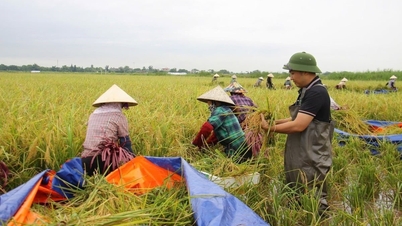
In rural North Vietnam, from 1960 to 1980, the average per capita food supply continuously decreased, at times reaching only about 14 kg/person/month. The scene of extreme hunger clung to the fields, while in reality, with the same people and land, the contracted land for households yielded significantly higher productivity than that of cooperatives. Because of these paradoxes, many farmers were forced to "break the rules," resorting to "underground contracting," which was seen as going against the mechanism of public ownership and the old management mindset.
In that context, journalist Thai Duy emerged as a pioneering writer. True to his principle of "facing the truth," he was deeply troubled by the question of why farmers had to suffer for so long and chose to stand with the emerging new ways of life.
In the early 1980s, Thai Duy published hundreds of practical and persuasive articles such as "A Revolution," "The Hai Phong Wind," "Breaking the Monoculture in Thai Binh," "New Mechanism, New People," and "Underground Contracting or Death"... These articles not only reflected reality but also made significant contributions to changing social perceptions, promoting the formation and refinement of the contract system, from Contract 100 to Contract 10, paving the way for the agricultural revolution that lifted Vietnam out of hunger and became a rice exporting country.
After the Sixth Party Congress, when the spirit of "facing the truth and speaking the truth" was established, the press entered a period of powerful transformation. Newspaper pages were no longer just for reporting or promoting good examples, but became a place where reality could speak. Each article published was not just for information, but for reflection, debate, and changing deeply ingrained ways of thinking. In that moment, the press truly was a pioneering force, paving the way for the Renovation through its language, its commitment, and the responsibility of its writers.
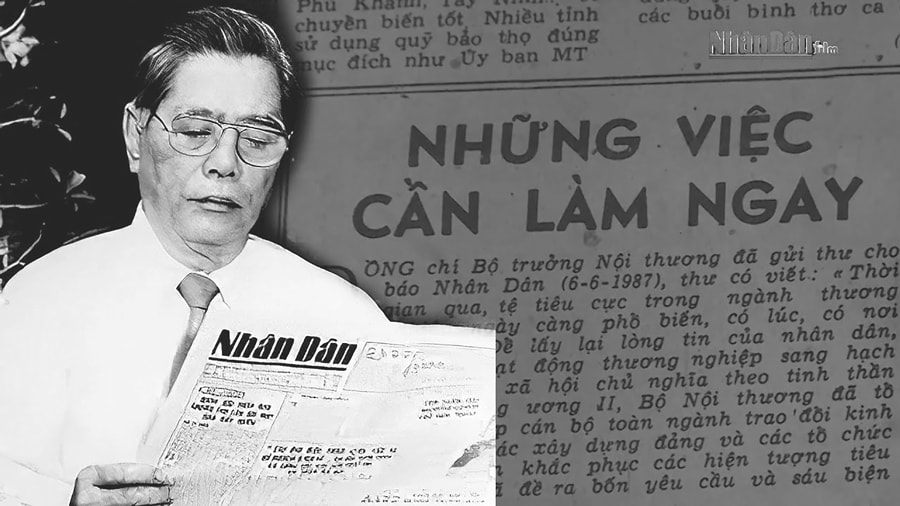
On May 24, 1987, in a letter to the Nhan Dan newspaper, General Secretary Nguyen Van Linh wrote: “From now on, I will publish short articles under the heading ‘Things That Need to Be Done Immediately’...”. This can be considered the opening signal for a series of articles fighting corruption, negativity, and waste on the journalistic front. These concise articles, signed with the pseudonym NVL, carried the prestige and responsibility of the Party leader. Each article was like a hoe striking the hardened soil of old thinking, pointing out seemingly small things that directly impacted discipline and social trust. The series not only shocked public opinion but also sent a strong message to the press: Speaking frankly is not about destruction, but about construction.
If "Things That Need to Be Done Immediately" was the flame of political commentary, then the feature stories in the Literature and Arts Newspaper of that era were flames from life, igniting emotions that made readers realize that reform was the inevitable path. Tran Huy Quang's feature story "The Tire King," published in the Literature and Arts Newspaper in 1986, posed a question of epochal significance: How can a country be rich if its people are not rich?
Also in the Literature and Arts Newspaper, Phung Gia Loc's "That Night... What Kind of Night?" caused a social uproar in 1988 when it recounted the suffering of farmers in the years before the Doi Moi (Renovation) period. In the freezing cold of the night, a family with an elderly mother nearing the end of her life and a baby still in her arms, lacking enough food, were woken up to "scavenge" for produce, causing chaos in the village. This reality left the reader speechless, only to realize that Doi Moi was not just a story of factories and enterprises, but began in the fields, in the meals of the people.
Along with that are works such as "The Kneeling Woman" (Tran Khac), "The Procedure for Remaining Alive" (Minh Chuyen), "The Voice of the Earth" (Hoang Huu Cac), "What's So Joyful About the Teacher's Village?" (Hoang Minh Tuong)... Each article is a slice of life, exposing simmering injustices, insensitive procedures, and the small, forgotten lives within the old system. These writings have brought humanity back to the center of all policies and reforms.
The lasting value of these articles that "ignited the flame of reform" lies not only in their content, but also in the social impact they created. Public opinion began to shift, debates emerged in newspapers, meetings, and daily life. Trust was rekindled by the truth, by the feeling that the voices of the people had been heard. Journalist Ho Quang Loi commented: These works demonstrate the tenacious "fighting spirit" of journalists – courageous writers who contributed to resolving bottlenecks and conflicts in agricultural life, rural areas, and among farmers.

The flame warms faith.
A prominent feature of journalism during the Doi Moi (Renovation) period was the formation of sections, forums, and series of articles with strong social critique, which were consistently maintained in many major newspapers. This created a new face for Vietnamese revolutionary journalism during this period of historical transformation.
The series of articles "Things That Need to Be Done Immediately" in the Nhan Dan Newspaper has had a profound social impact. Many cases, after being reported by the press, have been investigated and publicly responded to by ministries, departments, and localities; not a few officials in positions of power have been disciplined, thereby strengthening the people's trust in the Doi Moi (Renovation) process.
Subsequently, the "Business Stories" column in Nhan Dan Sunday (later Nhan Dan Weekend) both promoted new economic models and reflected on the shortcomings of socio-economic life during the period of opening up. Journalist Huu Tho's articles in this column clearly demonstrated a spirit of innovation in thinking and journalistic methods.
In the capital city, Hanoi Moi Newspaper expanded its coverage to reflect issues related to management reform, innovation in production and business mechanisms, and addressing difficulties faced by businesses and workers in the context of the transition from a centrally planned economy to a market economy. Sections such as "Voices from the Grassroots," "Investigative Reporting," and "A Story a Day"... contributed to shaping public opinion and fostering social consensus.
In the People's Army Newspaper, the "Saturday Forum" column became a space for frank discussions on economic and management issues, criticizing bureaucracy, the pursuit of achievements for their own sake, and negative manifestations within the system. Simultaneously, many newspapers and magazines, from central to local levels, simultaneously voiced their constructive opinions on the Doi Moi (Renovation) process.
Looking back after decades, it's clear that the press during the Doi Moi (Renovation) period not only reflected change but also contributed to it. The spirit of facing the truth, speaking the truth clearly, and putting the people first, which was formed and refined during this period, is a crucial legacy that Vietnamese journalism continues to inherit today.
As the nation enters an era of progress, these old articles still remind us of a simple yet profound truth: Innovation always begins with truth, and journalism, when standing on the side of truth, will always be a flame that warms faith.
Source: https://hanoimoi.vn/nhung-trang-bao-thap-lua-734243.html
































































![[Photo] Hanoi residents on the first day after the official cessation of E5 RON 95 gasoline sales.](https://vphoto.vietnam.vn/thumb/402x226/vietnam/resource/IMAGE/2026/06/02/1780370815909_666523_thumb_1780357660_06474202.jpeg)

![[Infographic] Market starts June 2026 with negative sentiment, VN-Index drops nearly 19 points.](https://vphoto.vietnam.vn/thumb/402x226/vietnam/resource/IMAGE/2026/06/02/1780370839687_666534_thumb_1780357795_06495602.jpeg)






Comment (0)