

(GLO) - Under the impact of a series of overlapping challenges, government debt as a percentage of GDP has increased in more than 100 developing countries. To achieve sustainable development goals, the United Nations is calling on the world to find strong multilateral solutions to address the public debt crisis facing developing countries.
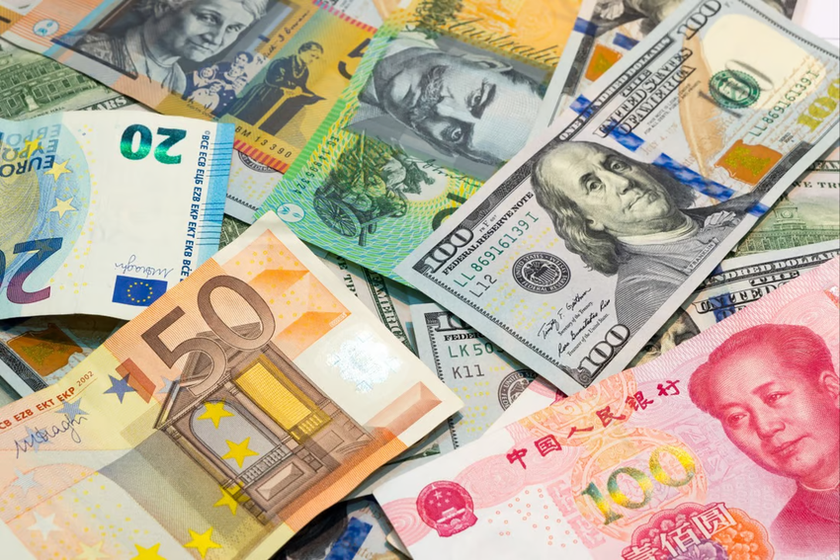 |
Global public debt increased by nearly $305 billion in the first quarter. (Illustration: Shuterstock) |
The South China Morning Post reported on May 18, citing a report by the Institute of International Finance (IIF - US), that global debt rose to nearly $305 trillion in the first quarter of this year, with emerging markets bearing a record amount of debt.
In the first quarter, global debt increased by $8.3 trillion compared to the end of 2022, reaching $304.9 trillion. Global debt is now $45 trillion higher than before the Covid-19 pandemic and is expected to continue rising. The debt-to-GDP ratio reached a record high of 360% in 2021 and then stabilized at 335%, higher than pre-pandemic levels.
IIF experts argue that an aging population and rising healthcare costs continue to put pressure on countries' spending, while "rising geopolitical tensions are also driving up medium-term defense spending."
Notably, the report shows that 75% of emerging markets saw an increase in US dollar-denominated debt in the first quarter, with the overall figure exceeding $100 trillion for the first time. The debt level of $100.7 trillion, equivalent to 250% of GDP, is up from $75 trillion in 2019. Data indicates that China, Mexico, Brazil, India, and Türkiye experienced the largest increases.
UN Secretary-General Antonio Guterres stated that, due to the impact of the Covid-19 pandemic, soaring food and fuel prices, inflation, and the financial crisis, the foreign debt of poor countries has increased sharply over the past 10 years. In the last two years, several countries have had to declare default, with African nations such as Nigeria, Mali, and Burkina Faso losing up to 20 years of development. This default pushes countries into a spiral of political violence and social instability, due to a lack of essential services, security, healthcare, and basic education .
The United Nations Development Programme (UNDP) urges countries to address the growing gap between rich and poor, change the multilateral landscape, and create a debt structure appropriate to the current global context. The UNDP warns that without urgent measures, many countries will face debt and default, unable to invest in projects to combat poverty, facilitate energy transition, mitigate climate change, and thus make the goal of sustainable global development difficult to achieve.
Source link
![[Video] Sunset at Lap An Lagoon – Where the sun sets over the fishing nets](https://vphoto.vietnam.vn/thumb/1200x675/vietnam/resource/IMAGE/2026/05/31/1780187239592_2222.jpeg)














![[Video] Sunset at Lap An Lagoon – Where the sun sets over the fishing nets](https://vphoto.vietnam.vn/thumb/800x450/vietnam/resource/IMAGE/2026/05/31/1780187239592_2222.jpeg)















































































Comment (0)