


Cuba has sentenced 203 civil servants to prison terms ranging from 2 to 22 years for embezzlement, bribery, forgery, theft, and damage to public documents, seals, or property.
According to Granma, the official newspaper of the Cuban Communist Party, those convicted were members of several state-owned companies in the food, beverage , and tobacco industries in Havana and had "caused millions of dollars in losses" to the country through various schemes.
According to the Granma newspaper, along with prison sentences, authorities have applied 383 disciplinary measures, 95% of which were dismissals. Recently, Cuban state media has frequently emphasized its tough stance against crime and corruption. Cuban President Miguel Díaz-Canel also urged prosecutors to show no tolerance for corruption at “all levels and stages” because such acts “erode the moral foundations of society.”
According to the Vice President of the Council of State and Auditor General of Cuba, Gladys Bejarano, Cuba has ratified the United Nations Convention Against Corruption, committing to preventing and combating corruption. Ms. Bejarano emphasized that it is impossible to aspire to build a better society, a better country, or to cultivate better people if anti-corruption measures are not effectively implemented. She affirmed that Cuba is determined to hold officials and managers accountable, ensuring their actions contribute positively to shaping the society that Cuba envisions and desires for future generations.
According to the head of Cuba's auditing agency, there are cases of corruption that extend beyond national borders. That is why Cuba pays special attention to international cooperation and signs bilateral agreements on mutual assistance, as well as with relevant international organizations. Therefore, the United Nations Convention Against Corruption is the only universally binding instrument to combat this type of crime and is recognized by most UN member states.
KHANH MINH
Source




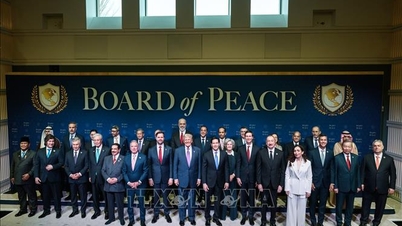
![[Photo] General Secretary To Lam attends the opening session of the Peace Council on Gaza.](https://vphoto.vietnam.vn/thumb/1200x675/vietnam/resource/IMAGE/2026/02/19/1771516865192_tbttolam5-jpg.webp)






















































Comment (0)