

Having spent many years cultivating rice in My Phu Dong, Mr. Truong Thanh Ha has never felt as satisfied with rice farming as in 2023, when rice prices continuously reached record highs. Furthermore, thanks to the application of safe farming practices, the use of organic fertilizers and biological pesticides, rice yields remained high while production costs decreased, and human health and the environment were protected.
"With stable and high rice prices, my family earned a profit of 150 million VND from three rice harvests. That's a dream figure," Mr. Ha said with a smile.
Entering the 2023-2024 winter-spring crop season, rice prices, although lower than in 2023, remain relatively stable. When asked if he hoped for even higher rice prices, Mr. Ha shared that he only needs stable prices to ensure farmers make a profit, export businesses have smooth operations, and consumers don't have to buy rice at high prices.
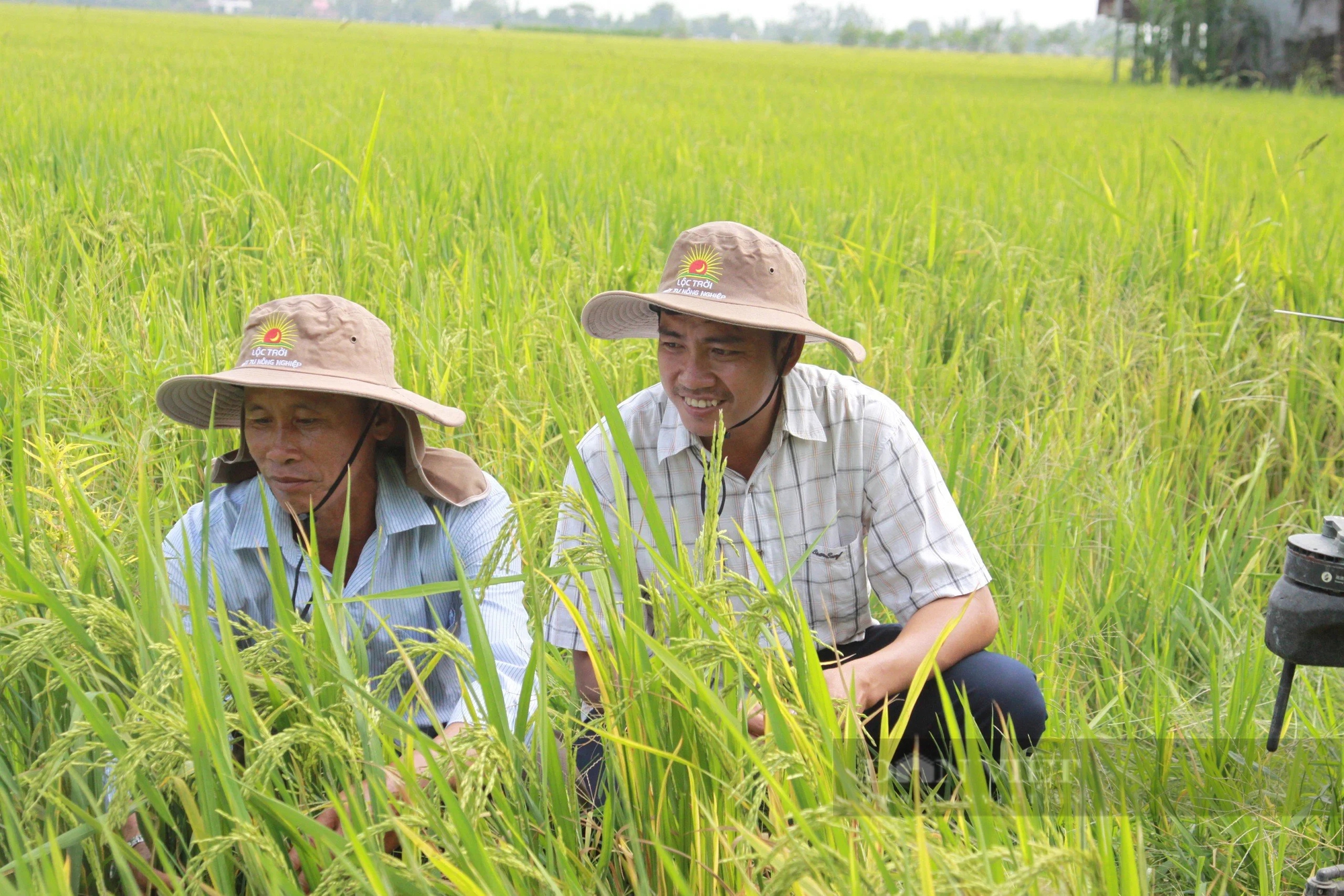
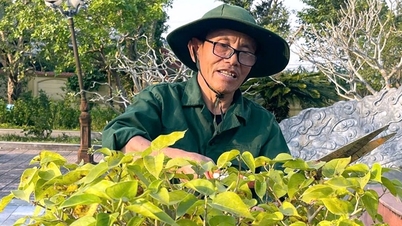
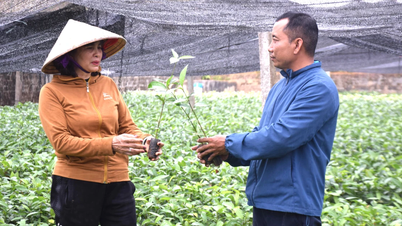
In 2023, with 1.7 hectares of rice, Mr. Truong Thanh Ha (left) in My Phu Dong commune (Thoai Son district, An Giang province) earned a profit of 150 million VND. Photo: KN
Mr. Ha has also been involved in partnerships with high-quality rice farming businesses for over 10 years. Regarding this relationship, he uses the word "smooth" when talking about the profits and benefits that the partnership has brought to him and many other farmers.
“My family has 2 hectares of rice land under a partnership with Loc Troi Group, producing according to safe procedures. For the past 3-4 years, I have switched to using a balanced amount of organic fertilizers and biological pesticides, so the living environment has improved, and especially, our health is not affected as before,” Mr. Ha said.
Mr. Ha boasted that during the 2023-2024 winter-spring crop season, farmers across the delta were exhausted by the white-backed planthopper infestation. Many farmers had to bear additional costs for pesticides to control the planthopper, but still suffered significant losses. However, his rice fields and those of many households in the cooperative model had significantly fewer planthoppers.
"I haven't had to use any more insecticides, and the rice is still growing well. Although there are still some planthoppers in the field, the number is negligible. This is because my field has many red spider mites, which help catch the planthoppers. In rice fields that use chemical fertilizers and biological pesticides, many beneficial natural predators have reappeared," Mr. Ha boasted.
According to Mr. Ha, the biggest advantage of these models of linking with businesses to produce according to safe processes is that farmers no longer have to worry about the market for their products, while production inputs are supplied at reasonable prices.
According to updates from the Department of Agriculture and Rural Development of An Giang province, the average price of fresh paddy rice purchased at the field on March 6th was 7,200 - 8,200 VND/kg. Specifically, fresh glutinous rice from Long An fluctuated around 7,800 - 8,000 VND/kg, an increase of 400 VND/kg; fresh 3-month glutinous rice was at 7,900 - 8,200 VND/kg, an increase of 300 VND/kg.
Dai Thom 8 rice is fluctuating around 7,800 - 8,000 VND/kg, IR 504 rice at 7,200 - 7,300 VND/kg; OM 5451 rice at 7,300 - 7,400 VND/kg; Nang Hoa 9 rice at 7,500 - 7,700 VND/kg; OM 18 rice at 7,600 - 7,800 VND/kg; and Nhat rice at 7,800 - 8,000 VND/kg.
On the export market, the price of Vietnamese rice is $578 per ton; 25% broken rice is $555 per ton.
Source


![[Photo] Prime Minister Pham Minh Chinh presides over a meeting on private sector economic development.](/_next/image?url=https%3A%2F%2Fvphoto.vietnam.vn%2Fthumb%2F1200x675%2Fvietnam%2Fresource%2FIMAGE%2F2025%2F12%2F20%2F1766237501876_thiet-ke-chua-co-ten-40-png.webp&w=3840&q=75)









































































Comment (0)