

An Bien District ( Kien Giang Province) has 4 out of 9 communes and towns located along the coast. It boasts a 22 km long coastline and over 5,200 hectares of alluvial land suitable for aquaculture, including blood cockle farming. In 2022, the communes of Nam Yen, Nam Thai A, Nam Thai, and Tay Yen cultivated blood cockles on approximately 5,200 hectares, yielding 16,000 tons.
Billionaire from the Mekong Delta
According to Mr. Huynh Van Thanh, Vice Chairman of the People's Committee of Nam Thai commune, the entire commune currently has 2,065 hectares of coastal alluvial water surface leased by 97 farming households for blood cockle farming annually. Thanks to their diligence and perseverance in the profession, many households have become renowned millionaires in the Mien Thu region.
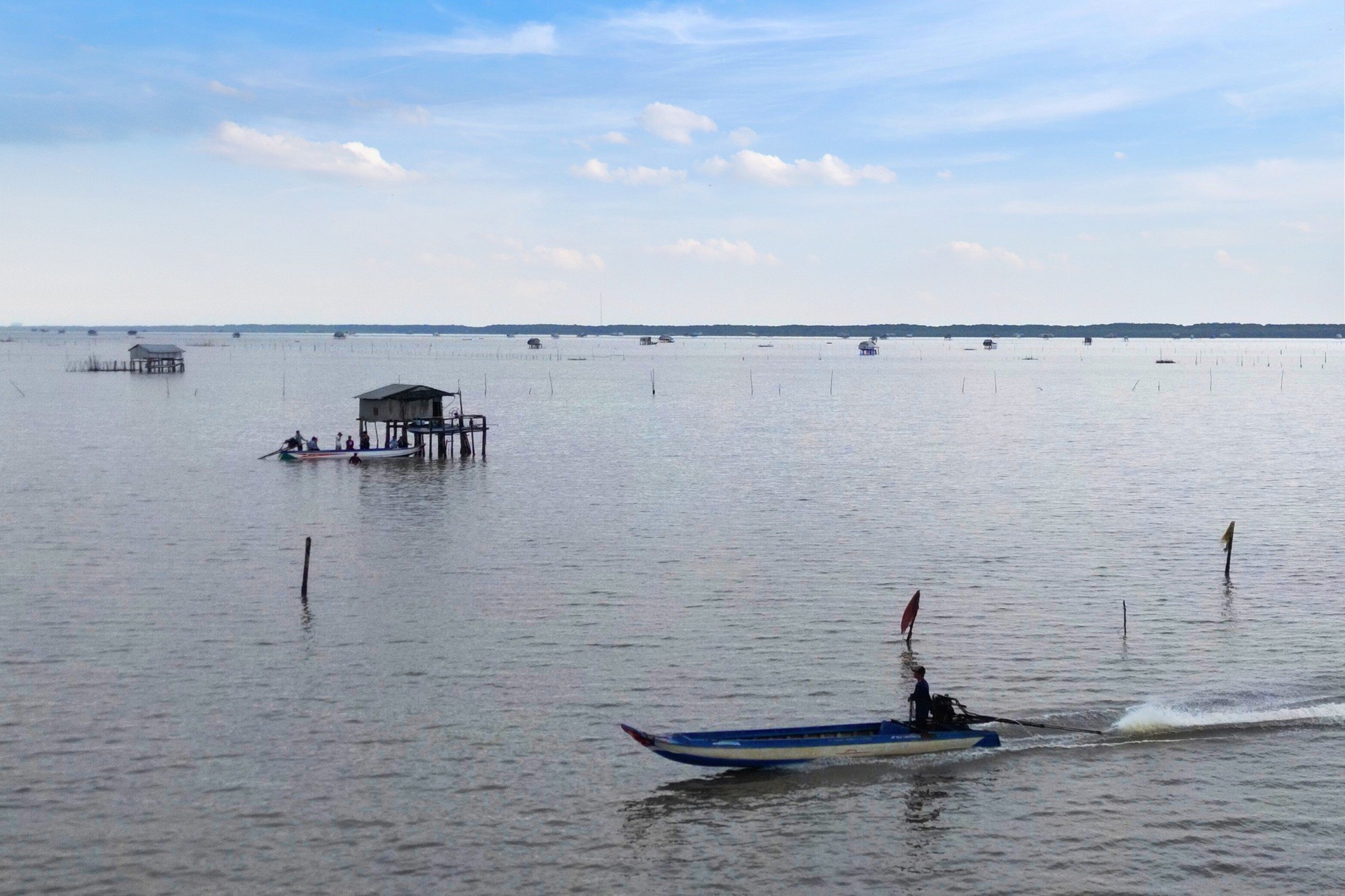
Blood cockle beds in Nam Thai commune, An Bien district, Kien Giang province.
Among the billionaires raising blood cockles is Mr. Nguyen Van Vui (42 years old, residing in Sau Bien hamlet, Nam Thai commune). From the beginning of 2023 until now, he has successively released blood cockles on 300 hectares, and the cockles are developing well. "This year, I released the cockle seedlings in favorable weather conditions, with minimal losses. The cockles are growing quickly, have thin shells, bright colors, and are healthy, so it promises to be a big harvest," Mr. Vui shared.
Fifteen years ago, Mr. Vui started his business raising clams, but it wasn't profitable, so he switched to raising blood cockles with an initial area of 20-30 hectares. However, due to lack of experience, in the early years he stocked the clams at a high density, leading to inefficiency. So, he went to great lengths to buy high-quality clam seedlings from Hon Dat and Kien Luong districts (Kien Giang province), and even from Ben Tre and Tra Vinh provinces to obtain seedlings for breeding before stocking. Thanks to his diligence, hard work, and accumulated experience, he gradually succeeded, achieving great success in every harvest, and expanding his farming area.
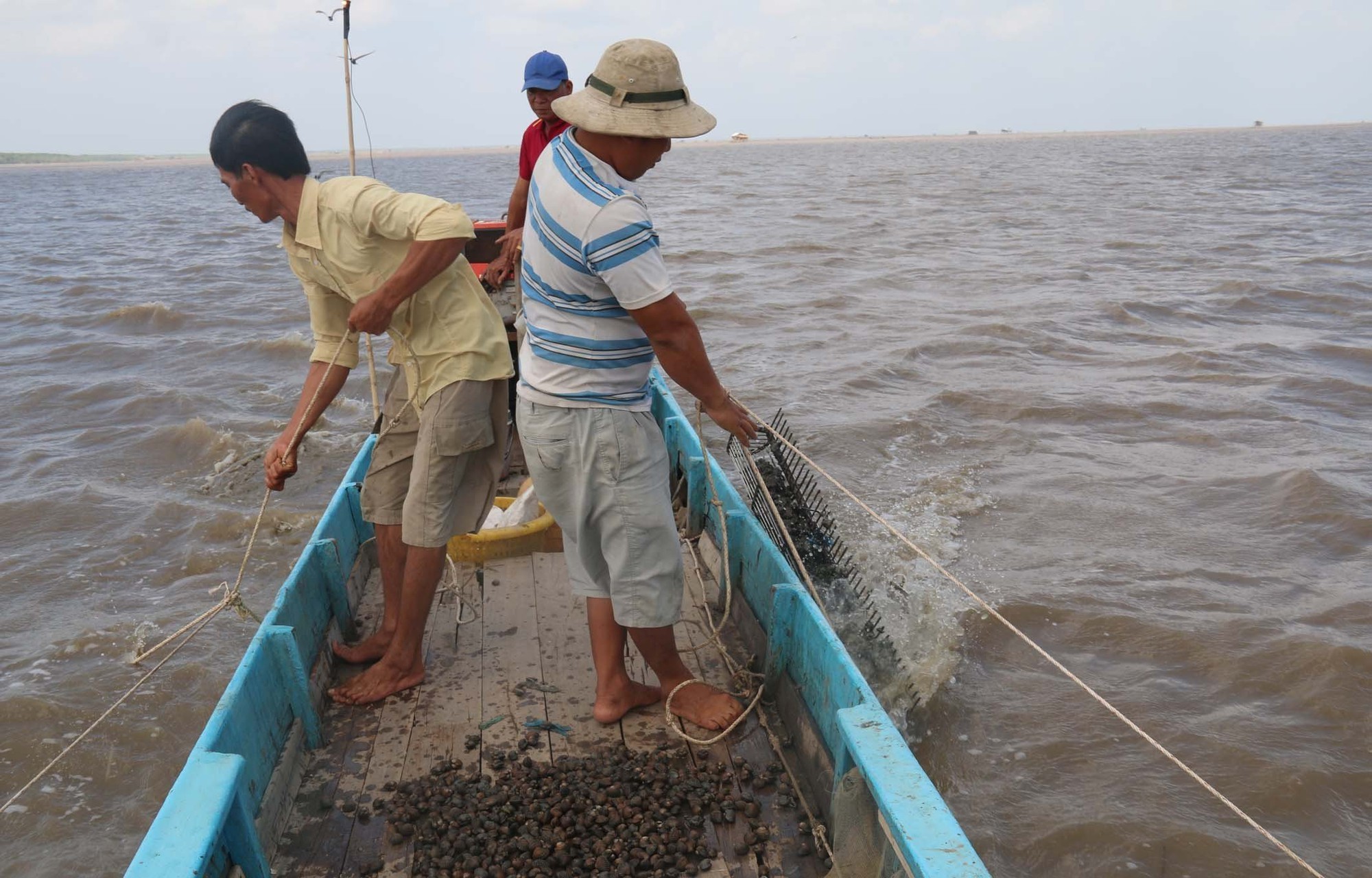
Residents of Nam Thai commune, An Bien district, harvest blood cockles.
According to Mr. Vui, blood cockles are easy to raise, have low risks, and a stable market, which can help farmers get rich after a few successful cockle farming seasons. "One of my success factors is stocking them sparsely. Secondly, I regularly stir the mud to create natural food for the cockles. Thirdly, the weather conditions in the seventh lunar month are rainy, and people pumping water out of the fields to drain floodwaters can easily shock and kill the cockles. Therefore, farmers need to calculate how to stock and harvest them before or after the rice crop, which will determine success, or what is called 'harvesting around the rice crop'," Mr. Vui shared.
Currently, with an expanded area of 300 hectares, Mr. Vui's family can harvest blood cockles year-round, with an estimated yield of 50 tons. Mr. Vui's blood cockles have achieved OCOP 3-star certification, resulting in high selling prices. Specifically: 1-year-old cockles (approximately 80 cockles/kg) are priced at 100,000 VND; 2-year-old cockles (approximately 60 cockles/kg) are priced at 200,000 VND/kg. Mr. Vui estimates his revenue to be around 7 billion VND, and after deducting all expenses, his profit is over 5 billion VND.
"Previously, in this locality, bridges and roads were difficult to navigate, and houses were dilapidated. Since implementing marine economic development, especially focusing on blood cockle farming, the economic lives of the people have improved, they have built spacious houses, contributed money to build bridges and roads to facilitate trade and commerce, and made it easier for their children to go to school," shared Mr. Huynh Van Thanh, Vice Chairman of the People's Committee of Nam Thai commune.
Exploiting the potential and applying scientific and technical methods to blood cockle farming.
Mr. Trang Minh Tu, Head of the Agriculture and Rural Development Department of An Bien District, said that in order to develop the potential of coastal alluvial plains and simultaneously implement the marine aquaculture project of the Kien Giang Provincial People's Committee, the unit has advised the An Bien District People's Committee to issue a plan for implementing the sustainable marine aquaculture development project until 2030, which includes outlining roadmaps and solutions.
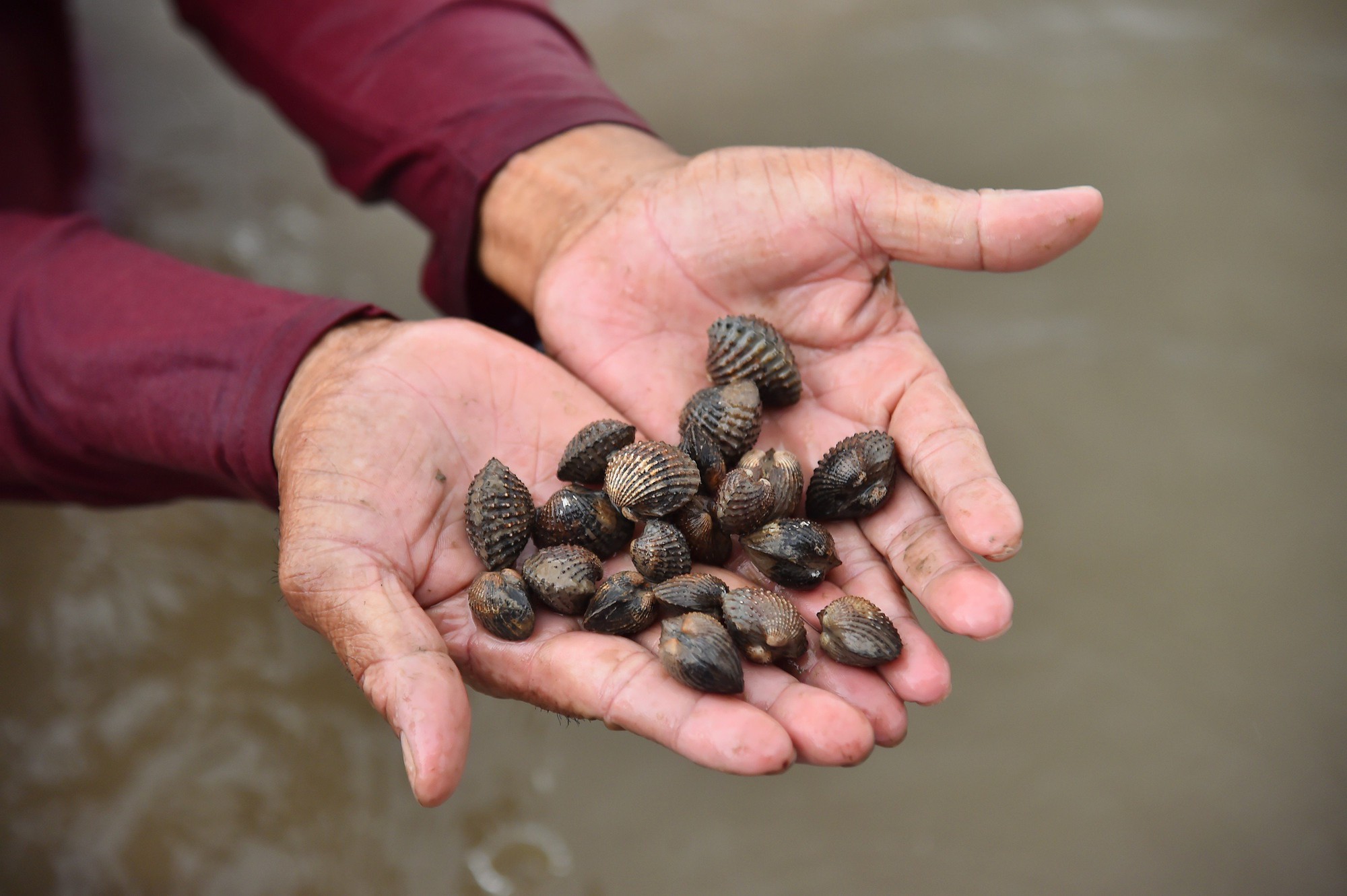
Blood cockles are farmed in coastal communes of An Bien District.
Specifically, we will continue to reorganize the locations of aquaculture farms, organize guidance for farmers to register for farming procedures according to State regulations on leasing coastal alluvial plains for aquaculture. We will develop sustainable models for blood cockle farming, applying science and technology so that farmers can replicate these models in the future. We will promptly provide information on weather developments and natural disasters at sea so that farmers can take timely preventive measures to minimize damage caused by natural disasters. From there, we will develop and improve the quality of local blood cockles to meet OCOP standards…
Since the implementation of the policy to develop the marine economy, especially the deployment of blood cockle farming models on coastal mudflats, people in the coastal communes of An Bien district have achieved many economic benefits. These blood cockle farming models create jobs for local people. Each farming household provides regular employment for 7-10 workers, earning a stable income of 7-9 million VND per month.
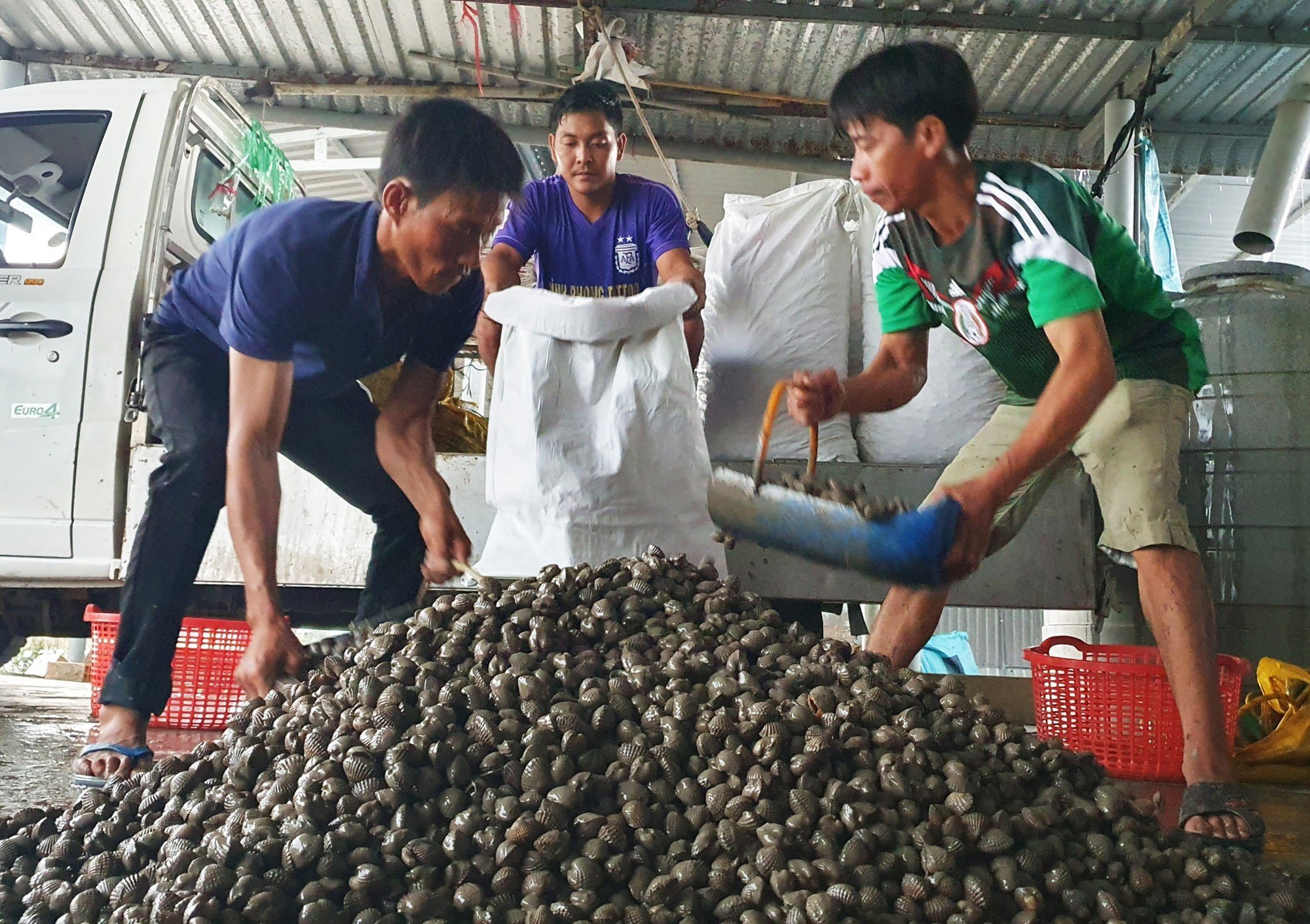
Traders buy blood cockles in Nam Thai commune, An Bien district, and transport them to various places for consumption.
In its regional economic development plan, An Bien District is orienting its planning and development towards blood cockle farming combined with investment in ecotourism development... This model is attracting many tourists to experience it. Visitors can tour the "cockle village" and enjoy fresh seafood caught on the spot.
The blood clam farming industry has made a significant contribution to the socio-economic development of An Bien District in recent years. "The district has focused on surveying coastal areas, specifically assessing the current state of land, forests, and coastal alluvial plains… from which, it has proposed groups of solutions for the stable and sustainable development of commercial blood clam farming," Mr. Trang Minh Tu added.
Source link



![[Photo] Prime Minister Pham Minh Chinh receives the Director of RMIT University Melbourne (Australia)](https://vphoto.vietnam.vn/thumb/1200x675/vietnam/resource/IMAGE/2026/04/02/1775142120087_thiet-ke-chua-co-ten-2026-04-02t214220784-png.webp)






























































Comment (0)