Before establishing his company and expanding his herbal chicken farming model to a farm, Mr. Nguyen Tien Sy (Thuan Hoa residential area, Dong Son ward, Quang Tri province) had spent nearly 5 years raising chickens on a small scale.
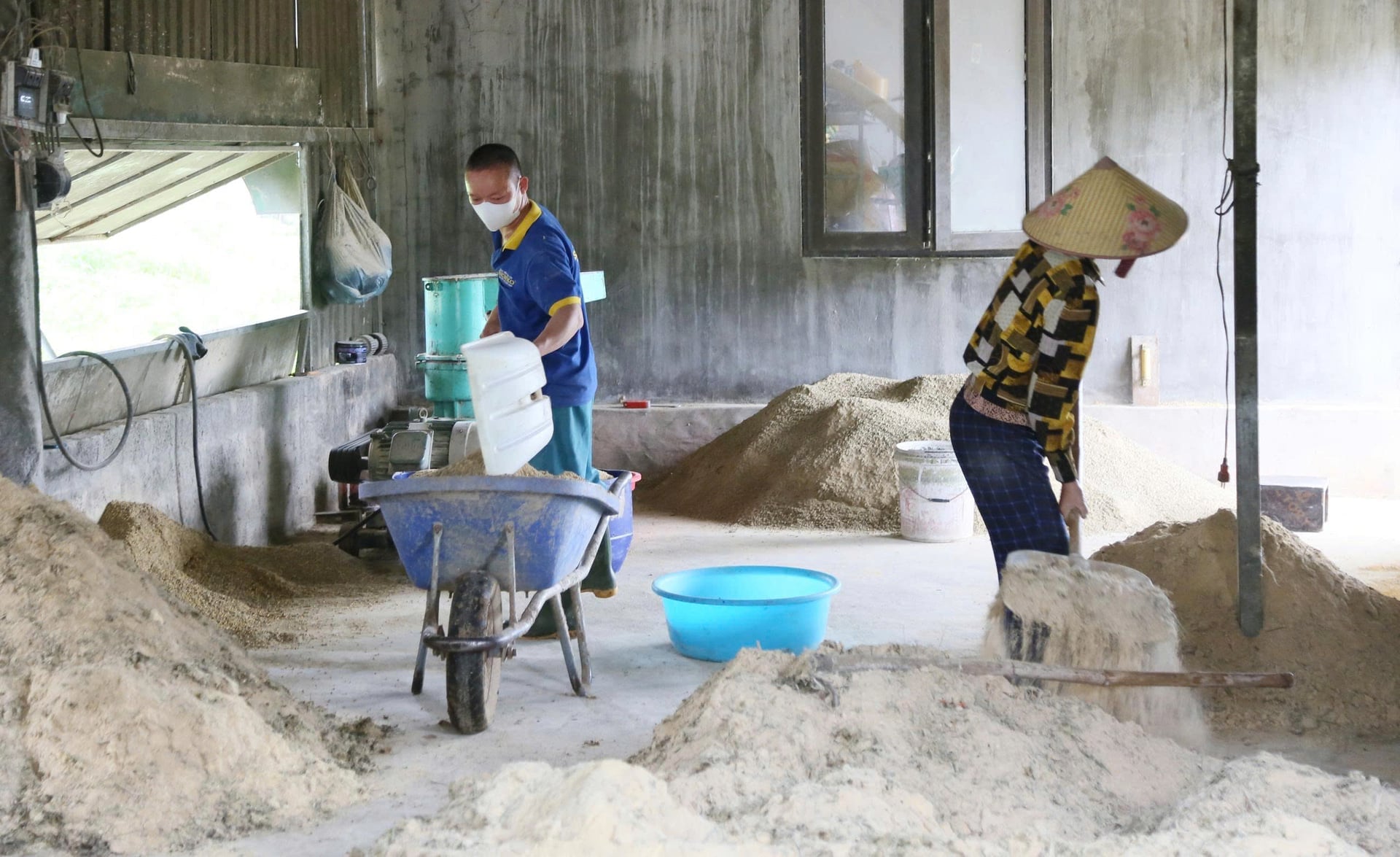
Processing herbal feed at a chicken farm. Photo: T. Phùng.
"At that time, I raised livestock using traditional methods, and the income wasn't much. Each year that passed, I accumulated more experience in farming, more in the market, and established my initial market area," Mr. Sy confided.
Realizing that successful and efficient poultry farming required a unique approach, utilizing readily available and inexpensive feed sources, he boldly established and became the Director of Moc Nhien Agricultural and Production Company Limited. His goal was to expand his poultry farms, invest in modern facilities, and implement a herbal-based chicken farming method.
"This means the chicken feed is prepared in a special way with a balanced nutritional regimen. It emphasizes natural herbs and uses agricultural products as the main feed for the flock," Mr. Sy added.
Implementing the herbal chicken farming method, the farm initially raised a few thousand chickens in the first batches, gradually increasing the number to 10,000 and then 20,000. The chicken breed was purchased from a reputable and reliable chicken breeding facility in Hai Phong . Over several breeding cycles, the flock has developed well and there have been no outbreaks of disease.
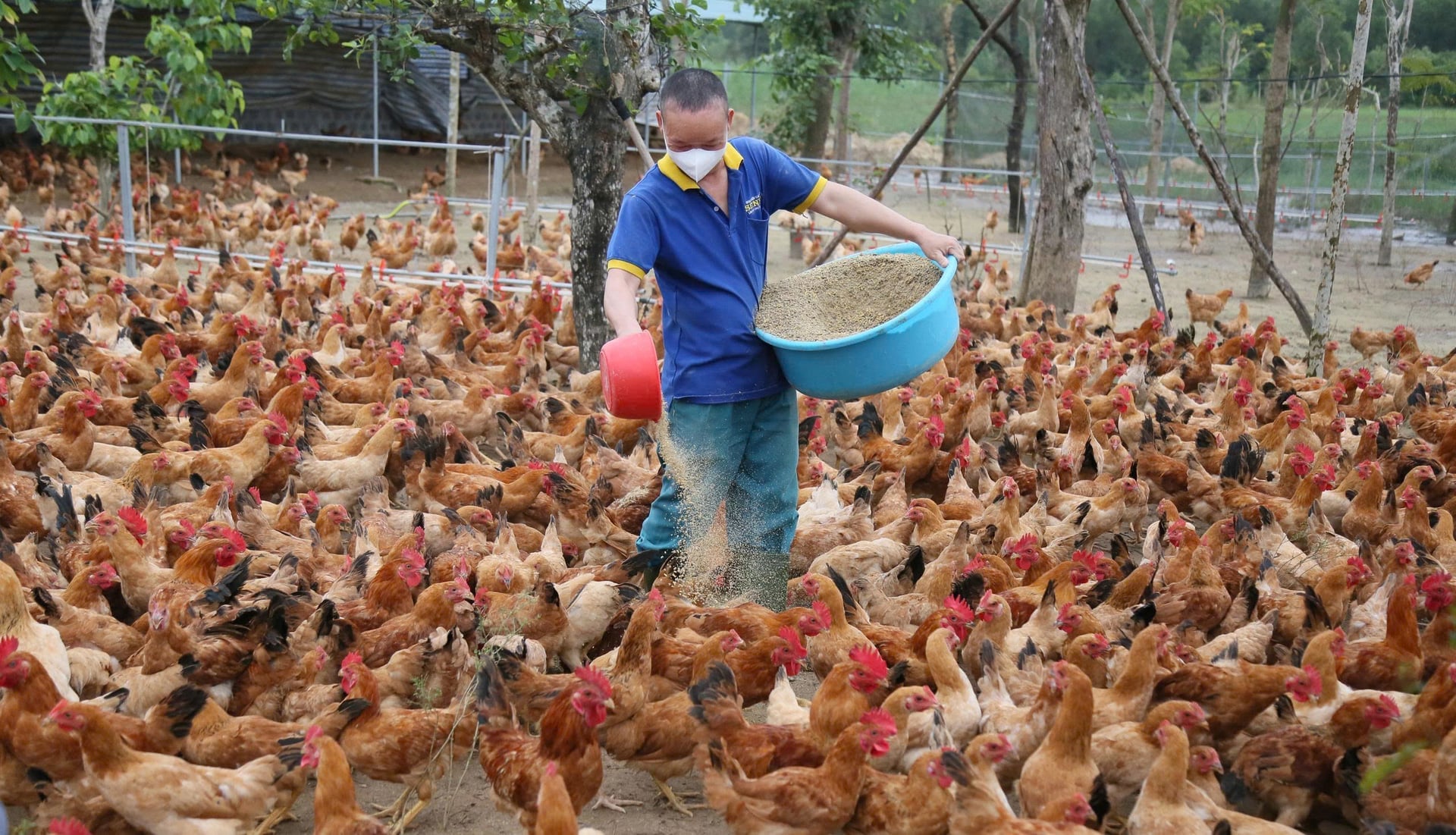
Chickens raised on herbal feed are of high quality and have delicious meat. Photo: T. Phùng.
According to Mr. Sy, the chicken feed is mixed with many ingredients such as bran, corn, and herbs. These include natural herbal ingredients such as mung beans, soybeans, and several types of herbs including large-leaf tea, elephant grass, banana tree, *Hoang Ngoc* plant, bear bile, and *Xuyen Chi* grass.
"The basic medicinal herbs are grown by us. After harvesting, the herbs are cleaned and put into a grinder, then mixed with agricultural by-products in a ratio depending on the age of the chickens for daily feeding," Mr. Sy said.
Raising chickens on herbal feed has many advantages; the chickens consume a lot of herbal ingredients, which strengthens their immune system, and the process of raising them reduces the need for antibiotics to prevent diseases.
"Our farm only uses antibiotics during the initial short period of brooding chicks. After the chickens reach a certain age, we gradually supplement their diet with herbal feed. Natural herbs contain many disease-fighting substances, which reduce the risk of disease in livestock," Mr. Sy shared.
Farm-raised chickens, raised on herbs, will be ready for market after 5 months, weighing 1.6-2 kg each. The selling price is approximately 80,000 VND per kg.
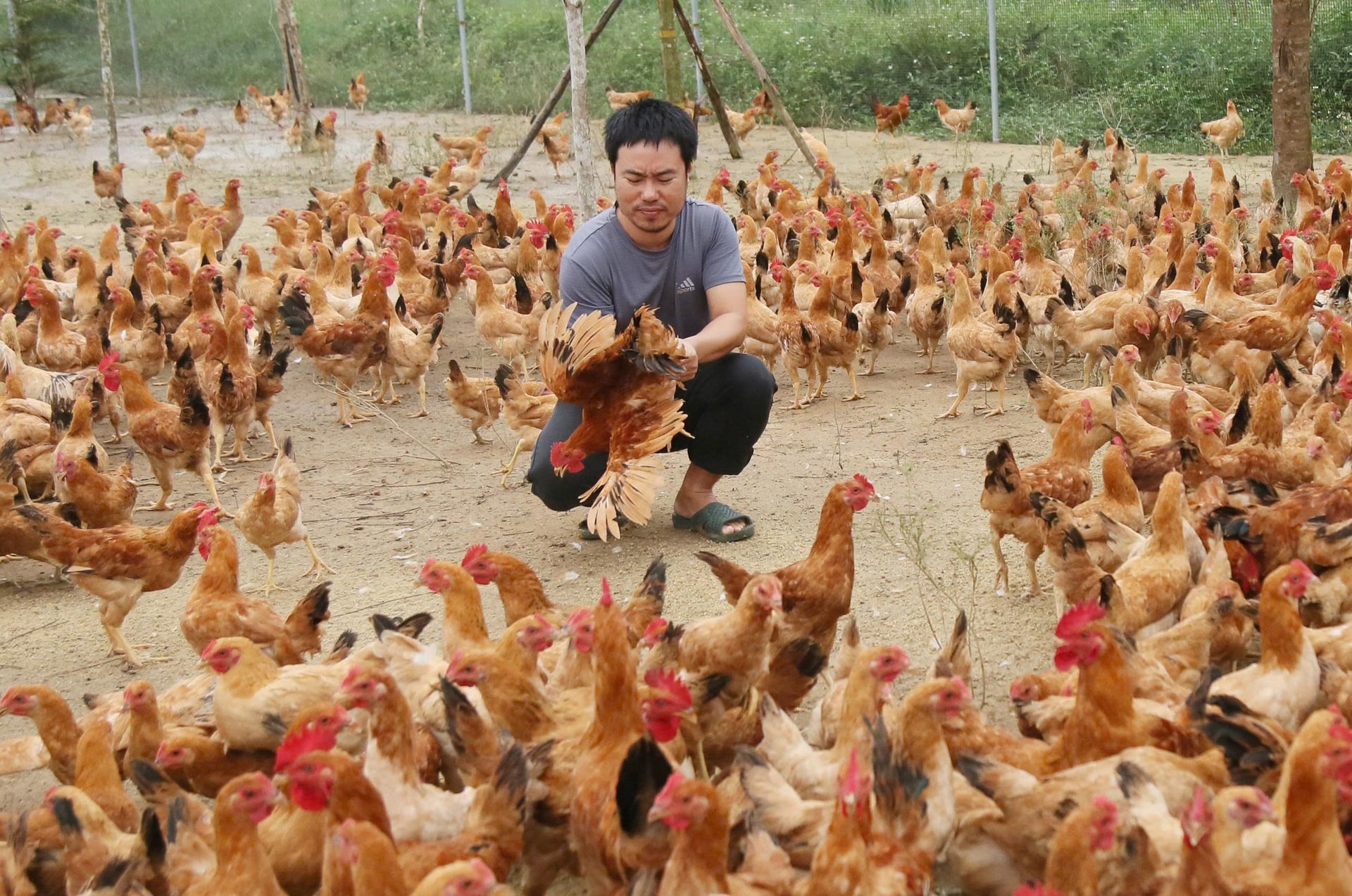
Mr. Nguyen Tien Sy inspects a batch of herbal-fed chickens ready for market. Photo: T. Phung.
Mr. Sy explained: "The reason the chickens are sold at a reasonable price is because the company has control over its herbal feed supply and can reduce other costs. Therefore, the selling price is always accepted by the market. Because the chickens are mainly raised on green fodder, the quality is clean, delicious, and the meat is firm and sweet, so customers really like them."
Following several successful batches of herbal-fed chickens, the company expanded production to two facilities in Dong Son ward and Nam Trach commune (Quang Tri province). To ensure a consistent supply chain for restaurants and hotels in the area and neighboring provinces, the company implements a rotational production process.
Each breeding facility is divided into six different sections, and the chicks are released at monthly intervals. During the rainy and cold seasons, the farm also applies appropriate production processes to ensure uninterrupted supply to customers. When restocking with multiple separate pens, each pen is designed to withstand both hot and cold weather.
Mr. Nguyen Tien Sy: “The farm has received technical advice on breeding and disease prevention from the Quang Tri Department of Agriculture and Environment. Currently, the farm has 6 sections, each consisting of a playground and breeding pens of about 1,200 m2. Each year, the farm sells 50 to 60 standard chickens, generating revenue of about 12 billion VND, with a profit margin of about 20-30%.”
Source: https://nongnghiepmoitruong.vn/nuoi-ga-thao-duoc-cho-thu-nhap-cao-d787736.html











































































Comment (0)