

Having started poultry farming in 2006, Ms. Phan Thi Huyen from Ruong Cai village, Tien Luc commune, Bac Ninh province, said that her family raised chickens using traditional methods: short-term farming, raising them for just over three months before selling them. The coops were cramped, located close to the house, and smelled foul during the dry season, while diseases easily spread during the rainy season. Although they raised three batches a year, each batch containing tens of thousands of chickens, the economic efficiency was low, while the labor costs were high, and the risks of disease and price fluctuations caused many difficulties for the family.
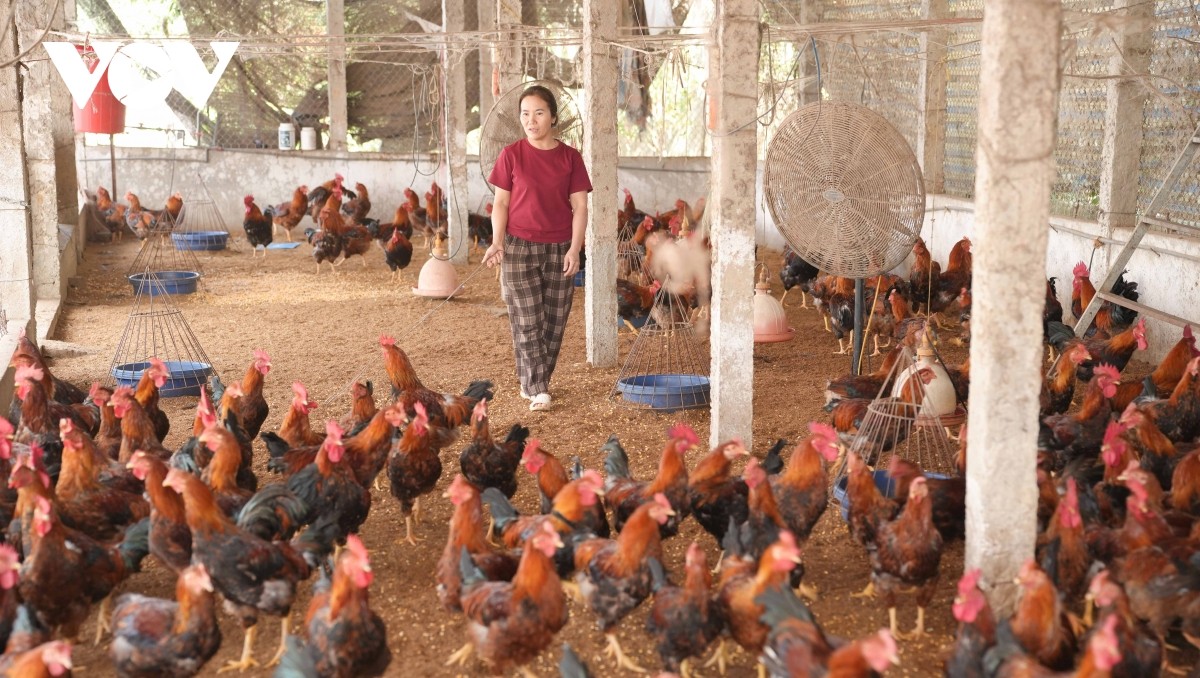
The model of raising castrated roosters by Ms. Phan Thi Huyen in Ruong Cai village, Tien Luc commune, Bac Ninh province.
Ms. Phan Thi Huyen recounted that in 2015, her family moved to a new plot of land, improving the space for livestock farming. However, the production methods remained unchanged, so their income only barely covered their living expenses. The turning point came in 2023 when Ms. Huyen participated in a livestock training course organized by the Department of Agriculture and Rural Development in collaboration with the Farmers' Association of Lang Giang district (formerly Bac Giang province).
During the training course, Ms. Huyen learned about the long-term capon breeding model – a farming method that yields high economic value, has low risk, and is suitable for households with spacious barns. Recognizing the potential of the model, Ms. Huyen boldly invested in a trial breeding program, then gradually expanded the scale to about 1,000 chickens per batch, raising two batches per year.
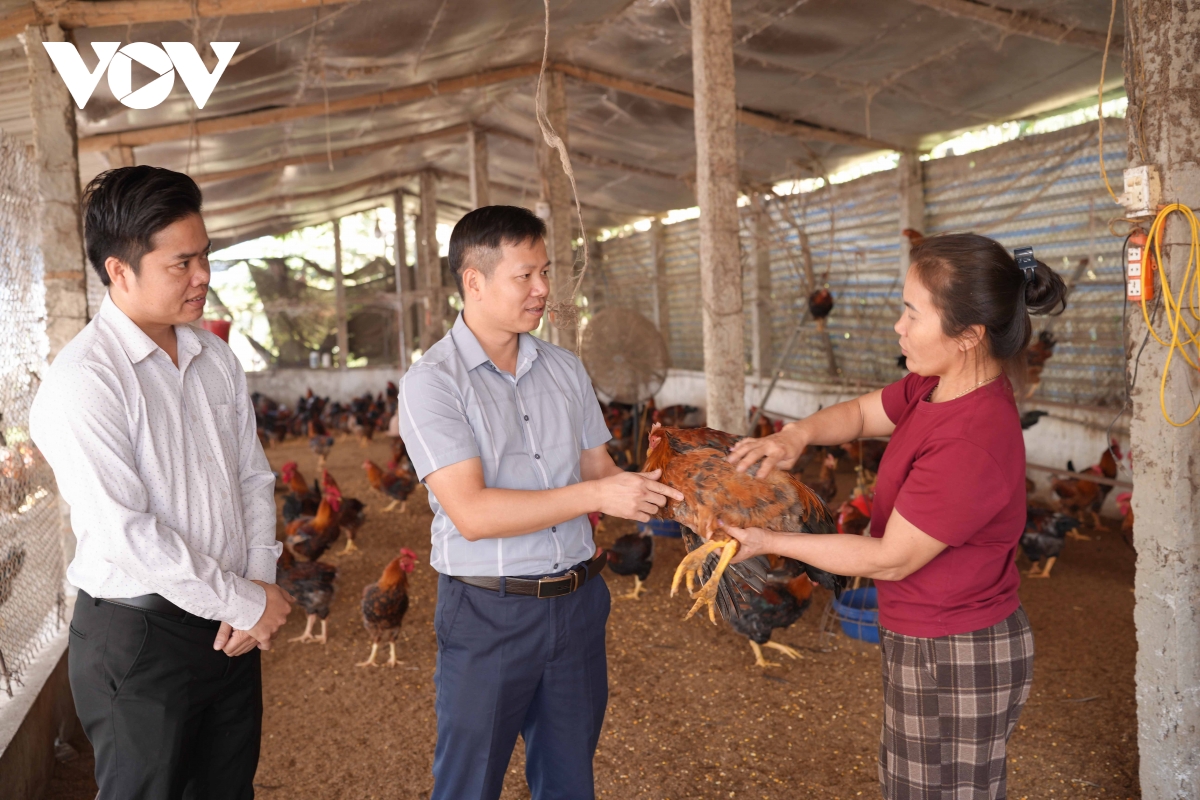
Mr. Nguyen Manh Hung, Deputy Secretary of Tien Luc commune (standing in the middle), visits Ms. Huyen's model farm raising castrated roosters.
“Regarding farming practices, chicks are carefully brooded for the first 10 days at a temperature of 33-35°C, and all vaccinations are completed by the 21st day. When the chickens reach 25 days old, castration is carried out – the most important step, requiring the correct technique to ensure the chickens are healthy and minimize losses. After castration, the flock is less active and less prone to fighting, so feed consumption decreases, and meat accumulation is better,” Ms. Huyen shared.
After 6–8 months of rearing, capons reach an average weight of 3.8–4 kg/bird. With an average selling price of approximately 150,000 VND/kg, each batch generates revenue of approximately 600 million VND, with a net profit of nearly 400 million VND. If raised for a full year, the selling price can reach 180,000–250,000 VND/kg, with stable demand thanks to the market and regular customers.
“A particularly outstanding feature of this model is the proactive production of animal feed. Fish are purchased, ground into small pieces, mixed with molasses, and then fermented with probiotics. This makes the feed easier to digest, increases the animals' resistance to disease, and reduces costs and dependence on industrial feed. As a result, the farm has good disease control, a clean breeding environment, and virtually no odor,” Ms. Huyen added.
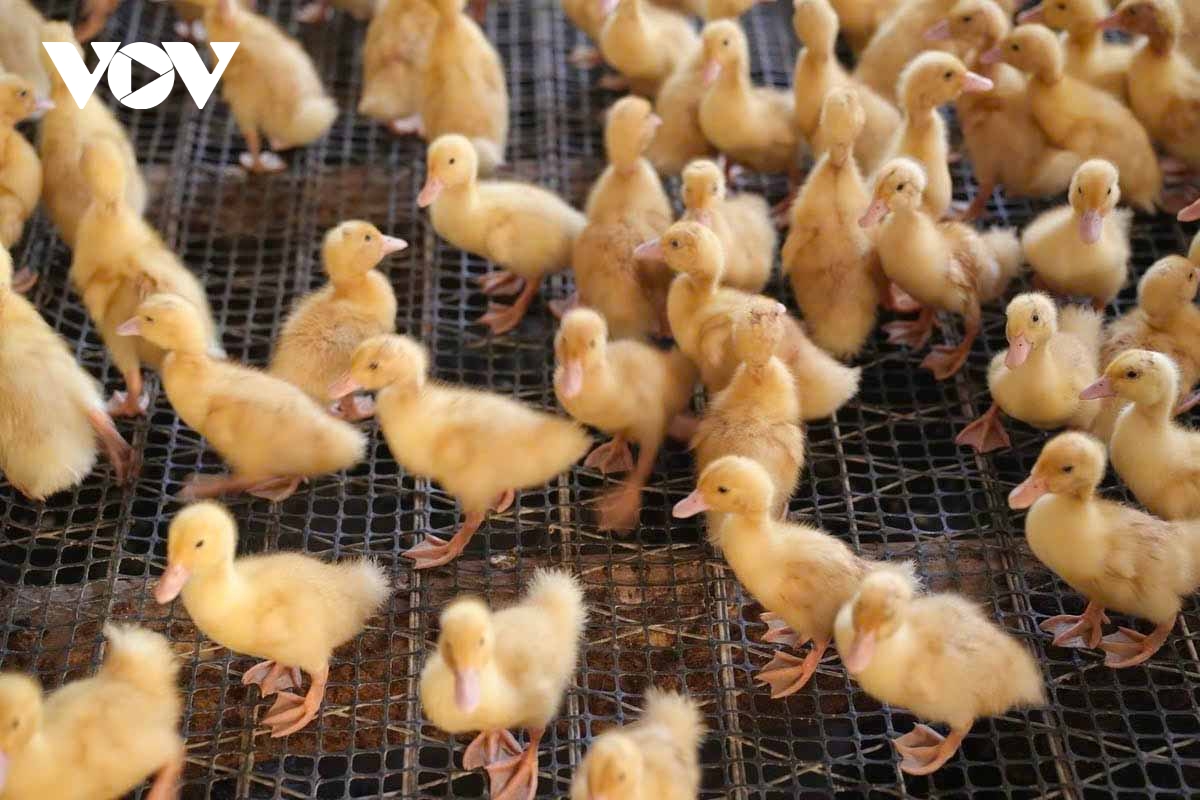
The ducks are kept in enclosures made of breathable plastic sheets.
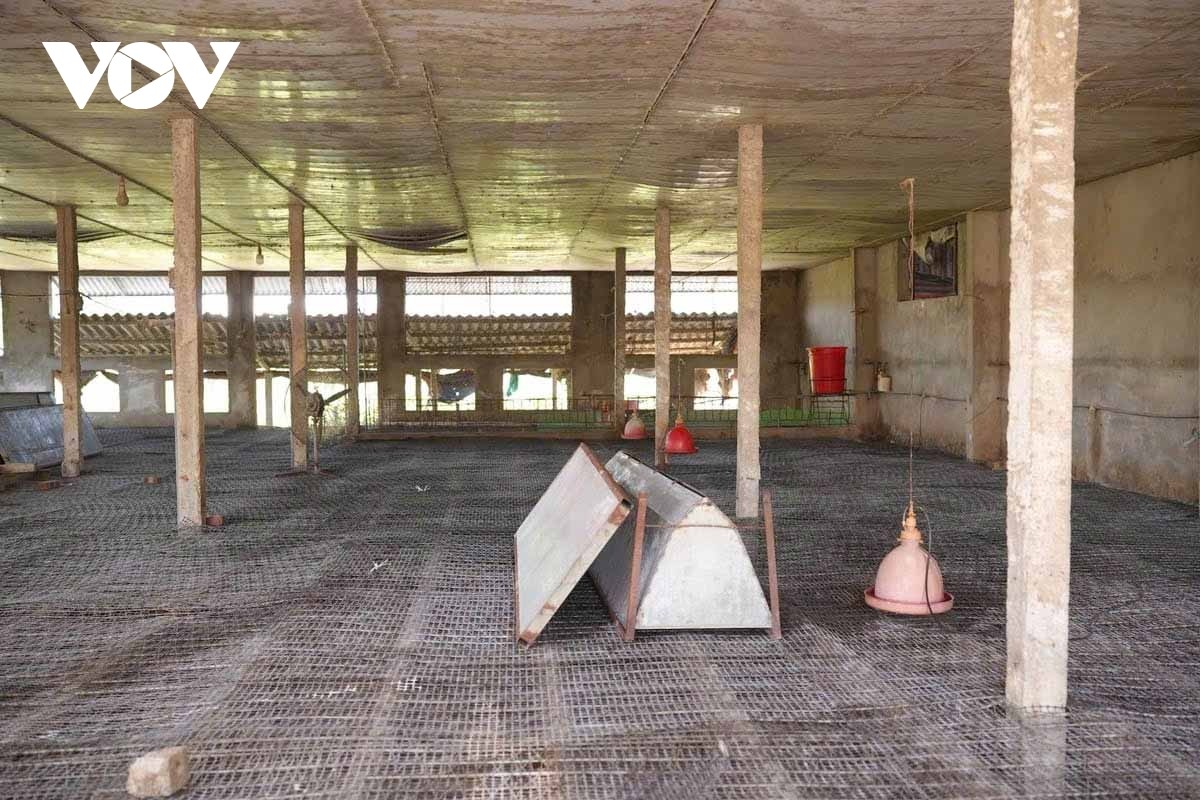
The duck coop model is a system that collects manure into a settling tank; daily rinsing will eliminate the odor.
Besides raising capons, Ms. Huyen's family also raises commercial ducks on a scale of about 10,000 per batch, with a rearing time of 35-37 days. This is considered a short-term source of income, helping to rotate capital, while capons require a longer rearing period. However, raising capons remains the main model, bringing sustainable economic value.
Commenting on this model, Mr. Nguyen Manh Hung, Deputy Secretary of the Party Committee of Tien Luc commune, Bac Ninh province, said that developing household-based farming is one of the key tasks of the locality. Households engaged in livestock farming that operate systematically and meet environmental requirements will be facilitated and guided by the commune through the necessary procedures to expand their scale, form clean livestock farming areas, and increase income for the people.
"By boldly changing her production mindset and actively learning new techniques, Ms. Phan Thi Huyen's model of raising castrated roosters has not only brought clear economic benefits to her family but has also become a valuable example for developing rural livestock farming in a safe and sustainable direction," Mr. Hung said.
Source: https://baolaocai.vn/nuoi-ga-trong-thien-giup-nong-dan-bac-ninh-thoat-ngheo-post889884.html




![[Photo] General Secretary and President To Lam presides over a meeting on preparations for the review of one year of operation of the three-tiered government system.](https://vphoto.vietnam.vn/thumb/1200x675/vietnam/resource/IMAGE/2026/06/02/1780391821195_a1-bnd-4595-9717-jpg.webp)



![[INFOGRAPHICS] Development goals for rural crafts and industries in the period 2026-2030](https://vphoto.vietnam.vn/thumb/402x226/vietnam/resource/IMAGE/2026/06/02/1780393054323_1780392879.webp)



































































Comment (0)