

Currently, women only account for about 37% of the workforce in this sector. This reality necessitates practical solutions to promote gender equality in STEM and STEAM industries.
Prejudice remains a "bottleneck".
In recent years, the Ho Chi Minh City University of Technology (Vietnam National University Ho Chi Minh City) has admitted approximately 5,000 students, including about 1,000 female students. Although the percentage of female applicants and admitted students is increasing, according to Professor Mai Thanh Phong - the Rector, overall, the number of female students studying STEM fields remains low.
According to a report by the Center for Applied Science and Entrepreneurship in collaboration with the United Nations Development Programme (UNDP) in Vietnam, by 2025, the percentage of female graduates in science, engineering, and technology (STEM) fields will reach approximately 36.5%. Women will account for nearly 37% of the workforce in these fields. However, instead of taking on highly specialized technical or managerial positions, the majority will remain in support roles such as testing, marketing, administration, or human resources.
Ms. Ramla Khalidi, Resident Representative of the United Nations Development Programme in Vietnam, noted that Vietnamese women have a solid foundation of capabilities in the fields of artificial intelligence (AI), data, and digital transformation; the participation rate in STEM education and the science and technology workforce is approximately 37%.
Nevertheless, many studies point to certain barriers that make it difficult for women to reach senior leadership positions and participate in decision-making processes. This suggests that women's potential has not been fully realized, primarily due to structural barriers rather than limitations in their abilities.
Speaking at the "Career Inspiration: Promoting Women's Participation in STEM and Digital Transformation" event, Mr. Do Tien Thinh, Deputy Director of the National Innovation Center (NIC), argued that gender stereotypes need to be broken down if we want to increase women's participation in science, technology, and digital transformation.
In reality, from a young age, families and society have instilled the notion that girls are not good at math, struggle with physics, or other natural sciences. For a long time, men were often oriented towards these fields, while women were encouraged to study literature, foreign languages, or other "less demanding" subjects. These prejudices need to be eradicated to change the perception that women cannot excel in science.
Regarding career choices, Mr. Do Tien Thinh also pointed out that when guiding their daughters, many parents tend to "avoid" science and technology fields because they consider them unsuitable. Meanwhile, women's strengths lie in creative thinking – a factor very well suited to the demands of modern technology. In fact, global experience shows that in some creative fields related to technology, women can even outperform men.
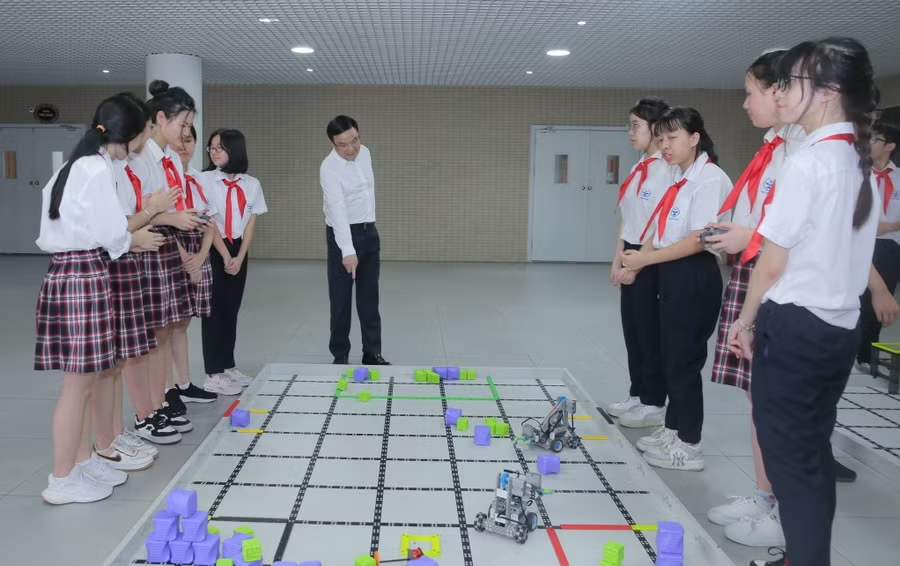 Female students from Cau Giay Secondary School (Hanoi) experience the STEM practice room. Photo: NTCC
Opening opportunities for female students in disadvantaged areas.
Referring to the reasons for encouraging women's participation in science and technology, the Deputy Director of the National Innovation Center (NIC) emphasized that the labor market and income are factors that need to be taken into account. For example, personnel in the semiconductor field often have higher salaries than many other professions. This is an opportunity for women not only to demonstrate their abilities but also to strive for income equality and gender equality in the workplace.
From another perspective, approximately 8,000 female students, many of whom come from ethnic minority groups, have gained access to STEAM (Science, Technology, Engineering, Art, and Maths) education. This information was announced at the closing ceremony of the "We Can" project (phase 2) and the launch of phase 3, scheduled for the end of March 2026. The project is implemented by UNESCO in collaboration with the Ministry of Education and Training.
This initiative aims to promote inclusive learning opportunities and enhance STEAM education for female students, particularly in ethnic minority and disadvantaged areas. Beyond capacity building for over 650 teachers, the project also mobilized 300 youth leaders to promote gender equality, contributing to narrowing the gender gap in the national education system.
With the theme “We Can for a Connected Future: From Learning to Pioneering Through STEAM Education”, Phase 3 (2026-2029) aims to support 6,000 students, with a priority given to 3,000 female students and learners from ethnic minority communities.
According to statistics from the expert group, Vietnamese women's participation in science, technology, engineering, and mathematics (STEM) is limited, with an estimated 37 out of 100 people working in these fields being women. Therefore, the project focuses on developing creative thinking, while also promoting improved educational management capacity, expanding experiential learning, and strengthening connections between schools and businesses, including female technology leaders.
Affirming his commitment to supporting the project, Mr. Jonathan Wallace Baker, Head of UNESCO's Representative Office in Vietnam, emphasized the organization's commitment to promoting gender equality through education – one of its core priorities. When girls are given genuine opportunities to develop skills and leadership abilities through STEAM education, they will maximize their potential and make positive contributions to socio-economic development.
“UNESCO will work alongside Vietnam to create an equitable learning environment where students have the right to be creative and lead the future,” affirmed Jonathan Wallace Baker.
Ms. Heekyung Jo Min, Head of Corporate Social Responsibility at CJ Group, also stated that they will continue to strengthen cooperation in the "We Can" project, phase 3, to expand access to quality education and support female and ethnic minority students in developing skills and confidence for success, especially through STEAM education.
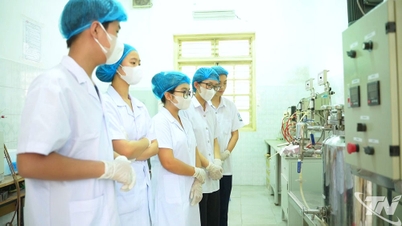
 Female students at Phenikaa University. Photo: NTCC
Improving policies
To promote inclusive learning opportunities for girls in Vietnam, Mr. Vu Minh Duc, Director of the Department of Teachers and Educational Management Staff (Ministry of Education and Training), suggested that content on gender and gender equality should be included in the official curriculum of teacher training institutions. This would contribute to the effective implementation of the National Strategy on Gender Equality for the period 2021–2030.
According to Mr. Vu Minh Duc, the "We Can" initiative has made a positive contribution to national policy dialogue on narrowing the gender gap in education. Over the next three years, the project will continue to support students, especially female students and learners from ethnic minority communities, in developing creative thinking, problem-solving skills, and the confidence to pursue fields in science and technology.
The project focuses on three main areas of activity: capacity building for teachers and education administrators; expanding experiential learning opportunities for students; and promoting collaboration between schools and businesses, the innovation community, and women leaders in the science and technology sector.
Gender equality is one of the important goals and a measure of each country's level of development. Mr. Vu Minh Duc emphasized that gender equality is not only an end in itself but also contributes to promoting economic growth, social progress, and improving the quality of human resources. Accordingly, ensuring gender equality has been clearly institutionalized in the Vietnamese legal system.
Specifically, the National Assembly has enacted the Law on Gender Equality, stipulating the principle of equality between men and women in all areas of social and family life, while also defining the responsibilities of agencies, organizations, families, and individuals in achieving this goal. The law aims to eliminate all forms of gender discrimination, create equal opportunities for men and women in socio-economic development and human resource development; and gradually move towards substantive equality and build cooperative and supportive relationships between the two genders in all fields.
In the field of education and training, the Law on Gender Equality dedicates a specific article to regulating relevant issues, ensuring equality between men and women in terms of school age, learning opportunities, training, and professional development; equality in choosing fields and professions; and measures to promote the narrowing of the gender gap in education. This is an important foundation for forming a high-quality workforce to meet the requirements of national development in the new context.
To concretize the provisions of the Law, the Government issued Decree No. 48/2009/ND-CP on measures to ensure gender equality, which emphasizes incorporating gender and gender equality education into the main curriculum and extracurricular activities, appropriate to each educational level and training program; and encourages diversification of communication methods to raise social awareness of gender equality.
Based on that, the Government continued to issue Resolution No. 28/NQ-CP on the National Strategy on Gender Equality for the period 2021–2030, building on the results of the previous period, while concretizing the policies and guidelines of the Party and the State, in conjunction with the implementation of the Sustainable Development Goals by 2030.
The overarching goal of the Strategy is to continue narrowing the gender gap, creating conditions for women and men to participate in and enjoy equal benefits in all areas of social life; thereby not only enhancing the status of women but also contributing to building a just, progressive, and sustainable society.
In the context of fundamental and comprehensive reform of education and training, according to Mr. Vu Minh Duc, integrating gender equality content into the education program not only has legal significance but also profound practical value, contributing to the formation of correct awareness, positive attitudes, and appropriate behaviors of the younger generation, thereby spreading the values of equality and civilization throughout society.
Encouraging and supporting women's participation in STEM fields and digital transformation, Mr. Do Tien Thinh stated that NIC is committed to acting as a bridge between organizations, businesses, universities, and the community, aiming to build a comprehensive innovation ecosystem where every individual, regardless of gender, has the opportunity to develop and contribute to social progress.
Source: https://giaoducthoidai.vn/pha-rao-can-gioi-trong-stem-post778019.html



![[Photo] National Assembly Chairman Tran Thanh Man working with the Standing Committee of the Law and Justice Committee](https://vphoto.vietnam.vn/thumb/1200x675/vietnam/resource/IMAGE/2026/05/21/1779378929214_ndo_br_1-4610-jpg.webp)
![[Photo] General Secretary and President To Lam presides over a working session with the Central Policy and Strategy Committee on the development of the materials industry.](https://vphoto.vietnam.vn/thumb/1200x675/vietnam/resource/IMAGE/2026/05/21/1779359935432_a3-bnd-3129-1412-jpg.webp)
















































































Comment (0)