

The U.S. Supreme Court has just ruled on voting regulations in the battleground state of Pennsylvania, one of the focal points of this year's presidential election.
The U.S. Supreme Court on November 1 upheld a Pennsylvania state court ruling that reserve ballots should be counted for voters whose mail-in ballots are rejected due to technical errors, thus rejecting an appeal from the Republican Party.
The story of mail-in ballots
According to Pennsylvania regulations, voters casting mail-in ballots need two envelopes: one to seal the ballot for confidentiality, and the other to fill out the postal declaration. Those who vote by mail before the deadline will not be eligible to use their reserve ballot on Election Day, November 5th, according to The Guardian . Following the Supreme Court ruling, voters can exercise their right to vote at polling stations in person if they previously failed to seal their ballot.
The Republican Party argues that tens of thousands of potentially disputed votes should not be counted, particularly in Pennsylvania – a state with a crucial impact on the outcome of this year's presidential and Senate elections. Former President Donald Trump won Pennsylvania's electoral votes in 2016, while President Joe Biden won it in 2020, contributing to his overall victory.
US ELECTION COUNTDOWN: Trump's gaffes, voting machines biased towards Harris?
The scale and impact of the ruling remain unclear, while US media outlets describe the development as potentially affecting "thousands of votes." Democrats have used the court ruling to criticize Republicans and Trump. "Trump and his allies have made it harder for your votes to be counted, but our institutions are stronger than his attacks," Vice President Kamala Harris's campaign said in a statement on November 1st.

People cast their votes by mail in Pennsylvania on October 15.
Also in Pennsylvania, a court in Erie County ordered officials to address the situation where nearly 20,000 mail-in ballots were not delivered to voters so they could fill them out and submit them to the election authorities before the state deadline. In addition, at least 365 voters received ballots with barcodes that matched those of others. The court also ordered the preparation of additional backup ballots for people to vote in person on November 5th, due to numerous problems with mail-in ballot delivery.
A wave of lawsuits
The developments in Pennsylvania are part of the ongoing troubles in this year's election, namely complaints and lawsuits regarding the ballots. Legal experts believe a "wave" of lawsuits could flood the courts at all levels. Following the 2020 election, Trump and his allies filed more than 60 lawsuits hoping to overturn the results, many focusing on allegations of voter fraud. Some cases were referred to the U.S. Supreme Court, but were rejected.
US Election: 62 million people have voted, both Harris-Trump camps remain optimistic.
According to Democracy Docket , a website that tracks litigation in the US, state and federal courts have received approximately 196 election-related lawsuits in 40 states this year. Of these, the Republican National Committee is involved in dozens of cases that it claims are aimed at ensuring election transparency.
Reuters reported on November 1st that Jason Torchinsky, a lawyer specializing in US elections and who has represented several Republican party members, said that cases that have failed in lower courts are unlikely to be heard by the Supreme Court.
Mr. Trump and Ms. Harris campaigned together in the city.
CNN reported that US presidential candidates Donald Trump and Kamala Harris stopped in Milwaukee, Wisconsin, on November 1st to attract voters in the battleground state. Both delivered campaign messages and urged people to vote. This was the second appearance of both Trump and Harris in Wisconsin in a week, and their final visit to the swing state before the November 5th election.

Source: https://thanhnien.vn/phan-quyet-moi-truoc-them-bau-cu-tong-thong-my-18524110221440743.htm

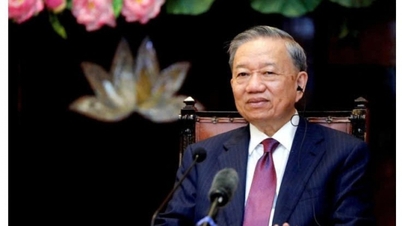
![[Photo] General Secretary and President To Lam presides over the meeting to approve the draft report on the results of the second inspection by the Politburo of the Standing Committee of the Hanoi City Party Committee.](https://vphoto.vietnam.vn/thumb/1200x675/vietnam/resource/IMAGE/2026/05/26/1779789811432_a2-bnd-4430-9620-jpg.webp)



































































Comment (0)