

But paradoxes also arise from this very development. People are more connected but also lonelier. They have more material wealth but are more insecure. Knowledge increases, but extremism, anger, division, and mental crises seem to grow daily as well.
Looking at the world more broadly, war, conflict, climate change, crises of confidence, pressure to achieve results, fierce competition, moral decay, and mental health issues are becoming global challenges. Many young people today live in a state of constant anxiety. Many are successful but unhappy. Many have everything but don't know what their life is all about.
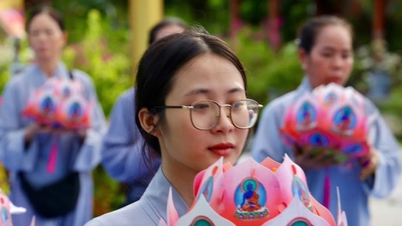
This year, as Buddha's birthday approaches, a thought-provoking question arises: What can Buddhism contribute to our modern era?
The answer probably doesn't lie in Buddhism offering a larger belief system, but rather in its ability to contribute values that help people live more mindfully, humanely, and peacefully.

The first thing Buddhism can contribute to the modern world is its ability to help people manage their inner selves. Perhaps never before have modern people lived so much with the outside world but so little with their inner selves as they do today. We easily access news from the other side of the world, but we don't fully understand our own emotions. We know a great deal about the outside world, but we understand little the fear, anger, or greed that operate within ourselves.
Buddhism doesn't begin by changing the world. Buddhism begins by looking deep within. The Buddha pointed out that the root of suffering lies in greed, hatred, and delusion—insatiable greed, uncontrolled anger, and ignorance. More than 2,500 years ago, these were the causes of human unease, and they remain so today!
A consumer society easily leads people to equate their self-worth with material possessions. A social media environment full of comparisons makes many people constantly feel they are not successful enough, not beautiful enough, not outstanding enough. This pressure creates a silent insecurity.
Buddhism does not deny the need for growth or achievement, but it reminds people to reflect on the limits of their desires and learn to live in greater balance.
The Middle Way, taught by the Buddha more than two millennia ago, seems to remain just as relevant today. Accordingly, Buddhist practitioners should avoid extremes in their practice: neither extreme indulgence nor extreme self-mortification, neither extreme thinking nor extreme judgment.
In an era where debate easily turns into aggression and differences easily lead to division, the spirit of the Middle Way can be a significant contribution to social life.
The second thing Buddhism can contribute is cultivating compassion. The modern world is booming in technology, but it doesn't always develop empathy in a corresponding way.
Humans may be excellent debaters, but listening is becoming increasingly difficult. Social media provides unprecedented opportunities for expression, but it also exposes a great deal of verbal violence. A single malicious comment can deeply hurt someone.
Buddhism does not teach people to be weak, but rather helps them to see others with understanding.
Compassion in Buddhism is not just about feeling sorry for those who suffer. It's also about the ability to put yourself in someone else's shoes to reduce judgment, lessen anger, and increase empathy.
Society may develop rapidly, but sustainable development will be difficult without compassion. Amidst moral crises, school violence, hate speech online, and increasingly selfish lifestyles, the compassionate and loving values of Buddhism can become an important moral resource for society.
The third point is mindfulness. The digital age is causing people to become increasingly distracted: eating meals with their eyes glued to their phones, spending time with family but their minds are preoccupied with work, reading for a few minutes only to immediately check social media... Many people live very fast but don't truly live deeply.
Buddhism offers the practice of mindfulness—the ability to be aware of what is happening in the body and mind in the present moment. Only by recognizing one's own mind can one avoid being led astray by emotions.
In the context of mental health becoming an alarming issue in many countries, the Buddhist principles of mindfulness and awareness can be a practical contribution to modern life.
The fourth point is a sense of responsibility towards the environment. One of the core values of Buddhism is the principle of dependent origination – that all things are interconnected. Humans cannot exist in isolation from nature. Therefore, destroying the environment is also harming our own future.
Unsustainable resource exploitation, overconsumption, and wasteful lifestyles are contributing to the global climate crisis. The Buddhist philosophy of contentment, moderation, and harmony with nature can serve as inspiration for green living, a circular economy , and sustainable development.
But perhaps the greatest contribution Buddhism can make to this era lies in something simpler: helping people become better versions of themselves.
Therefore, not everyone can become a Buddhist, not everyone can go to the temple, but anyone can learn to be less angry, less selfish, a better listener, more loving, to live more slowly, and to be more responsible for their words and actions.
A good society is not built solely on modern technology or high economic growth, but on kind people.
During the Buddha's birthday season, Buddhist calendar 2570 - Gregorian calendar 2026, amidst a world full of turmoil and uncertainty, perhaps what humanity needs is not only faster progress but also greater maturity.
Buddhism does not replace science, education , or social institutions, but it can help people use those achievements more wisely, compassionately, and responsibly. And perhaps, in this fast-paced era, Buddhism's greatest contribution is reminding each person to pause for a moment, look deeply into themselves, and thereby live better with others and with life.
Source: https://baophapluat.vn/phat-giao-co-the-dong-gop-gi-cho-thoi-dai-nay.html
![[Image] Close-up view of the interchange connecting the two expressways and Long Thanh Airport.](https://vphoto.vietnam.vn/thumb/1200x675/vietnam/resource/IMAGE/2026/05/25/1779703378210_ndo_br_z7863716673926-224453a31600126cce10622af6290afd-4549-jpg.webp)
![[Image] Hanoi's urban life under the challenge of a "scorching hot" environment](https://vphoto.vietnam.vn/thumb/1200x675/vietnam/resource/IMAGE/2026/05/25/1779706979265_nang-nong-t5-2026-minh-duy-7-4636-jpg.webp)



























































































Comment (0)